
A licensed practical nurse resigns from a skilled nursing facility at the end of a Friday shift to take a position at another organization. Which information-security action must the facility complete promptly to protect electronic protected health information?
Select an answer to reveal the explanation.
Short Explanation
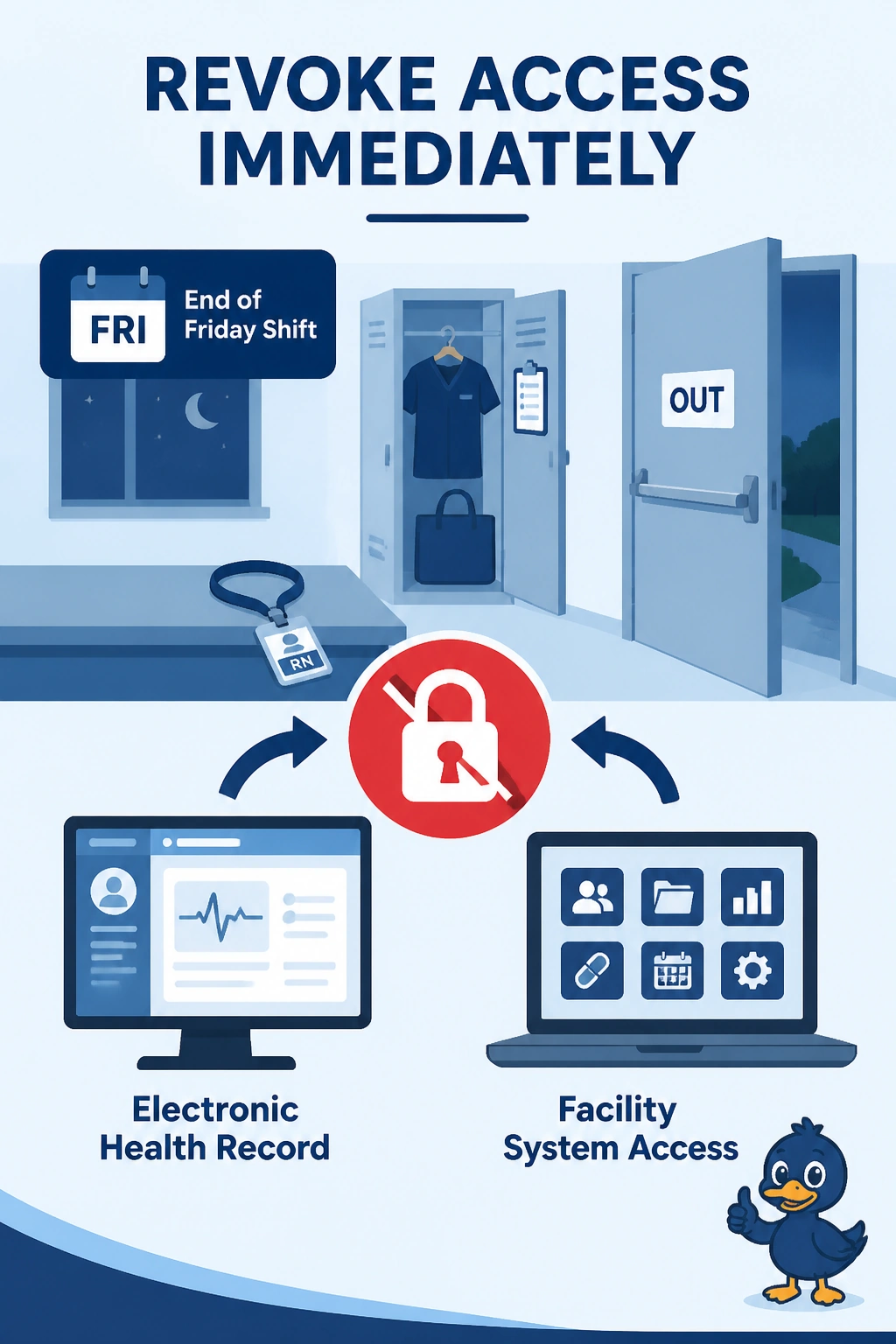
When a clinician leaves, you need to close the door on access to resident records right away. Immediate deactivation keeps an active account from being misused; archiving notes in an external spreadsheet, reusing credentials, or waiting for a quarterly review does not protect access promptly. You can think of it as collecting a front-door key when someone moves out.
Full Explanation
The HIPAA Security Rule requires covered entities to implement workforce termination procedures that promptly remove access to electronic protected health information when employment ends. Revoking the nurse’s electronic health record and facility system access immediately prevents unauthorized remote or on-site viewing of resident records after the nurse’s last shift. Archiving clinical notes into an external spreadsheet creates an unsecured copy of protected health information outside the controlled EHR audit trail. Reassigning the nurse’s login credentials to the incoming replacement violates unique user identification rules and destroys accountability for who documented care. Waiting until the next quarterly IT audit to review user accounts leaves an orphaned active account exposed for weeks or months. One caveat is that offboarding checklists should cover all connected systems—including automated dispensing cabinets, HR portals, and building keycards—not just the primary EHR. As a practical check, cross-check monthly human resources termination rosters against active IT user logs to confirm every separated employee’s accounts were disabled on their final day.
Prefer to study offline? Printable PDF study book + test engine ($7.50, unofficial). These questions stay free here.