
While preparing to archive closed charts in an electronic health record system, a health information manager asks how long the facility must retain adult resident medical records when state law specifies no longer period. What is the federal minimum retention requirement?
Select an answer to reveal the explanation.
Short Explanation
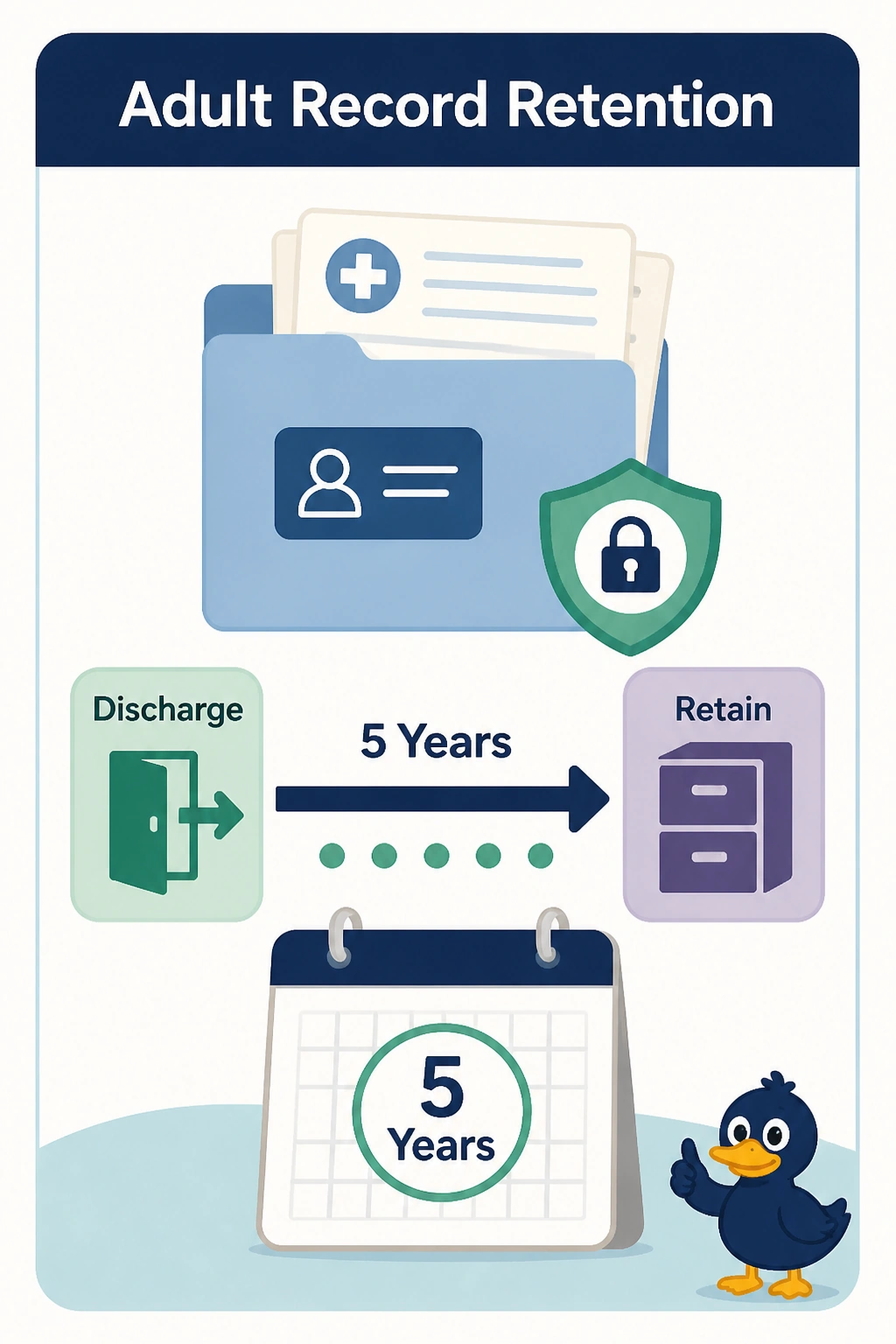
Think of medical record retention like keeping tax returns: if you destroy records too early, you may be unprepared when an auditor or clinician needs them. When state law does not require longer, keep adult resident records for five years from discharge—not from admission or a billing date.
Full Explanation
Under federal nursing facility requirements at 42 CFR 483.70(h)(4), you must retain adult resident medical records for at least five years from the date of discharge when state law does not require a longer period. Starting the period at discharge preserves documentation for continuity of care, survey review, and legal defense after the resident leaves or passes away. Two years from the date of the resident’s initial admission is too short and starts the clock at the wrong event; for a long-stay resident, that could put records at risk while the resident is still in the facility. Three years from the date of the last Medicare claim submission confuses clinical record retention with billing timelines and does not account for stays paid by Medicaid or private funds. Ten years from the date of the resident’s final care plan exceeds the federal minimum and uses the wrong starting event, though a longer state-law requirement must be followed. One caveat: for a minor resident, federal rules require retention for three years after the resident reaches legal age under state law, or five years from discharge, whichever is longer. As a practical check, review EHR purge settings and offsite storage contracts to confirm that no adult record is scheduled for destruction before the fifth anniversary of discharge.
Prefer to study offline? Printable PDF study book + test engine ($7.50, unofficial). These questions stay free here.