
A nursing facility administrator is reviewing the balance sheet before renewing a short-term vendor credit line and wants to measure whether current assets can cover obligations due within the next twelve months. Which financial metric should the administrator calculate?
Select an answer to reveal the explanation.
Short Explanation
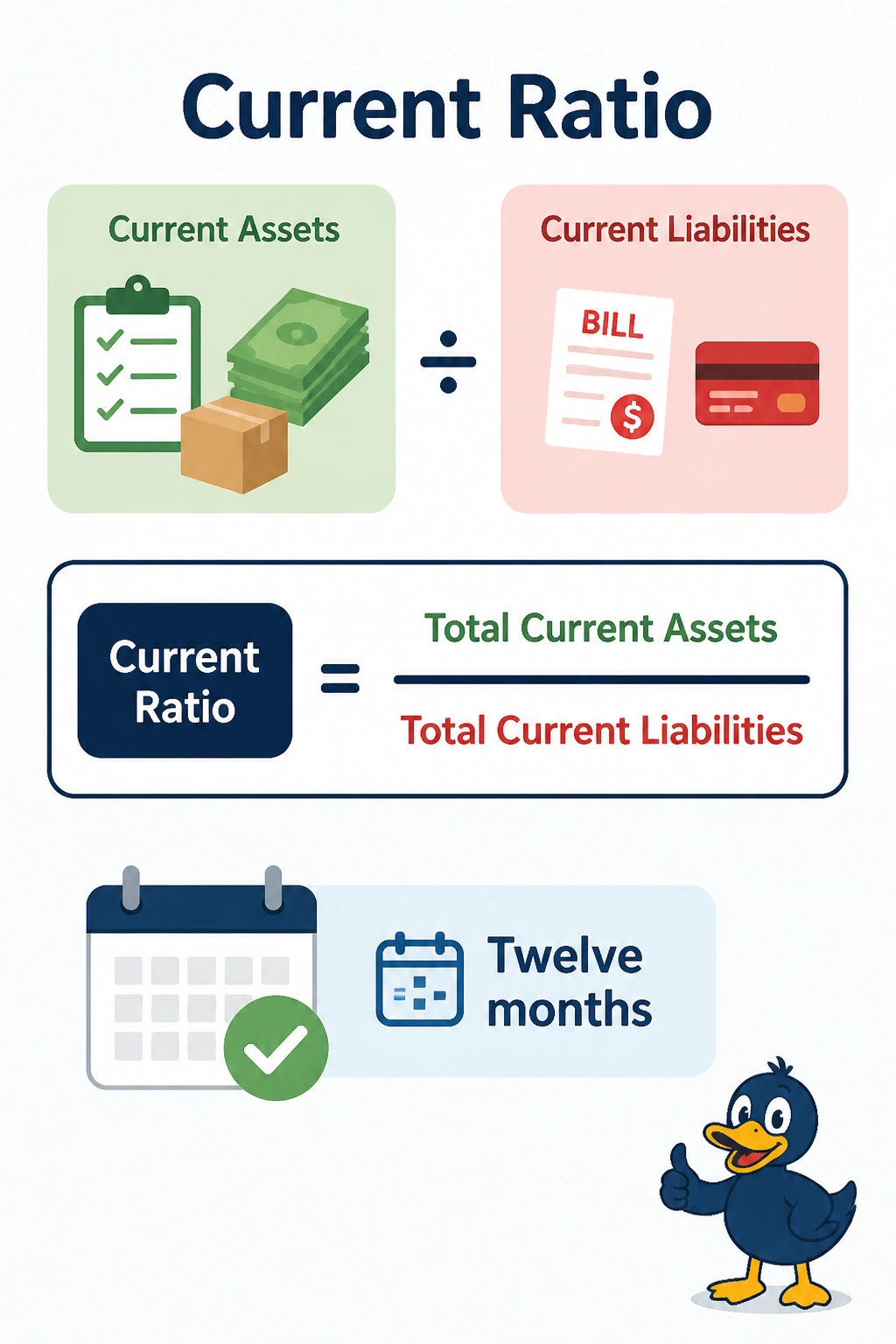
Think of your current ratio as checking whether the cash in your wallet and near-term receivables can pay this month's bills before they come due. The trap is reaching for profitability or occupancy metrics, which can look healthy on paper even when short-term bills outpace liquid cash.
Full Explanation
Liquidity measures a facility's ability to meet obligations coming due within one operating year without disrupting daily resident care. Calculating the "Current ratio dividing total current assets by total current liabilities" directly compares cash, short-term receivables, and inventory against accounts payable, accrued payroll, and current debt. By contrast, "Operating margin ratio comparing net patient revenue to total operating expenses" evaluates profitability over a period rather than immediate bill-paying capacity. Using the "Debt-to-equity ratio measuring long-term leverage against total net assets" assesses capital structure and solvency over years, not twelve-month liquidity. Similarly, "Average daily census percentage comparing occupied beds to licensed capacity" tracks physical occupancy rather than balance-sheet obligations. Caveat: a high current ratio driven by slow-paying or uncollectible receivables can overstate true cash liquidity, so pair it with accounts receivable aging. Operational check: calculate the current ratio monthly alongside days cash on hand before committing to new short-term credit terms.
Prefer to study offline? Printable PDF study book + test engine ($7.50, unofficial). These questions stay free here.