
A former short-stay resident submits a written request for copies of her clinical records, but the business office manager notes the resident still owes a private-pay coinsurance balance. How must the facility respond under federal privacy rules?
Select an answer to reveal the explanation.
Short Explanation
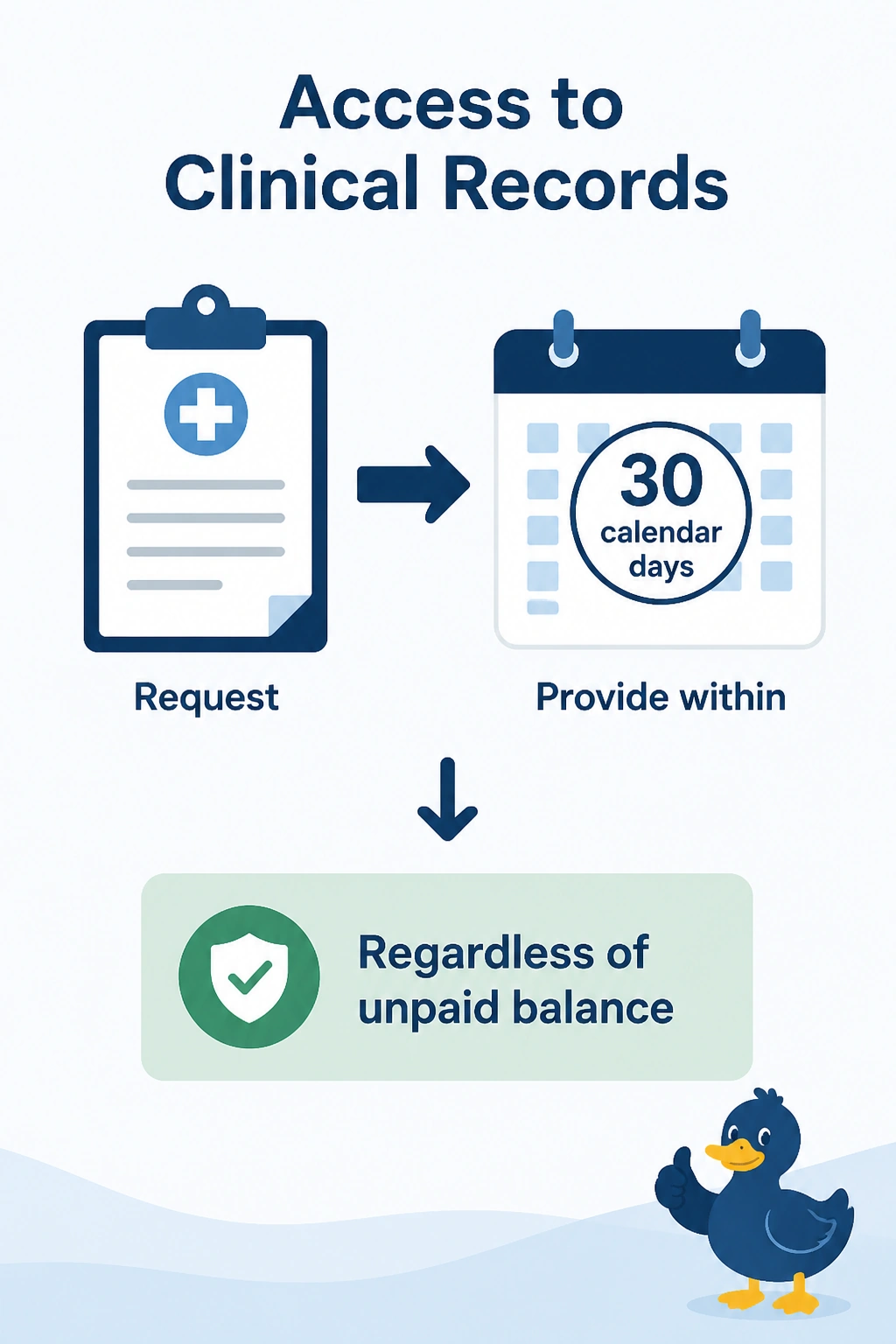
Your residents' right to their own health information works like a library card they already own, not collateral for a billing dispute. The trap is letting the business office hold medical records hostage until a coinsurance bill is paid, which directly violates the federal HIPAA Privacy Rule.
Full Explanation
Under the HIPAA Privacy Rule, individuals have a legal right to inspect and obtain copies of their designated record set, and a covered facility may not condition that access on payment of an unrelated care balance. Selecting "Provide the requested records within 30 calendar days regardless of the unpaid balance" fulfills the federal 30-calendar-day access standard while keeping collections separate from privacy rights. Conversely, "Hold the clinical records until the resident establishes a signed payment plan with billing" is an unlawful barrier to access that can trigger federal enforcement. Offering to "Release only a one-page discharge summary until the outstanding coinsurance is settled" improperly restricts the scope of the requested designated record set without a valid clinical exception. Likewise, "Require the resident's attending physician to co-sign a release before copying any charts" adds an unauthorized gatekeeper delay to a resident's direct request. Caveat: a facility may charge only a reasonable, cost-based fee for copying and postage, and may take one 30-day extension only with written notice stating the reason. Operational check: audit the medical-records request log monthly to confirm fulfillment dates fall within 30 calendar days.
Prefer to study offline? Printable PDF study book + test engine ($7.50, unofficial). These questions stay free here.