
A 115-bed skilled nursing facility's QAPI committee has limited staff capacity and must choose which quality issue to target with a formal Performance Improvement Project next quarter. Which selection criterion best aligns with federal QAPI program requirements?
Select an answer to reveal the explanation.
Short Explanation
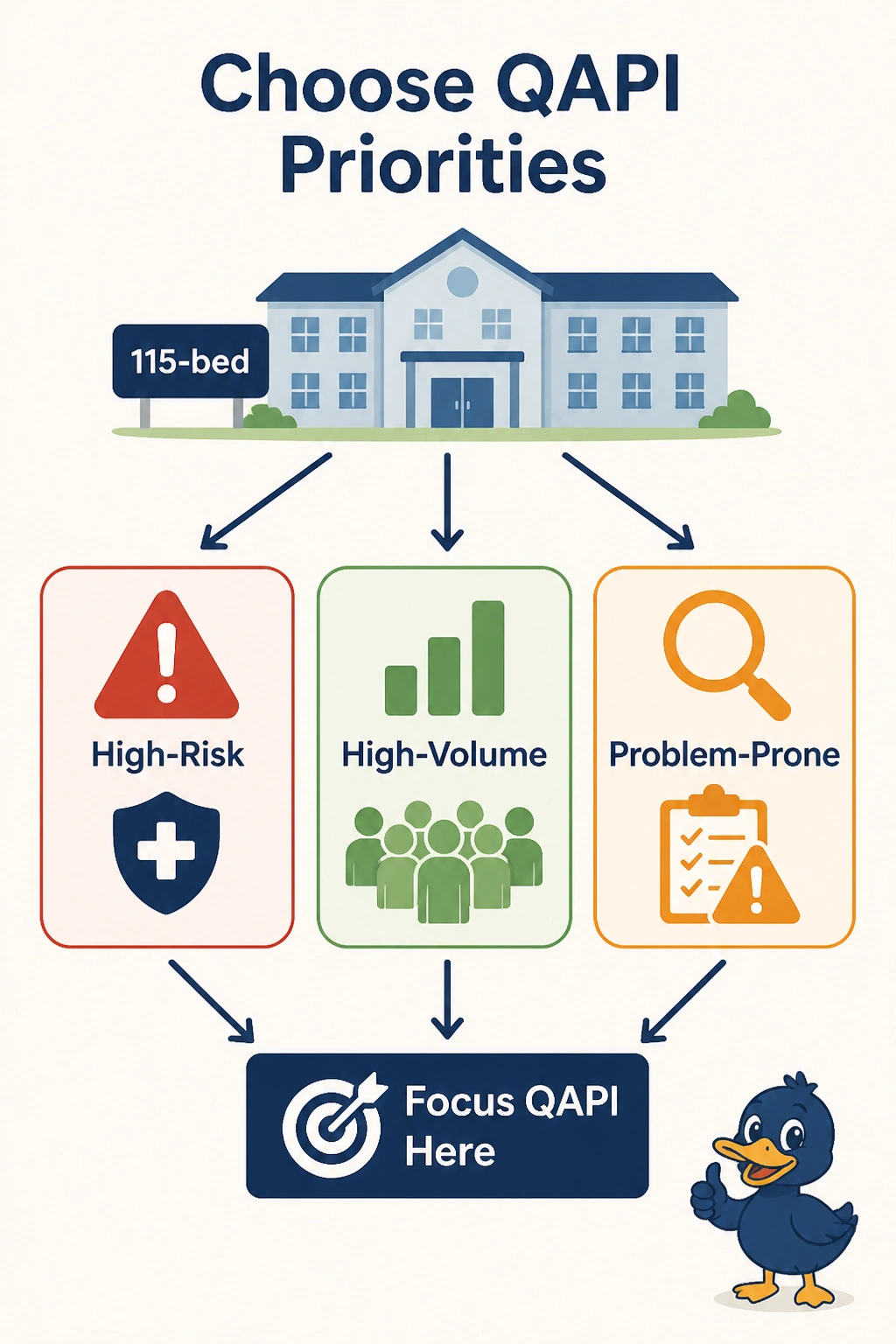
When you choose your next QAPI project, think like an emergency-room team: address the greatest threats to residents first, not simply the loudest complaint. You’ll use limited capacity better by focusing on risk rather than relying only on survey citations, public ratings, or convenience.
Full Explanation
Under 42 CFR 483.75, a nursing facility’s Quality Assurance and Performance Improvement (QAPI) program must be data-driven, proactive, and comprehensive. When selecting a Performance Improvement Project, prioritize areas that are high-risk, high-volume, or problem-prone for residents; these criteria direct limited resources toward serious harm or widespread quality gaps. Focusing exclusively on issues cited during the most recent annual recertification survey is reactive and can miss emerging internal risks that surveyors have not observed. Selecting whichever clinical metric ranks lowest on the public Five-Star website overlooks low-frequency, high-severity hazards, such as elopement or anticoagulation errors, that may not immediately affect a composite star rating. Allowing each department head to choose a convenience-based workflow project fragments effort and may leave systemic resident-safety priorities unaddressed. One caveat: facilities must still correct cited deficiencies promptly while maintaining broader QAPI projects. As a practical check, review your quarterly QAPI charter and incident dashboards to confirm that each active project maps to documented high-risk, high-volume, or problem-prone data.
Prefer to study offline? Printable PDF study book + test engine ($7.50, unofficial). These questions stay free here.