
During an infection control round, an infection preventionist discovers a medication nurse drawing a partial dose from a single-dose vial of injectable vitamin B12, labeling it with the date, and placing it back in the medication cart to use for a second resident later that afternoon. What must the infection preventionist require?
Select an answer to reveal the explanation.
Short Explanation
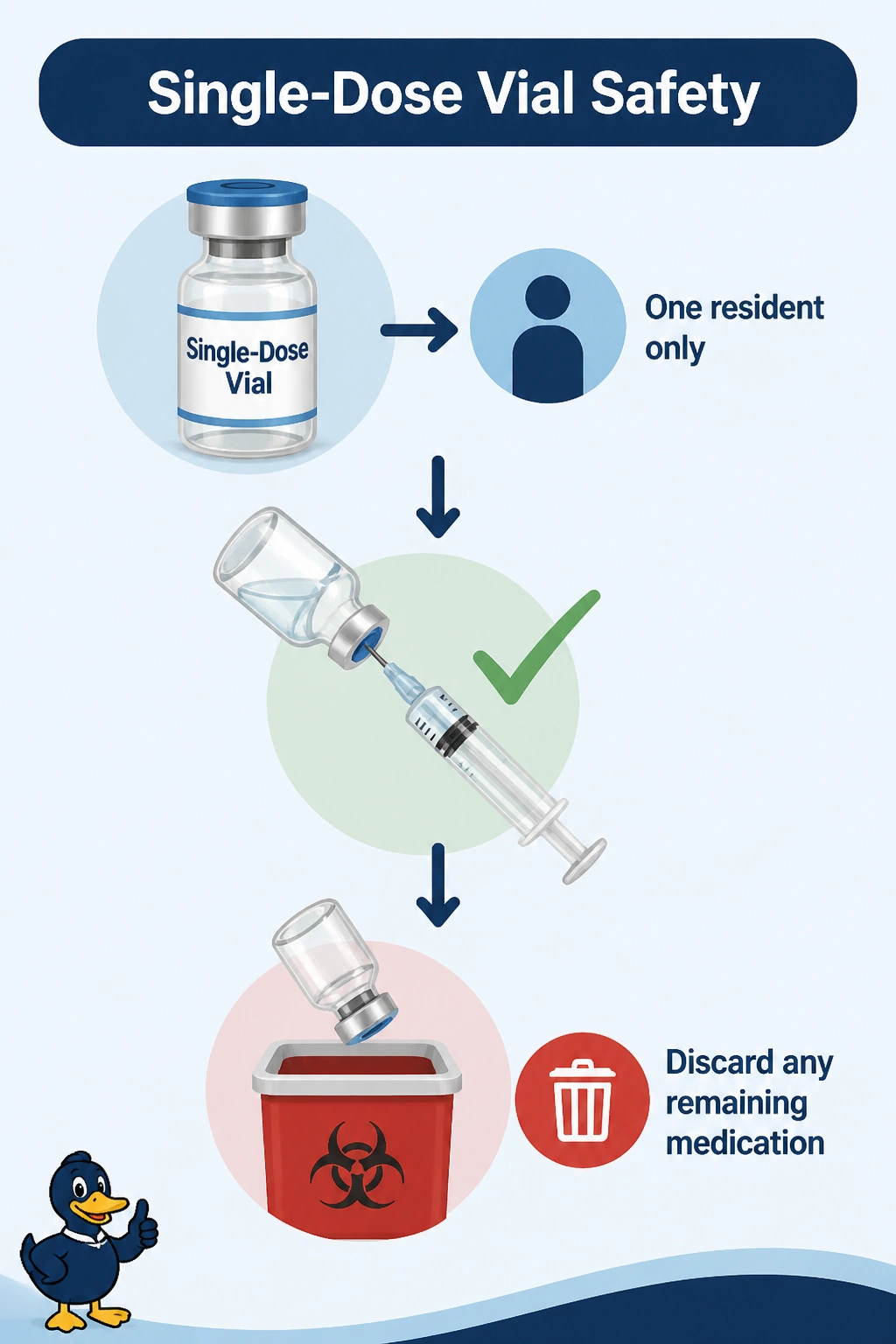
You can remember that a single-dose vial is for one resident only: discard any medication left after preparing that resident’s dose. Refrigerating the vial, using a new needle and syringe, or combining leftovers does not make sharing it safe.
Full Explanation
Under 42 CFR 483.80 and CDC safe injection practices, a single-dose or single-use vial is intended for one-time access and lacks antimicrobial preservatives. Require staff to use it for one resident only and discard any medication remaining after the dose is drawn; this reduces the risk of bacterial contamination and bloodborne pathogen transmission. Refrigerating a punctured vial and using it within 24 hours is not safe, because refrigeration does not prevent contamination after the preservative-free stopper is pierced. A new sterile needle and syringe do not make it safe to use the vial for a second resident: microscopic reflux or a contaminated vial septum can still transmit pathogens. Pooling leftovers from two single-dose vials into one sterile syringe also compounds contamination risk and violates sterile compounding standards. One caveat: multi-dose vials contain preservatives and may be used for more than one resident only when handled appropriately in a clean medication preparation area; date them with a 28-day beyond-use limit unless the manufacturer specifies otherwise. As a practical check, observe medication passes and audit carts for punctured single-dose vials being retained for later use.
Prefer to study offline? Printable PDF study book + test engine ($7.50, unofficial). These questions stay free here.