
A nursing facility plans to replace paper-based warfarin dosing logs with a new electronic anticoagulation tracking workflow across all units next month. Which quality-improvement method best helps the QAPI team identify and mitigate potential workflow breakdowns before the system goes live?
Select an answer to reveal the explanation.
Short Explanation
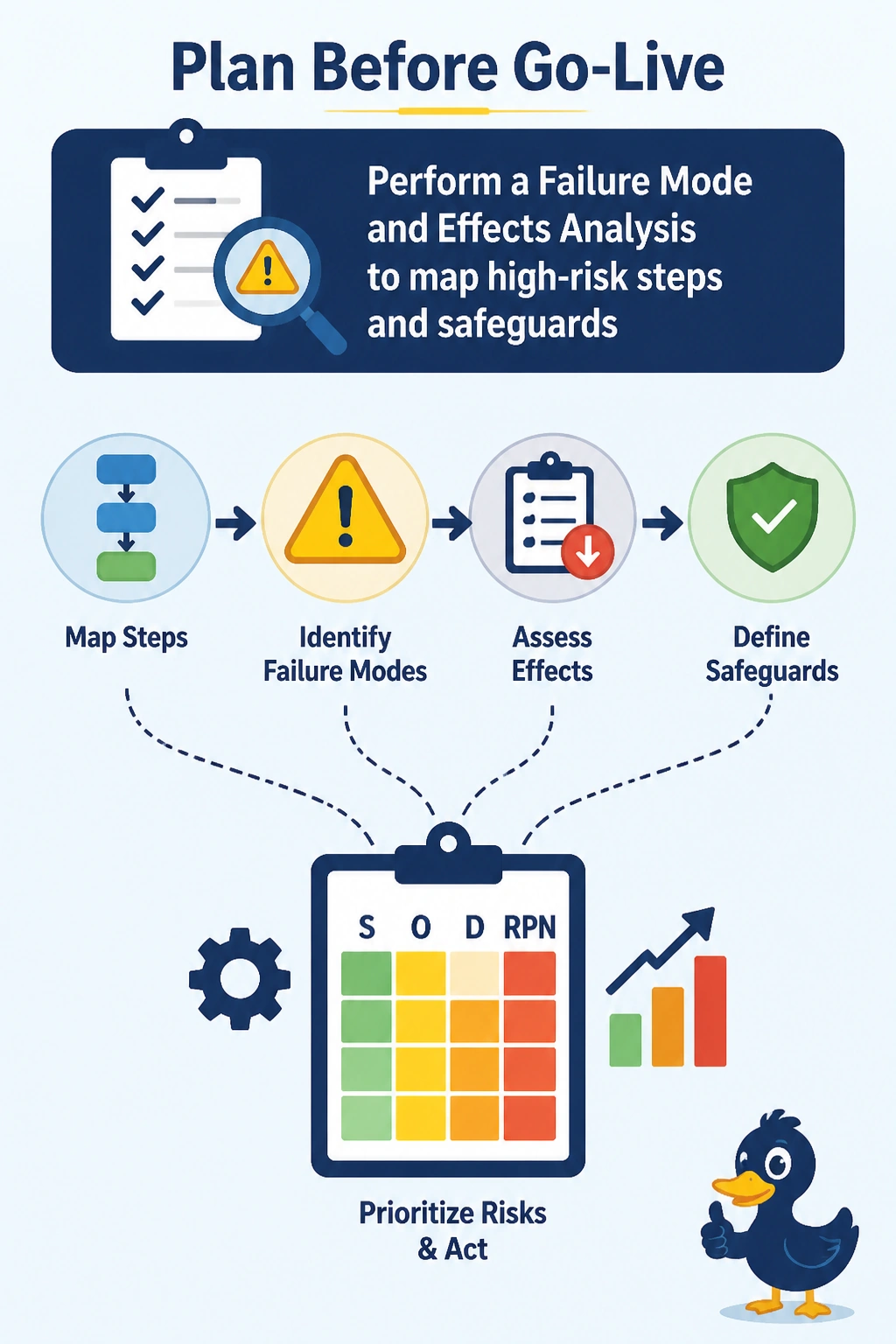
Waiting for an error involving a high-alert blood thinner is like testing a parachute after jumping out of the plane. You want a proactive FMEA to spot where the new workflow could break down before residents are exposed to risk. Incident reviews after launch, generic reminder memos, and manager attestations do not engineer safeguards into the workflow up front.
Full Explanation
In QAPI, proactive risk reduction for high-alert processes is best achieved by performing a Failure Mode and Effects Analysis (FMEA) to map high-risk steps and safeguards. An FMEA guides an interdisciplinary team through each step of the proposed electronic anticoagulation workflow, assessing how likely a failure is, how severe the resident harm could be, and how easily a breakdown would be detected so controls can be built before go-live. Waiting ninety days after launch to review medication incident reports is reactive and exposes residents to preventable bleeding or clotting events during the transition. Issuing a facility-wide memo reminding nurses to double-check doses relies on human vigilance rather than addressing interface gaps, alert fatigue, or handoff ambiguities. Requiring unit managers to sign an attestation after software installation confirms administrative sign-off but does not uncover operational failure points. One caveat: an FMEA is effective only when frontline nurses, prescribers, and the consultant pharmacist help map real-world handoffs rather than leaving the analysis to IT assumptions. As a practical check, prioritize the highest-scoring failure modes for pre-launch simulation testing and verify every lab-value interface alert before retiring the paper log.
Prefer to study offline? Printable PDF study book + test engine ($7.50, unofficial). These questions stay free here.