
During infection control rounds on a skilled nursing unit, an infection preventionist sees a nursing assistant carry one shared blood glucose meter from room to room, wiping it with an alcohol pad between residents. What policy correction is required?
Select an answer to reveal the explanation.
Short Explanation
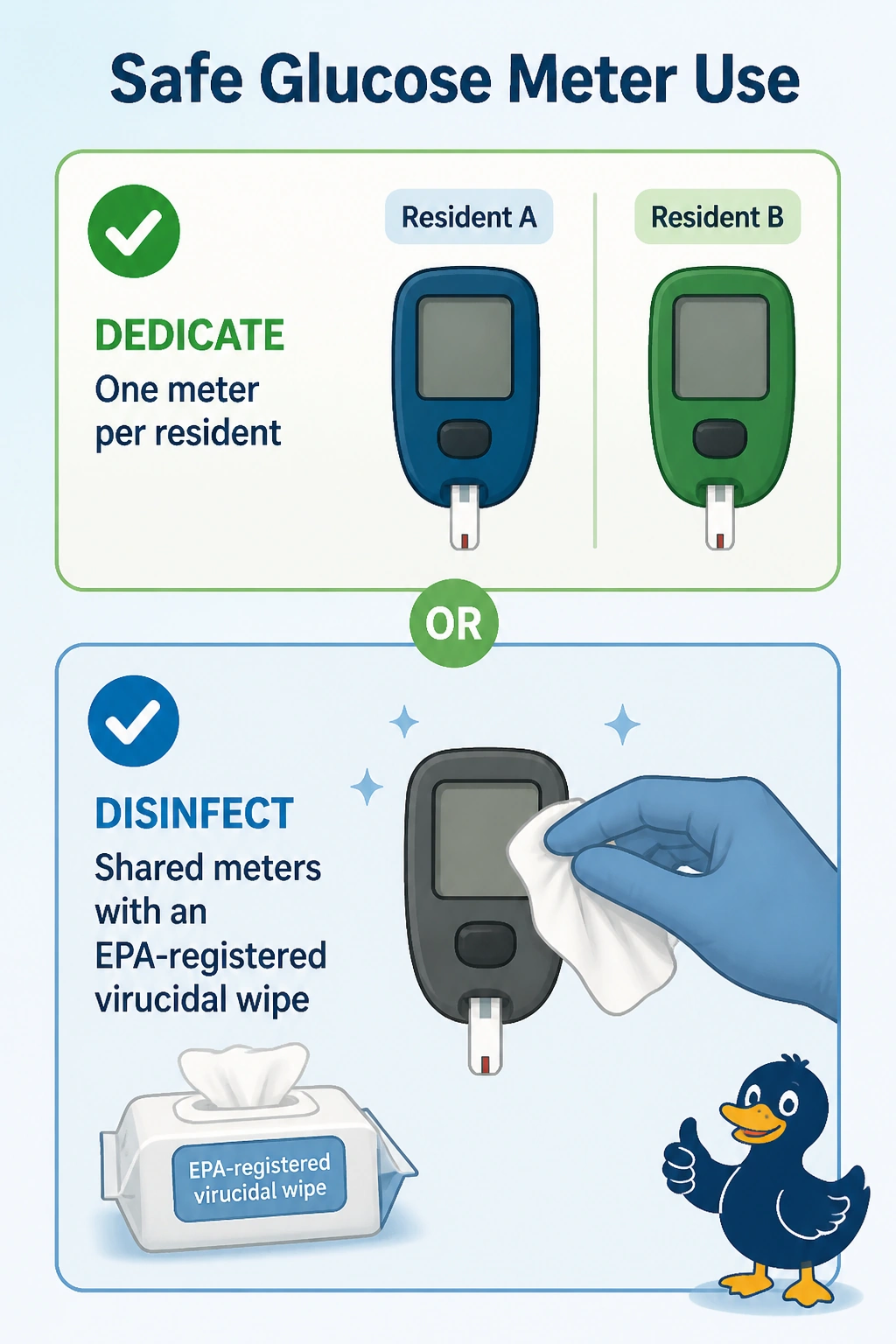
A quick swipe with an alcohol pad might look tidy, but it will not stop bloodborne viruses from hitching a ride down the hall. The trap is thinking standard alcohol wipes disinfect medical devices; you need dedicated meters or an approved virucidal disinfectant between every resident.
Full Explanation
Assisted blood glucose monitoring is a well-documented vector for hepatitis B transmission in long-term care when devices are shared without proper disinfection, which is why CMS infection control guidance under 42 CFR 483.80 requires facilities to dedicate a meter to each resident or disinfect shared meters with an EPA-registered virucidal wipe following manufacturer contact times. Choosing to require staff to wear double gloves when carrying the shared meter between resident rooms protects the worker's hands but does nothing to decontaminate the meter surface between residents. Choosing to use the shared meter only for residents who have no documented history of bloodborne illness relies on incomplete screening, since residents can have undiagnosed infections. Choosing to clean the meter at the end of each shift with soap and water before returning it to storage leaves bloodborne pathogens active during every daytime test. Note as a caveat that manufacturer instructions vary on compatible disinfectants so the EPA-registered product must be approved for the specific device. Operationally, audit point-of-care testing carts weekly to confirm individual labeling or stocked virucidal wipes and observe contact times.
Prefer to study offline? Printable PDF study book + test engine ($7.50, unofficial). These questions stay free here.