
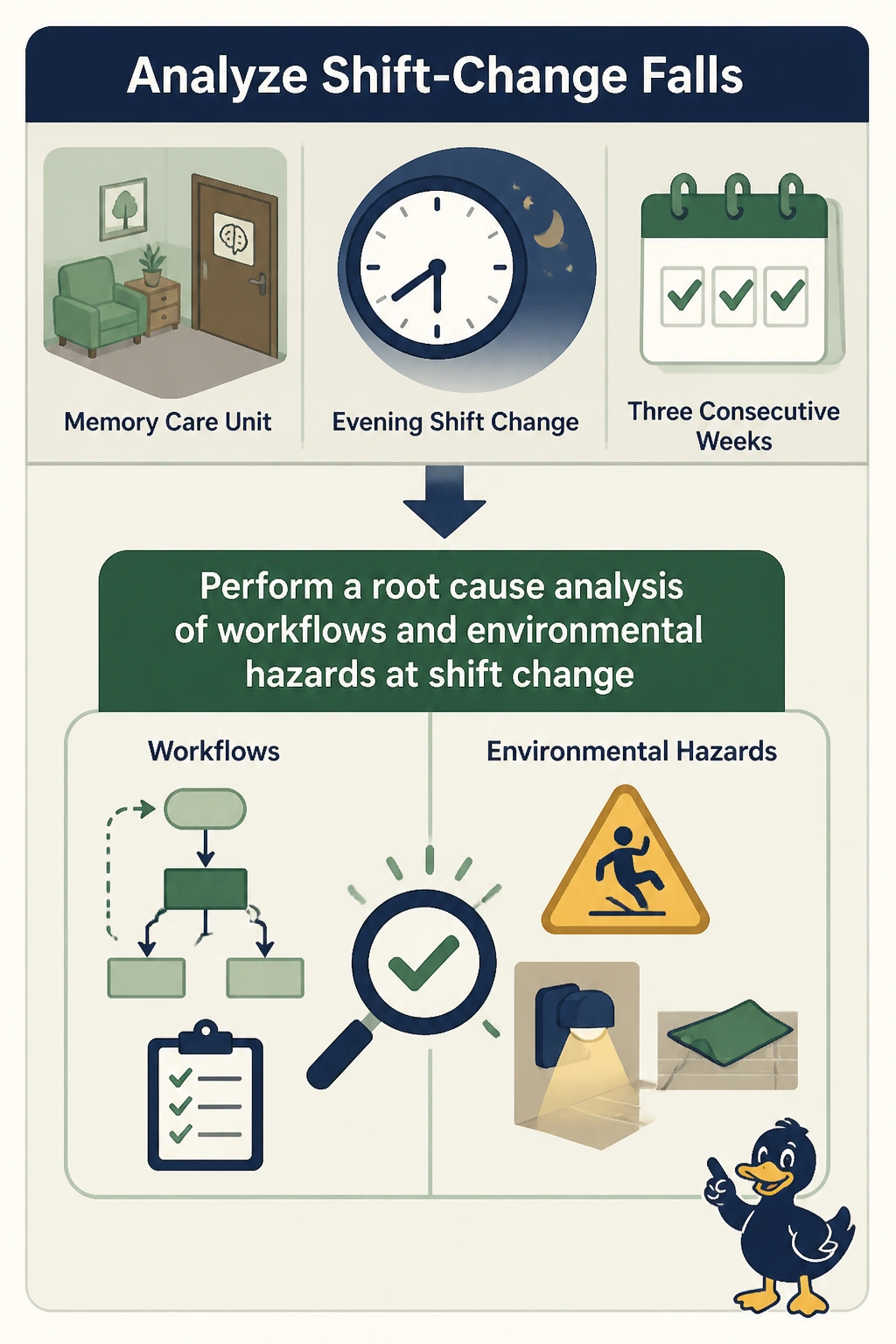
A nursing facility's incident reports show that resident falls on the memory care unit have spiked during evening shift change for three consecutive weeks. Which QAPI action should leadership prioritize first to address this recurring trend?
Select an answer to reveal the explanation.
Short Explanation
When falls cluster at the exact same hour every evening, your building is sending you a systems clue, not a reason to blame individual aides. The trap is jumping straight to discipline or restrictive bedrest instead of digging into what actually breaks down during handoff.
Full Explanation
Effective QAPI programs treat recurring clinical patterns as system failures first, so the team should Perform a root cause analysis of workflows and environmental hazards at shift change before choosing interventions. Examining handoff timing, corridor lighting, staffing overlap, and resident sundowning routines reveals why falls cluster at that hour and points to durable process fixes. Choosing to Issue written warnings to the evening nursing assistants involved in each documented fall promotes a punitive culture that discourages incident reporting without fixing the underlying workflow gap. Trying to Require every resident on the memory care unit to remain in bed during shift change hours imposes an improper physical restriction that undermines resident rights, mobility, and dignity. Attempting to Remove fall trend data from the QAPI dashboard until the unit stabilizes next quarter compromises quality oversight and conceals an active safety risk from the QAA committee. As an important caveat, individual accountability still applies if an investigation uncovers willful neglect, but systemic trends demand system analysis first. For an operational check, review the past month of shift-change fall timestamps alongside staffing schedules and rounding logs.
Prefer to study offline? Printable PDF study book + test engine ($7.50, unofficial). These questions stay free here.