
A long-stay resident taking daily warfarin for atrial fibrillation develops unexplained bruising on both forearms and dark, tarry stools. What clinical action should the nursing team prioritize?
Select an answer to reveal the explanation.
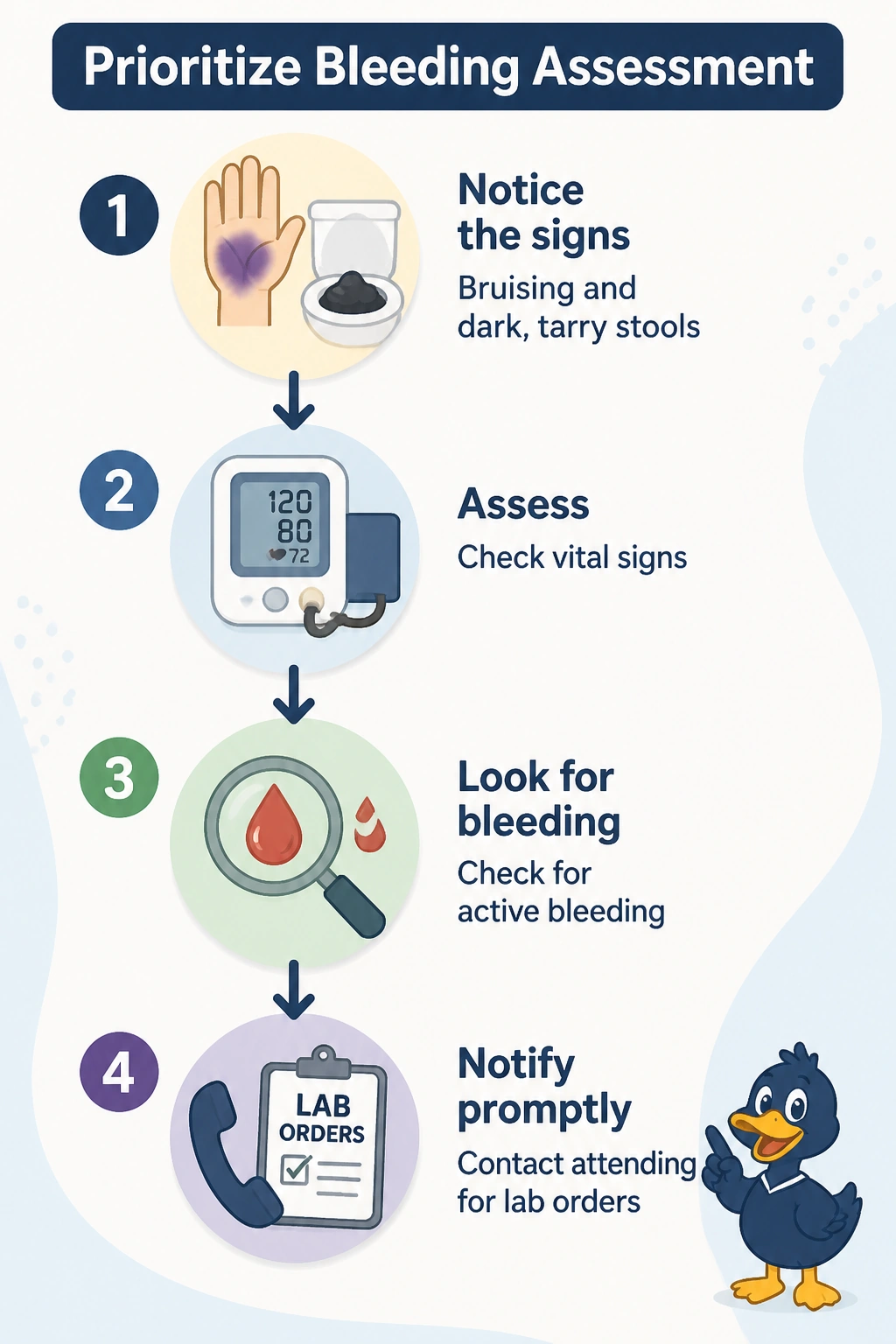
Short Explanation
Anticoagulants walk a tightrope between preventing clots and causing dangerous bleeding, so new bruising and dark stools are your red-flag warning signs. The trap is waiting for routine rounds when immediate clinical assessment and physician notification are needed.
Full Explanation
Warfarin is a high-alert anticoagulant medication that requires vigilant clinical monitoring for signs of hemorrhage, especially gastrointestinal bleeding indicated by dark, tarry stools. The nursing team must Assess vital signs, check for active bleeding, and notify the attending physician promptly for lab orders. Checking blood pressure and heart rate detects early hypovolemia, while prompt physician contact allows for urgent coagulation studies such as an INR and potential medication holds or reversal. Choosing to Hold all scheduled cardiovascular medications and encourage extra oral fluids until the forearm bruising fades is inappropriate because nurses cannot unilaterally discontinue unrelated prescriptions and fluids do not address active bleeding. Deciding to Document the bruising on the weekly skin sheet and wait for the next scheduled monthly laboratory draw dangerously delays intervention during a potential gastrointestinal bleed. Similarly, to Apply warm compresses to both forearms and administer an over-the-counter stool softener at bedtime ignores systemic bleeding signs and could worsen hemorrhage. Caveat: always review concurrent medications, such as antibiotics or NSAIDs, that can potentiate warfarin levels. Operational check: audit anticoagulation tracking logs weekly to verify timely lab monitoring and bleeding-sign follow-up.
Prefer to study offline? Printable PDF study book + test engine ($7.50, unofficial). These questions stay free here.