
A long-stay resident with type 2 diabetes and peripheral neuropathy has thickened, overgrown toenails and mild redness on the plantar surface of her left foot. Which care-planning action best protects the resident from serious foot complications?
Select an answer to reveal the explanation.
Short Explanation
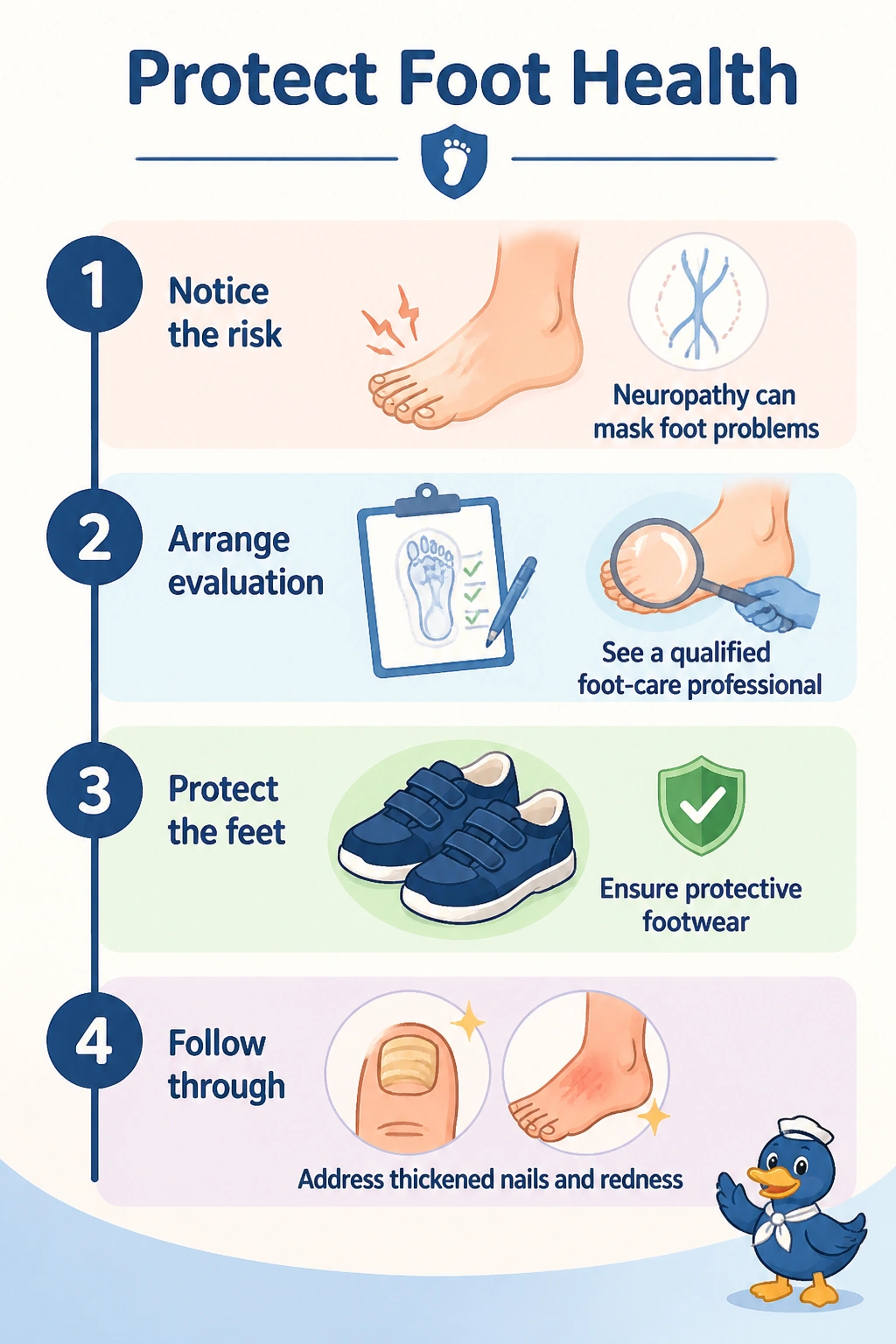
With diabetic neuropathy, a resident may not feel heat, sharp clippers, or a pebble until an ulcer is already deep. The trap is treating thickened nails or redness like routine grooming that any aide can handle with hot water or drugstore pads. You need qualified foot-care evaluation and protective footwear right away.
Full Explanation
Under 42 CFR 483.25 foot care standards, facilities must ensure residents receive proper treatment and preventive foot care, so the team should Arrange evaluation by a qualified foot-care professional and ensure protective footwear. Residents with diabetes and peripheral neuropathy have impaired sensation and slower wound healing, making professional podiatric nail care, daily skin inspection, and offloading footwear essential to prevent ulcers and amputations. Choosing to Instruct nursing assistants to soak the resident's feet in hot water and trim the nails risks thermal burns on insensate skin and accidental tissue cuts that can rapidly become infected. Choosing to Apply over-the-counter salicylic acid corn pads to reduce pressure on the plantar skin introduces caustic chemicals that can burn fragile diabetic tissue. Choosing to Encourage the resident to walk barefoot in her room to improve circulation and sensation exposes numb feet to splinters, friction, and trauma. As a clinical caveat, document baseline foot pulses, sensation, and skin integrity in the care plan and notify the physician promptly of any erythema or drainage. For an operational check, audit diabetic residents' footwear and podiatry schedules during monthly skin-integrity reviews.
Prefer to study offline? Printable PDF study book + test engine ($7.50, unofficial). These questions stay free here.