
A long-stay resident with severe post-stroke dysphagia receives continuous enteral nutrition via a gastrostomy tube, and a nursing assistant lowers the resident's bed completely flat after morning care while the feeding pump continues to infuse. What clinical safety risk must the nursing team prevent immediately?
Select an answer to reveal the explanation.
Short Explanation
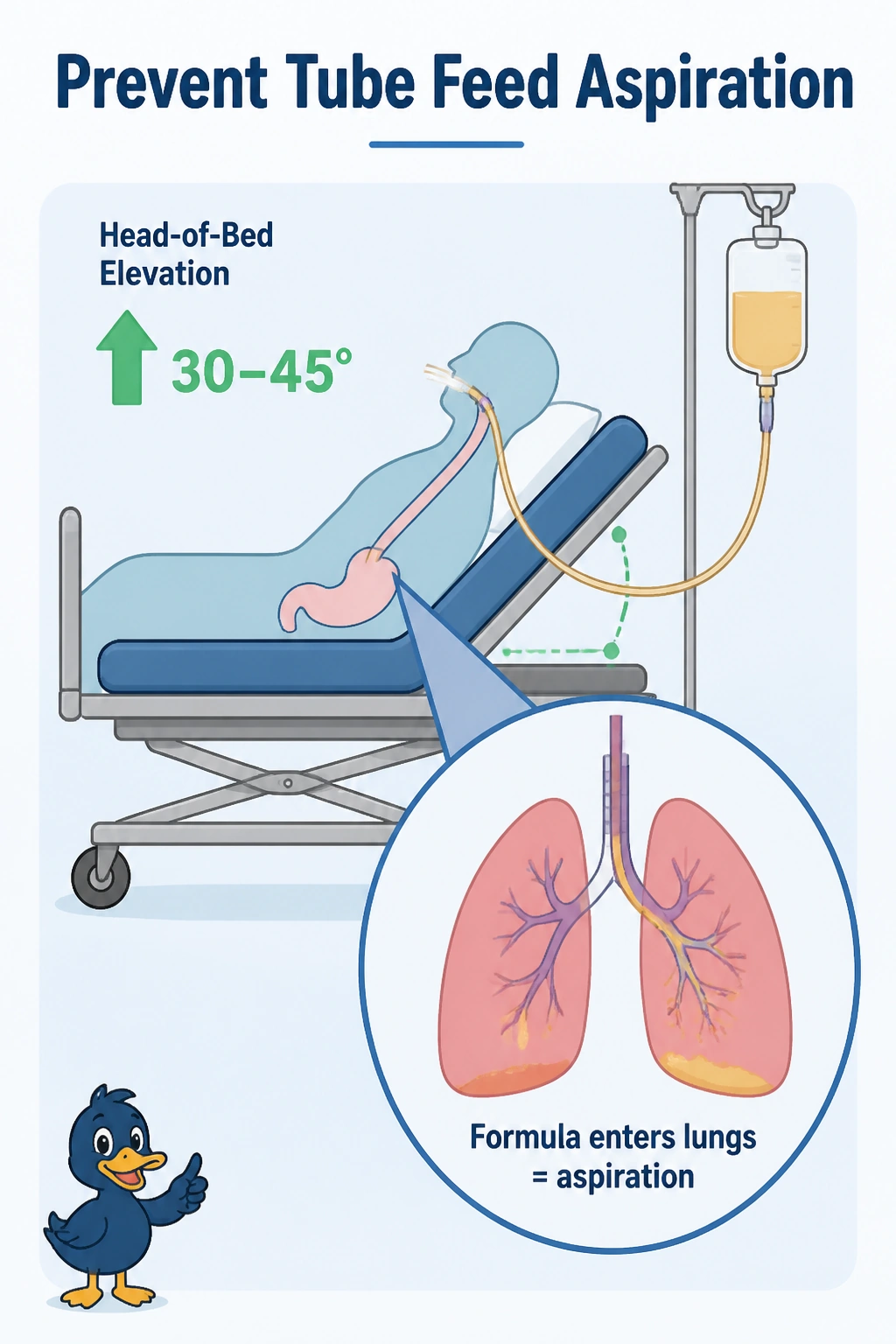
Running a tube feeding while a resident lies flat is like pouring water into a tilted bottle—gravity stops helping, and fluid can easily travel the wrong way. The trap is focusing on comfort or skin positioning while overlooking airway protection. You must ensure the head of the bed stays elevated during enteral infusions to prevent aspiration.
Full Explanation
Under federal clinical care standards at 42 CFR 483.25(g), staff must prevent Pulmonary aspiration of enteral formula resulting from infusing tube feedings without proper head-of-bed elevation. Keeping the head of the bed elevated (typically 30 to 45 degrees unless clinically contraindicated) during and after enteral feedings uses gravity to reduce gastric reflux and aspiration pneumonia, a leading cause of hospitalization in tube-fed residents. Claiming Increased gastrostomy tube site skin breakdown caused by keeping the upper body elevated during continuous infusion is backwards because skin integrity at the stoma depends on keeping the site clean, dry, and properly anchored, not lying flat. Asserting Acute hypoglycemia caused by gravitational slowing of enteral formula flow when the resident lies flat misunderstands infusion pumps, which deliver formula mechanically regardless of bed angle. Suggesting Lower the head of the bed flat during the feeding so the formula infuses faster and the scheduled volume finishes on time is unsafe because flat positioning does not speed pump-controlled infusion and directly increases reflux and aspiration risk. As a caveat, if a resident must be laid flat briefly for care or repositioning, pause the feeding pump first. Operationally, verify head-of-bed elevation and tube placement checks on every shift round for tube-fed residents.
Prefer to study offline? Printable PDF study book + test engine ($7.50, unofficial). These questions stay free here.