
A newly admitted resident who uses intermittent supplemental oxygen asks to smoke cigarettes in the facility's designated outdoor courtyard, and a unit nurse proposes banning the resident from smoking altogether. Which approach best balances resident rights with federal accident-prevention standards?
Select an answer to reveal the explanation.
Short Explanation
Oxygen and open flames are a volatile mix, but a blanket ban without an assessment isn't the answer either. The trap is swinging to one extreme—either confiscating cigarettes without evaluating capacity, or letting a resident smoke near oxygen tubing. Instead, you must ensure your team conducts an individualized smoking safety assessment and puts clear safeguards in place.
Full Explanation
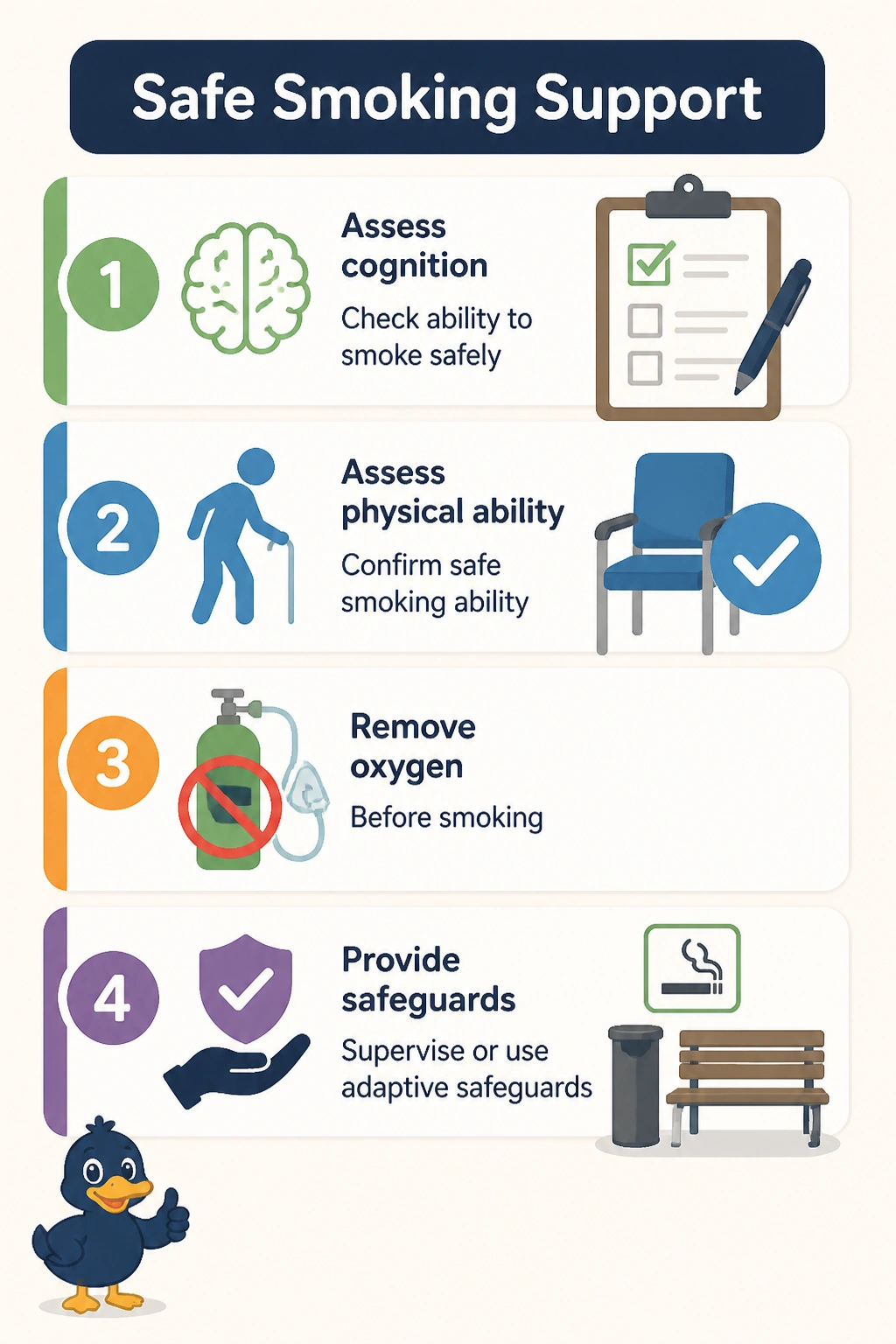
Under 42 CFR 483.25 accident-prevention standards and resident rights principles, the care team should Assess the resident's cognitive and physical ability to smoke safely, remove oxygen before smoking, and provide supervision or adaptive safeguards. An individualized smoking assessment evaluates judgment, dexterity, medication sedation effects, and the need for a fire-retardant smoking apron, lighter storage, or staff supervision in a designated outdoor area. Choosing to Confiscate the resident's cigarettes and lighter permanently upon admission without conducting any individual safety evaluation infringes on resident autonomy when safe, supervised accommodations may be feasible. Deciding to Allow the resident to smoke independently in the courtyard while wearing portable oxygen tubing as long as a fire extinguisher is nearby creates an extreme burn and explosion hazard because oxygen accelerates combustion. Opting to Permit the resident to smoke inside her private bedroom with the window open and a facility air purifier running violates Life Safety Code fire-prevention rules and exposes residents and staff to indoor smoke and fire risk. As a caveat, if a resident's cognitive decline makes safe smoking impossible even with supervision, the team must document the risk and update the care plan. Operationally, audit smoking-assessment documentation and inspect designated outdoor smoking areas daily for safe ashtrays and oxygen-free compliance.
Prefer to study offline? Printable PDF study book + test engine ($7.50, unofficial). These questions stay free here.