
An adult nephew asks the social worker to intercept and screen his cognitively intact aunt's incoming personal mail and block her phone calls from an old neighbor, citing family disagreements. How must the facility respond to this request?
Select an answer to reveal the explanation.
Short Explanation
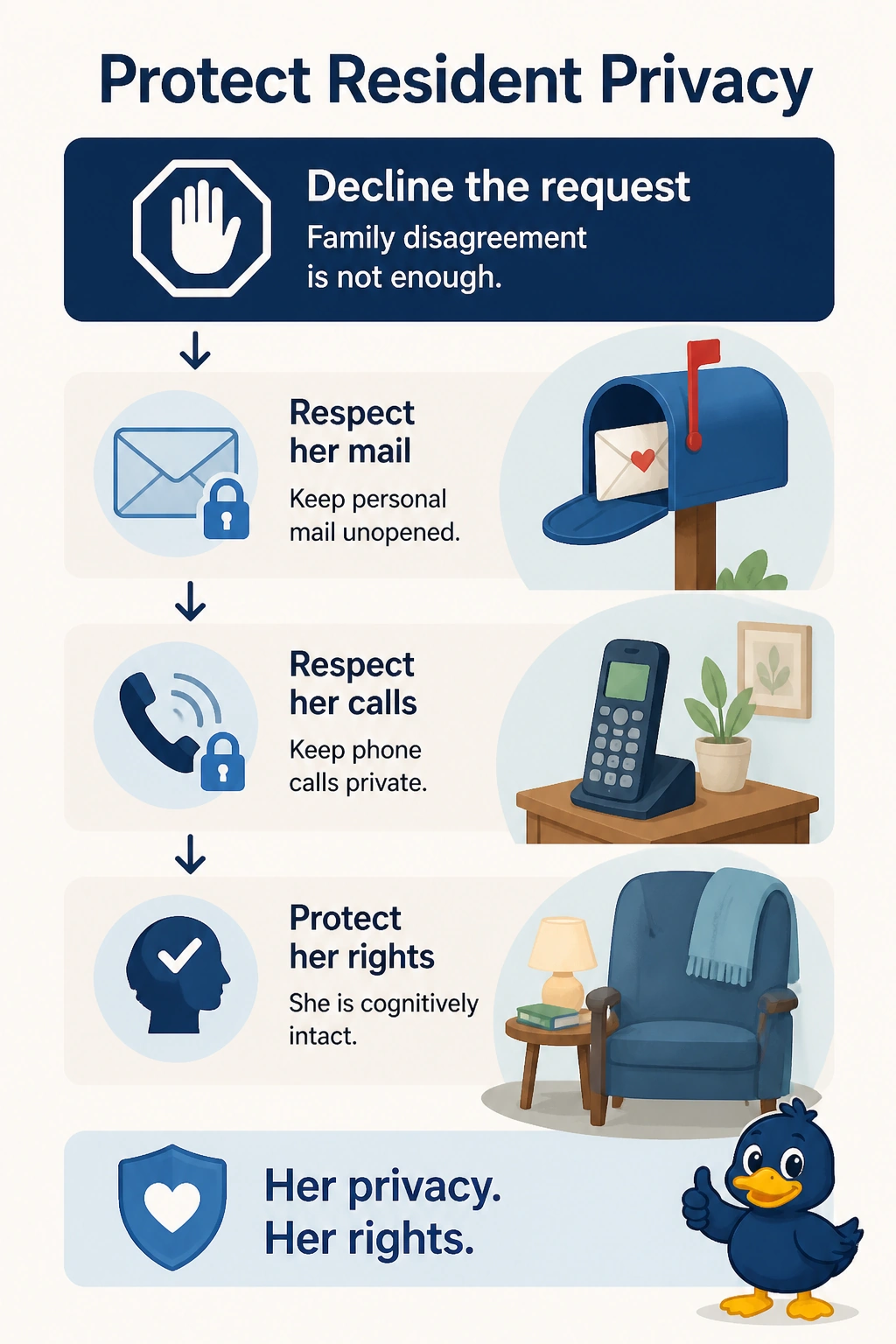
A family disagreement does not give you permission to censor a capable resident’s mail or phone calls. Autonomy means you protect her right to receive unopened mail and have private calls instead of following her nephew’s request.
Full Explanation
Federal resident rights under 42 CFR 483.10(g) and (h) protect a resident’s right to send and promptly receive unopened mail and to have reasonable, private access to telephone communications. Because the aunt is cognitively intact, the facility must decline the nephew’s request and protect her private communication. Holding her incoming mail at the nurses’ station until the nephew reviews it interferes with her privacy and access to mail. Disconnecting her bedside phone line whenever the neighbor’s number appears restricts her calls without her consent. Asking the housekeeping supervisor to monitor her phone conversations violates communication privacy and assigns monitoring to staff without an appropriate clinical role. The appropriate response is to decline the request and protect the resident’s right to unopened mail and private calls. An exam caveat is that a family member’s concern or preference does not replace the choice of a resident who can make her own decisions. As a practical check, train reception and social services staff to protect mail-delivery privacy and verify that residents have private phone access.
Prefer to study offline? Printable PDF study book + test engine ($7.50, unofficial). These questions stay free here.