
A resident recovering from a stroke has a speech-language pathologist order for nectar-thickened liquids and upright positioning during meals due to documented dysphagia. A visiting family member brings a cup of thin iced tea and asks the nursing assistant to help the resident drink it. What should staff do?
Select an answer to reveal the explanation.
Short Explanation
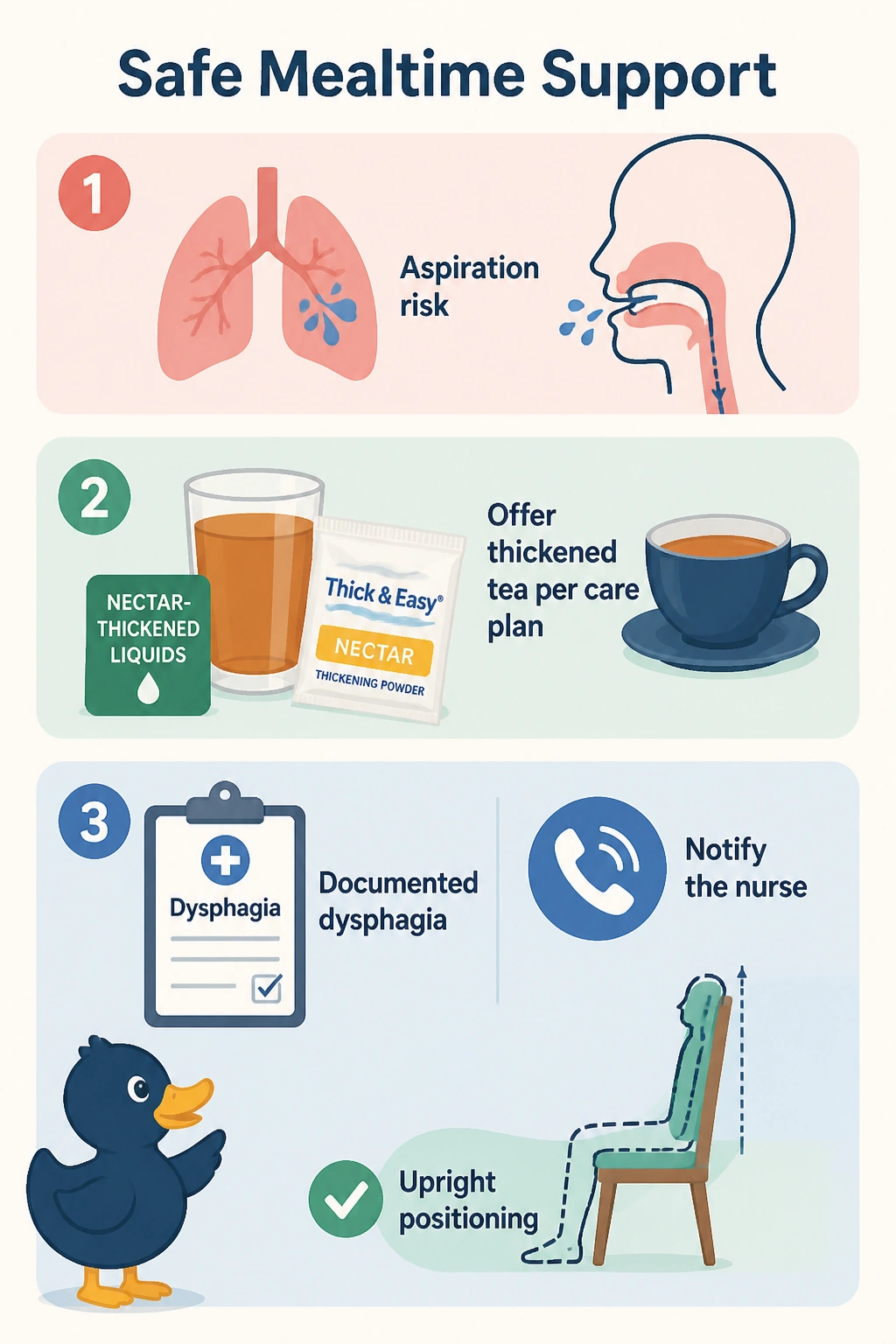
You can welcome the family’s help while protecting the resident from aspiration by explaining the risk, offering thickened tea, and notifying the nurse. The goal is to make the preferred drink safer, not to give thin iced tea or shut the family out without education.
Full Explanation
Safe nutritional care for dysphagia requires following prescribed liquid thickness and positioning while partnering respectfully with families. Explain the aspiration risk, offer thickened tea per the care plan, and notify the nurse so the resident can have a safer version of the preferred drink and the nurse can reinforce education or review preferences with the resident. Serving thin iced tea because family preferences override therapy recommendations exposes the resident to choking or aspiration without an informed medical discussion. Offering thin tea with a straw while the resident sits at forty-five degrees does not make it safe: a straw can deliver rapid boluses, and a semi-reclined position does not adequately protect the airway. Confiscating the beverage and restricting the family member creates unnecessary conflict instead of teaching a safe adaptation. Exam caveat: if a decisionally capable resident knowingly chooses to accept aspiration risk after physician and speech-language education, the interdisciplinary team must document an informed-choice care plan. Practical check: observe dining rooms and bedside trays daily to verify that thickener is available and matches the speech therapy diet cards.
Prefer to study offline? Printable PDF study book + test engine ($7.50, unofficial). These questions stay free here.