
A cognitively intact, short-stay rehabilitation resident asks to keep her own asthma rescue inhaler at her bedside so she can use it immediately when short of breath. How should the interdisciplinary team handle this request under federal regulations?
Select an answer to reveal the explanation.
Short Explanation
When a capable resident asks to keep her rescue inhaler at the bedside, you do not want to force her to surrender every ounce of independence at the front door. The trap is issuing a blanket refusal or skipping the clinical safety check just to get a signature on a waiver.
Full Explanation
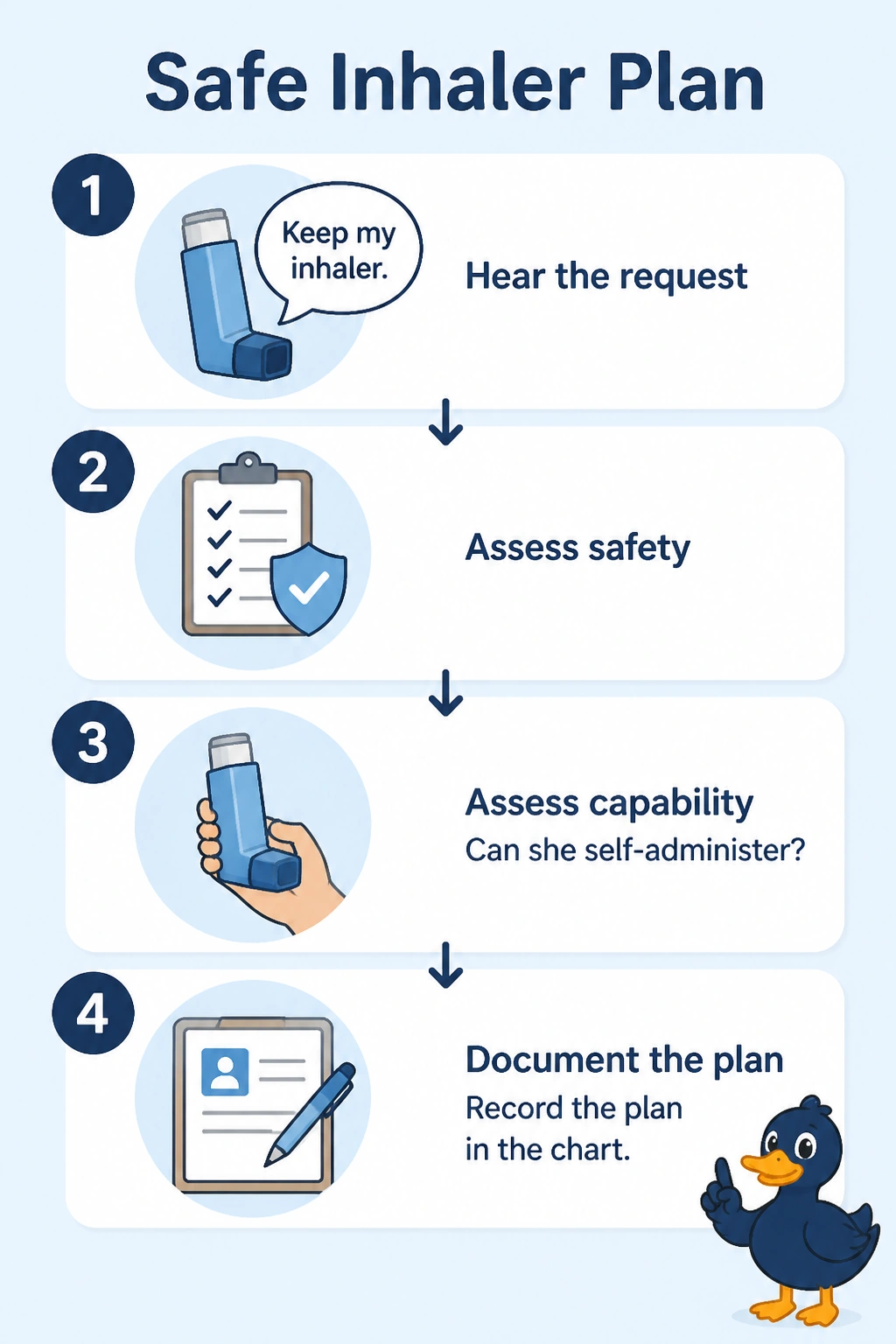
Under 42 CFR 483.10, a resident has the right to self-administer medications if the interdisciplinary team determines that this practice is clinically appropriate and safe. The team must "Assess the resident's safety and capability to self-administer, then document the plan in the chart" including safe bedside storage and how staff will monitor usage. Choosing to "Deny the request automatically because facility policy requires all medications to remain in locked carts" violates resident rights by substituting a rigid facility rule for an individualized clinical evaluation. Deciding to "Allow bedside storage immediately as long as the resident signs a personal liability waiver" skips the mandatory clinical safety assessment and improperly shifts regulatory responsibility onto the resident. Opting to "Keep the inhaler at the nursing station and instruct the resident to use the call light for every dose" delays urgent bronchodilator relief and ignores the resident's right to an evaluation. Caveat: even when self-administration is approved, the team must protect roommates or confused residents from accidental access to bedside medications. Operational check: audit active self-administration care plans monthly to verify documented IDT assessments, physician orders, and secure bedside storage.
Prefer to study offline? Printable PDF study book + test engine ($7.50, unofficial). These questions stay free here.