
A nursing facility plans to relocate a long-stay resident to a different wing to consolidate staffing during a unit renovation, even though the move is not an urgent clinical or safety necessity. What must the facility do before moving the resident?
Select an answer to reveal the explanation.
Short Explanation
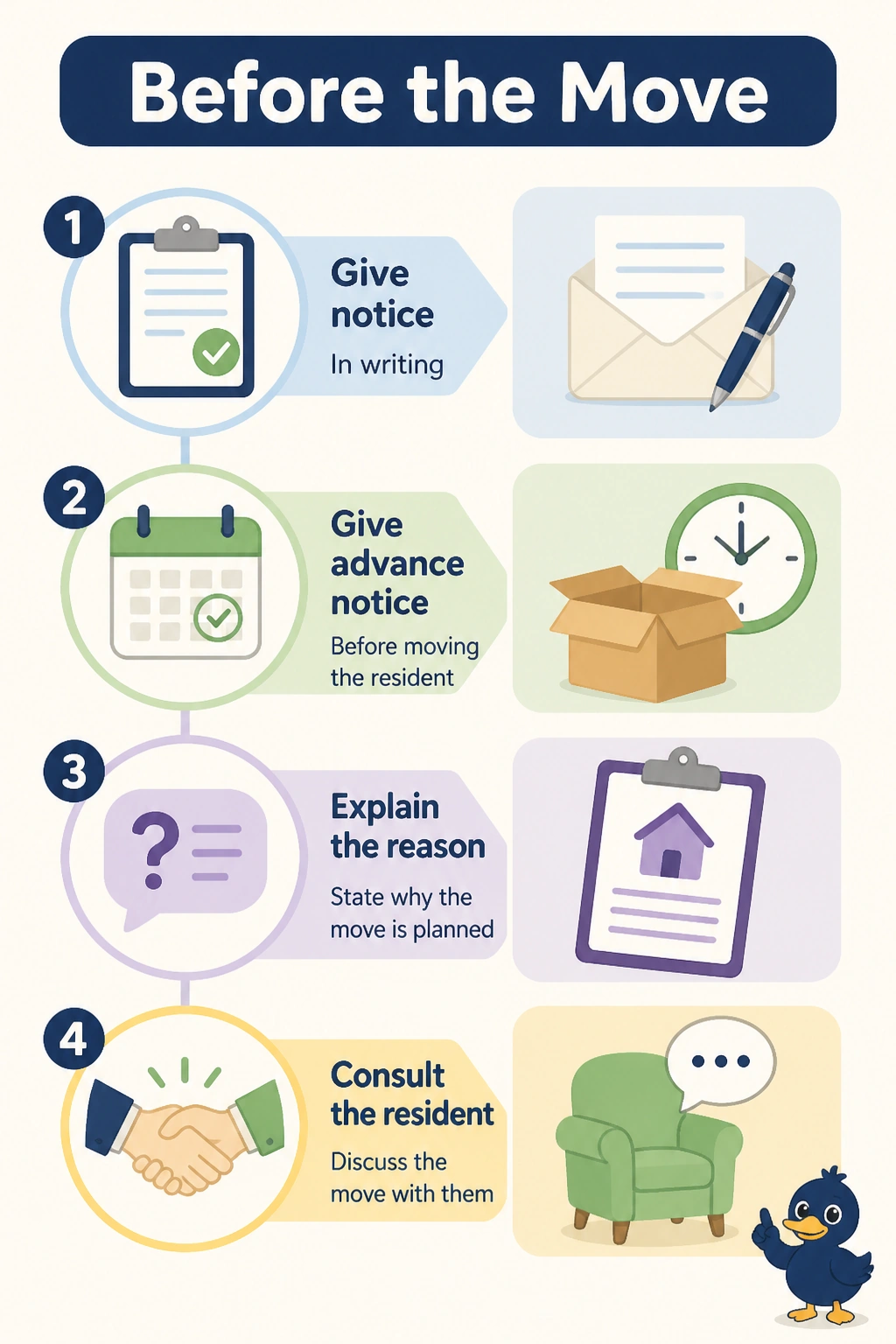
Moving your room is moving your home, so it should not be treated like rearranging furniture. A staffing or renovation move is not an emergency: advance written notice and consultation with you are required first.
Full Explanation
Under federal resident rights regulations in 42 CFR 483.10(e)(6), you have the right to receive notice before your room or roommate in the facility is changed. For a non-emergency move, the facility must give you advance written notice explaining the reason and consult with you. Even when the reason is operational, such as a unit renovation, transparent communication respects your autonomy and can help reduce relocation stress. Completing the room relocation during morning care and notifying your family afterward fails to provide you with prior notice or personal participation. Obtaining a signed physician transfer order authorizing the relocation for staffing efficiency is also not a substitute for your notice and consultation rights; a medical order does not justify a non-clinical move. Waiting until the next quarterly care conference to ask you about a future move delays discussion when the renovation schedule requires timely planning. The facility should instead provide prompt written notice and consult with you about the planned change. Exam caveat: an emergency move needed to protect your immediate health or safety may occur first, with notice and an explanation provided promptly afterward. Practical check: audit room-change logs to confirm that advance written notices and documented resident preferences precede every non-emergent move.
Prefer to study offline? Printable PDF study book + test engine ($7.50, unofficial). These questions stay free here.