
A newly admitted resident who worked as a commercial carpenter for forty years refuses to attend group bingo and sing-alongs, preferring to spend afternoons alone in his room looking depressed. How should the activities director and interdisciplinary team respond?
Select an answer to reveal the explanation.
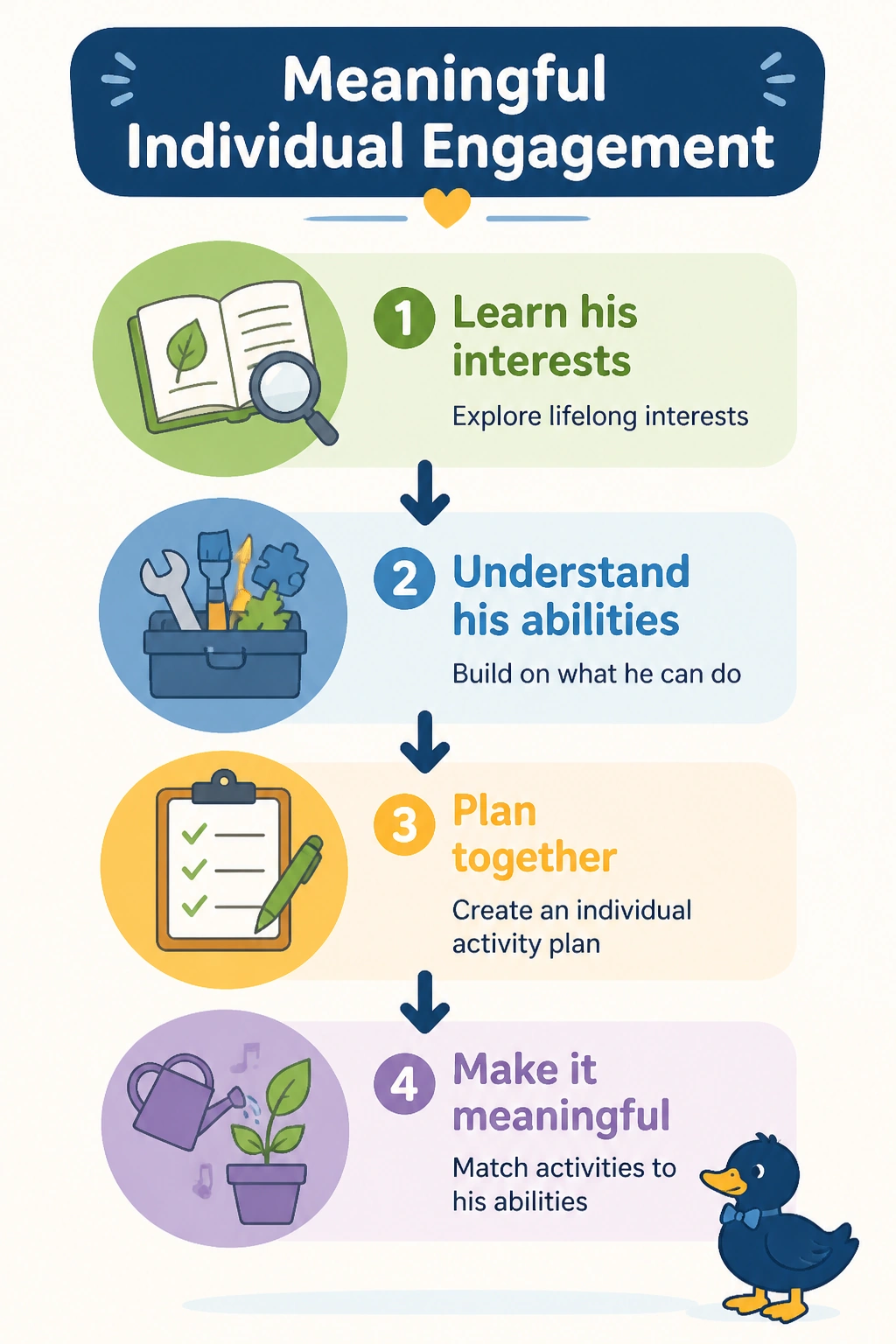
Short Explanation
Not everyone lights up for bingo, and forcing a lifelong carpenter into a sing-along is a fast way to deepen his withdrawal. Your trap is either walking away completely or pushing a generic calendar instead of building activities around who he actually is.
Full Explanation
Under 42 CFR 483.24, facilities must provide an ongoing program of activities designed to meet the interests and support the physical, mental, and psychosocial well-being of each resident. The team should "Assess his lifelong interests and design individualized, meaningful engagement aligned with his abilities" such as woodworking magazines, sanding safe small projects, or mentoring conversations about building trades. Choosing to "Respect his refusal and stop offering activity invitations to avoid bothering him" mistakes a dislike for group games for a lack of psychosocial need and leaves him isolated. Deciding to "Escort him to group bingo daily so he receives regular social stimulation on the unit" ignores resident choice and forces participation in activities with no personal meaning. Opting to "Request an antidepressant order immediately to improve his group participation" medicalizes a normal preference mismatch before attempting person-centered recreational engagement or a clinical mood evaluation. Caveat: individualized activities must be adapted continuously as a resident's cognition, vision, or dexterity changes over time. Operational check: review a sample of care plans monthly to confirm each resident's activity interventions reflect personal history rather than generic calendar events.
Prefer to study offline? Printable PDF study book + test engine ($7.50, unofficial). These questions stay free here.