
A resident with advanced dementia who is no longer able to verbally rate her discomfort grimaces, guards her left hip, and resists transfers during morning care. What is the most appropriate clinical nursing action to address this resident's pain?
Select an answer to reveal the explanation.
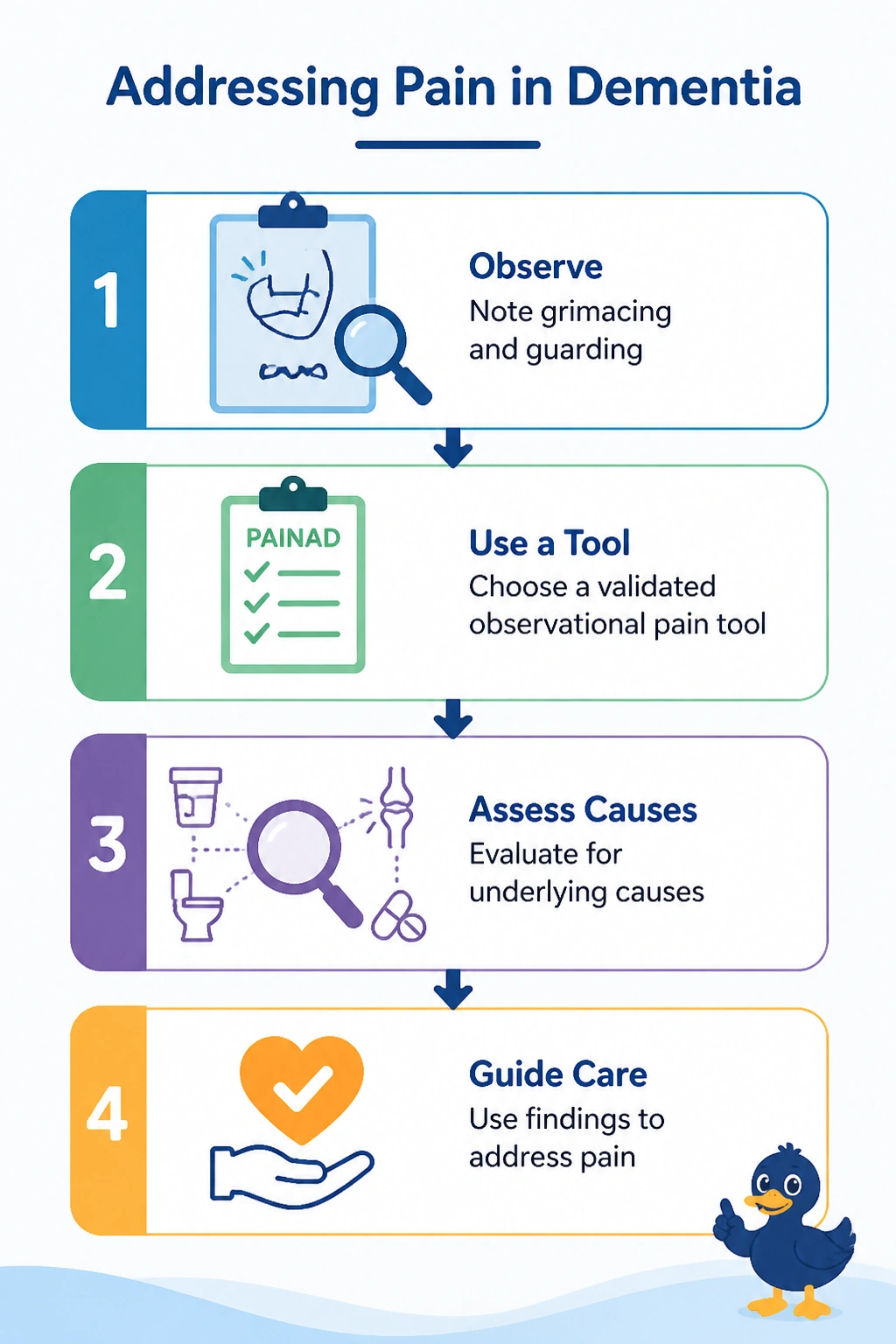
Short Explanation
When a resident with dementia cannot tell you where it hurts, her body language speaks volumes. Waiting for a numeric score or treating pain as a behavior problem leaves real suffering untreated.
Full Explanation
Under federal pain management standards in 42 CFR 483.25(k), when a resident cannot self-report, the nursing team must Use a validated observational pain tool and evaluate for underlying causes—such as an occult fracture, joint inflammation, or pressure injury—before selecting targeted interventions. Choosing to Wait until the resident can state a numeric pain score before notifying the prescriber guarantees under-treatment because advanced dementia impairs verbal numeric scaling. Deciding to Document the resistance as behavioral refusal and skip morning hygiene care misinterprets pain-driven guarding as willful refusal and neglects essential personal care. Choosing to Administer an as-needed antipsychotic medication to calm the resident prior to transfers risks serious adverse effects and inappropriate chemical restraint use without addressing physical pain. As a caveat, non-pharmacological comfort measures such as gentle repositioning and warm compresses should accompany any ordered analgesic plan, with timely reassessment of effectiveness. Operational check: audit nursing assessments for nonverbal residents exhibiting new agitation or transfer resistance to confirm that validated behavioral pain scores and physical evaluations are documented.
Prefer to study offline? Printable PDF study book + test engine ($7.50, unofficial). These questions stay free here.