
A nursing facility determines it can no longer meet a resident's complex behavioral needs safely and plans an involuntary transfer to another licensed facility. Which procedural safeguard must the facility complete before executing a non-emergency involuntary transfer?
Select an answer to reveal the explanation.
Short Explanation
Even when a transfer is clinically justified, you cannot shortcut a resident's federal due-process rights. The trap is relying on informal conversations or an emergency-room drop-off instead of delivering proper written notice with appeal instructions.
Full Explanation
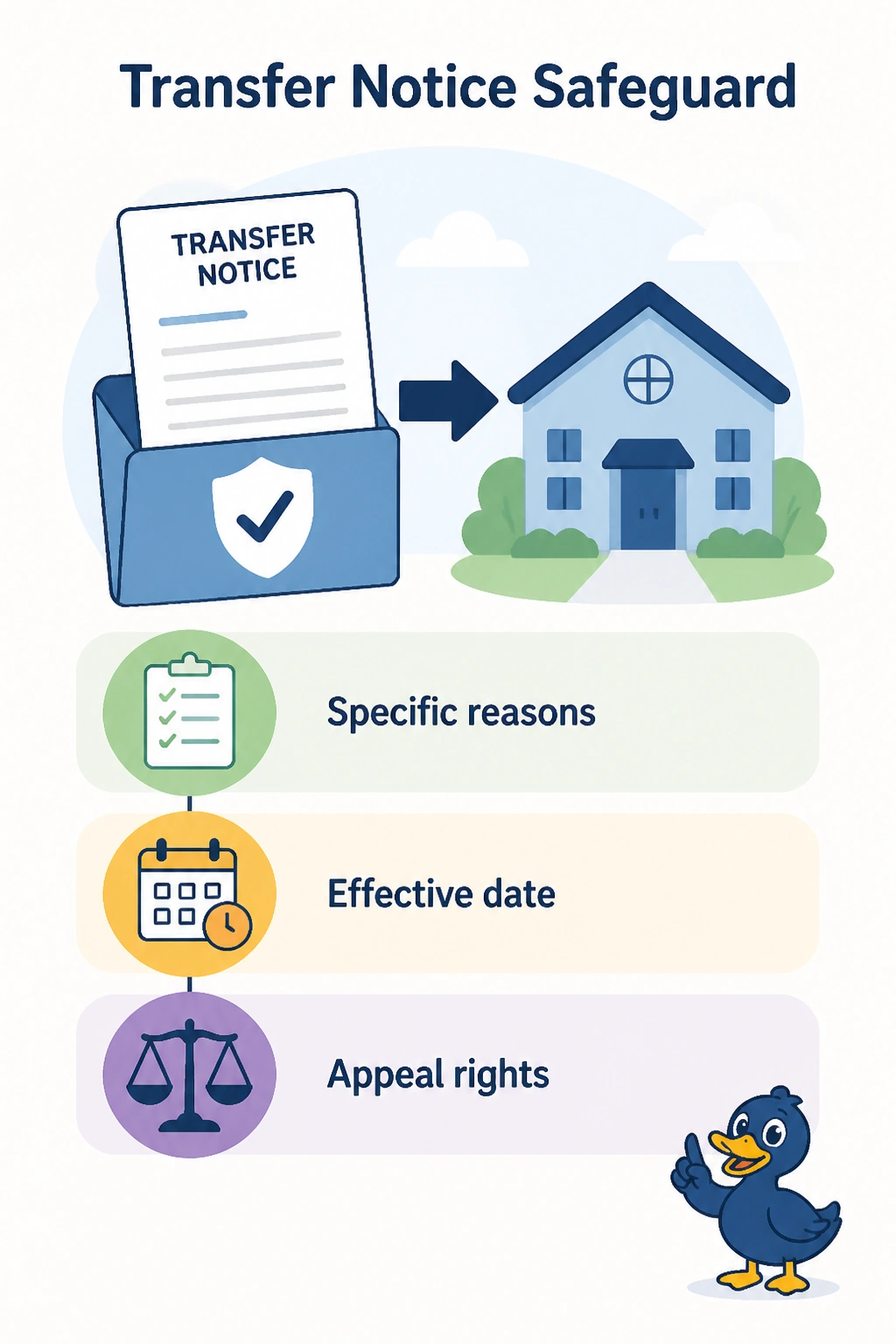
Under 42 CFR 483.15, a facility may only initiate an involuntary transfer or discharge for specific permissible reasons and must follow strict notice procedures. Leadership must Provide written notice with specific reasons, effective date, and appeal rights—along with the transfer location and ombudsman contact information—to the resident and representative in a language and manner they understand. Choosing to Obtain verbal approval from the resident's roommate and the unit charge nurse prior to discharge invents an irrelevant step that neither satisfies federal notice rules nor protects resident rights. Choosing to Send the resident to a local emergency department without notice so the hospital handles placement constitutes an impermissible transfer unless an acute medical emergency exists. Choosing to Issue a verbal thirty-day warning during a hallway conversation with the resident's family member fails because federal regulations explicitly require formal written notice. As a caveat, the facility must also document physician clinical rationale and provide sufficient discharge preparation for a safe, orderly transfer. Operational check: review every pending involuntary discharge packet with social services to confirm written notice, ombudsman notification, and appeal details are complete.
Prefer to study offline? Printable PDF study book + test engine ($7.50, unofficial). These questions stay free here.