
A newly admitted, bedbound resident with poor oral intake is assessed at high risk for skin breakdown and exhibits persistent, non-blanchable redness over the sacrum. Which interdisciplinary care plan best addresses the underlying causes of this early pressure injury?
Select an answer to reveal the explanation.
Short Explanation
Non-blanchable redness is your skin's early alarm bell telling you tissue is starving under pressure. The trap is reaching for a quick topical cover or rubdown instead of relieving the mechanical load and fixing the nutritional deficit.
Full Explanation
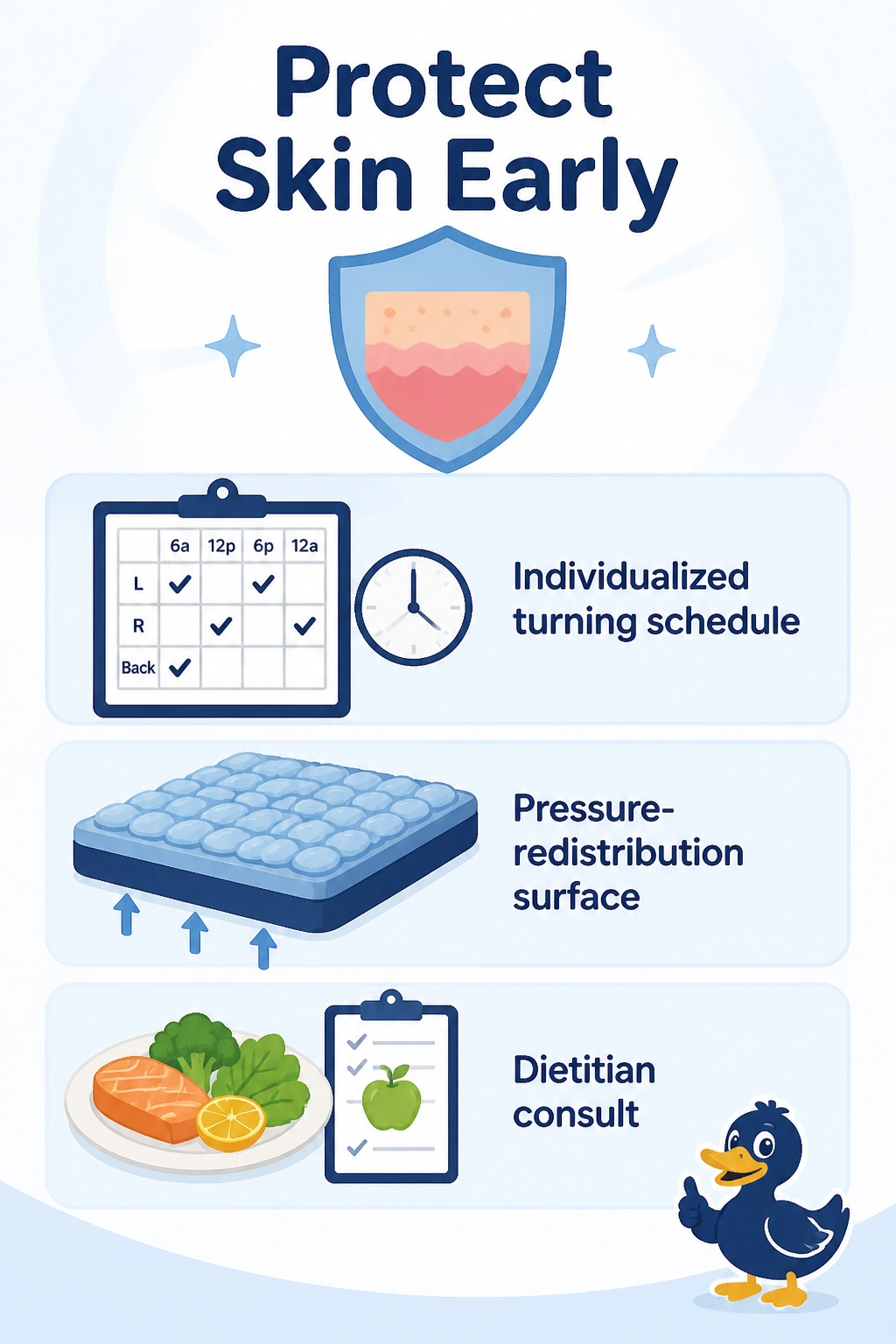
Under 42 CFR 483.25, facilities must ensure residents who enter without pressure injuries do not develop them unless clinically unavoidable, and must provide necessary treatment and services to promote healing. The team should Implement an individualized turning schedule, pressure-redistribution surface, and dietitian consult because offloading pressure, reducing shear, and correcting protein-calorie deficits target the root physiological drivers of tissue ischemia. Choosing to Apply a dry sterile gauze dressing over the sacrum and reassess skin weekly offers no pressure relief and leaves an evolving Stage 1 injury unmonitored for days. Choosing to Massage the reddened sacral area vigorously during each shift to restore blood flow can actually tear fragile microvasculature and worsen deep tissue damage. Choosing to Keep the head of the bed elevated continuously above forty-five degrees increases shear and sacral pressure as the resident slides downward. As a caveat, repositioning intervals and mattress selection must align with the resident's comfort and medical tolerances. Operational check: verify turning logs, mattress settings, and weight or intake trends during weekly clinical skin rounds.
Prefer to study offline? Printable PDF study book + test engine ($7.50, unofficial). These questions stay free here.