
A resident with moderate dementia repeatedly attempts to stand up unassisted from a wheelchair in the dining room, and a charge nurse asks the administrator to approve a lap belt to prevent falls. How should the facility respond first?
Select an answer to reveal the explanation.
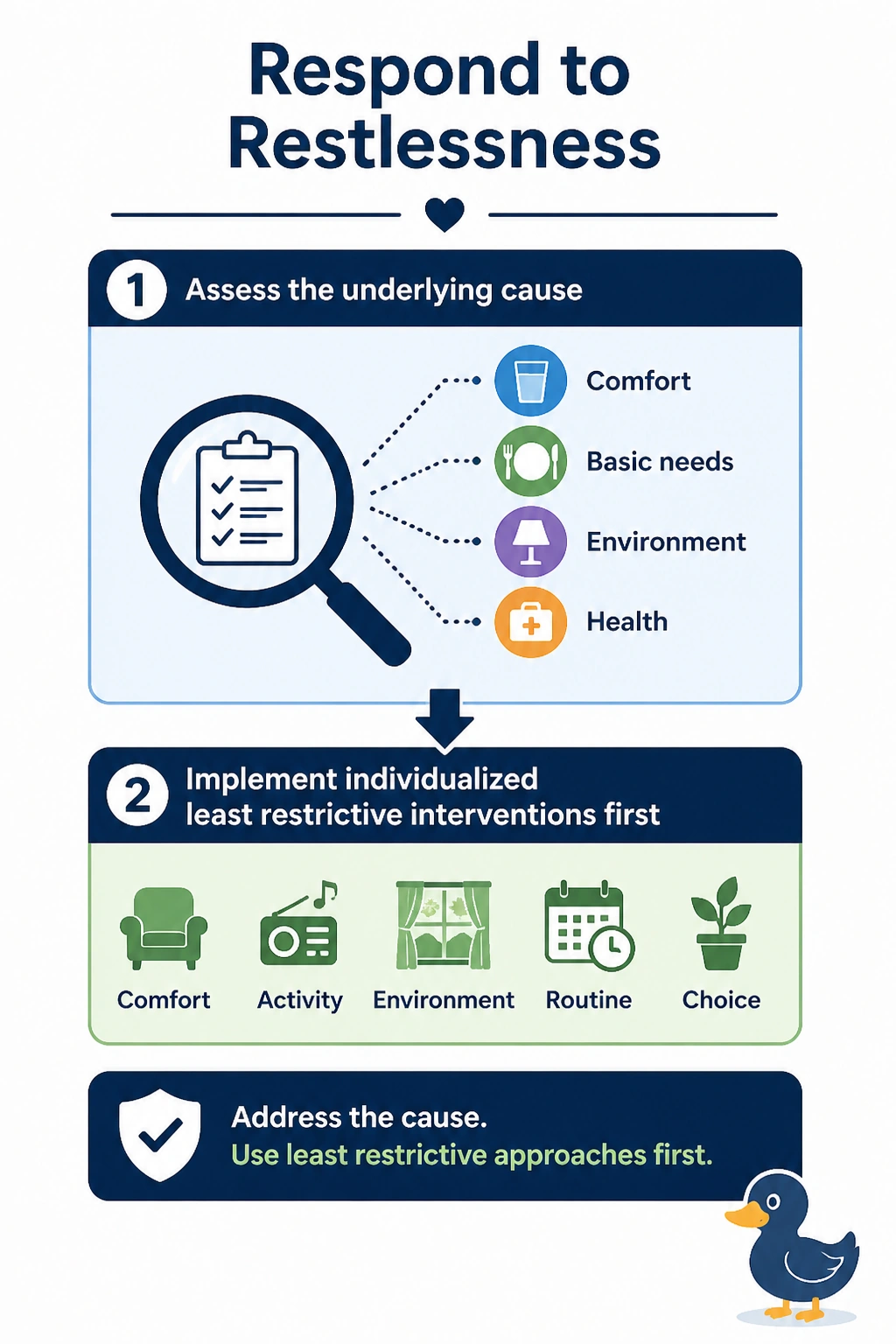
Short Explanation
When a resident keeps trying to stand, think of yourself as a detective looking for the unmet need before you ever reach for a belt. Federal rules require facilities to explore root causes and least restrictive alternatives rather than defaulting to restraints. The trap is assuming short-term mealtime use or a family waiver makes a restraint acceptable.
Full Explanation
Under 42 CFR 483.10 and 483.12, residents have the right to be free from physical restraints imposed for discipline or convenience, so the team must Assess the underlying cause of the restlessness and implement individualized least restrictive interventions first. Checking for pain, toileting needs, hunger, or seating discomfort often resolves standing attempts without restricting mobility. Choosing to Apply the lap belt during meals only because temporary use for safety does not constitute a restraint is incorrect because any device the resident cannot easily remove that restricts freedom of movement is a physical restraint regardless of duration. Choosing to Obtain a blanket standing order from the medical director so staff can apply belts whenever needed violates the requirement for individualized clinical assessment and specific medical justification. Choosing to Ask the resident's family to sign a liability waiver authorizing continuous wheelchair belt placement fails because neither family consent nor a waiver can override federal resident rights protections. One caveat is that even when a device is medically necessary to treat a specific symptom, it must be the least restrictive option and periodically re-evaluated for removal. As an operational check, review restraint prevalence in monthly QAPI meetings and audit care plans for documented trials of non-restraint alternatives.
Prefer to study offline? Printable PDF study book + test engine ($7.50, unofficial). These questions stay free here.