
A decisionally capable long-stay resident refuses a prescribed anticoagulant after the attending physician explains the elevated risk of stroke. How must the facility respond to uphold resident rights?
Select an answer to reveal the explanation.
Short Explanation
Every capable resident holds the steering wheel for their own medical care, even when you and the physician strongly disagree with their choice. The trap is letting clinical worry push you into overriding a competent refusal or threatening discharge when the law protects informed refusal.
Full Explanation
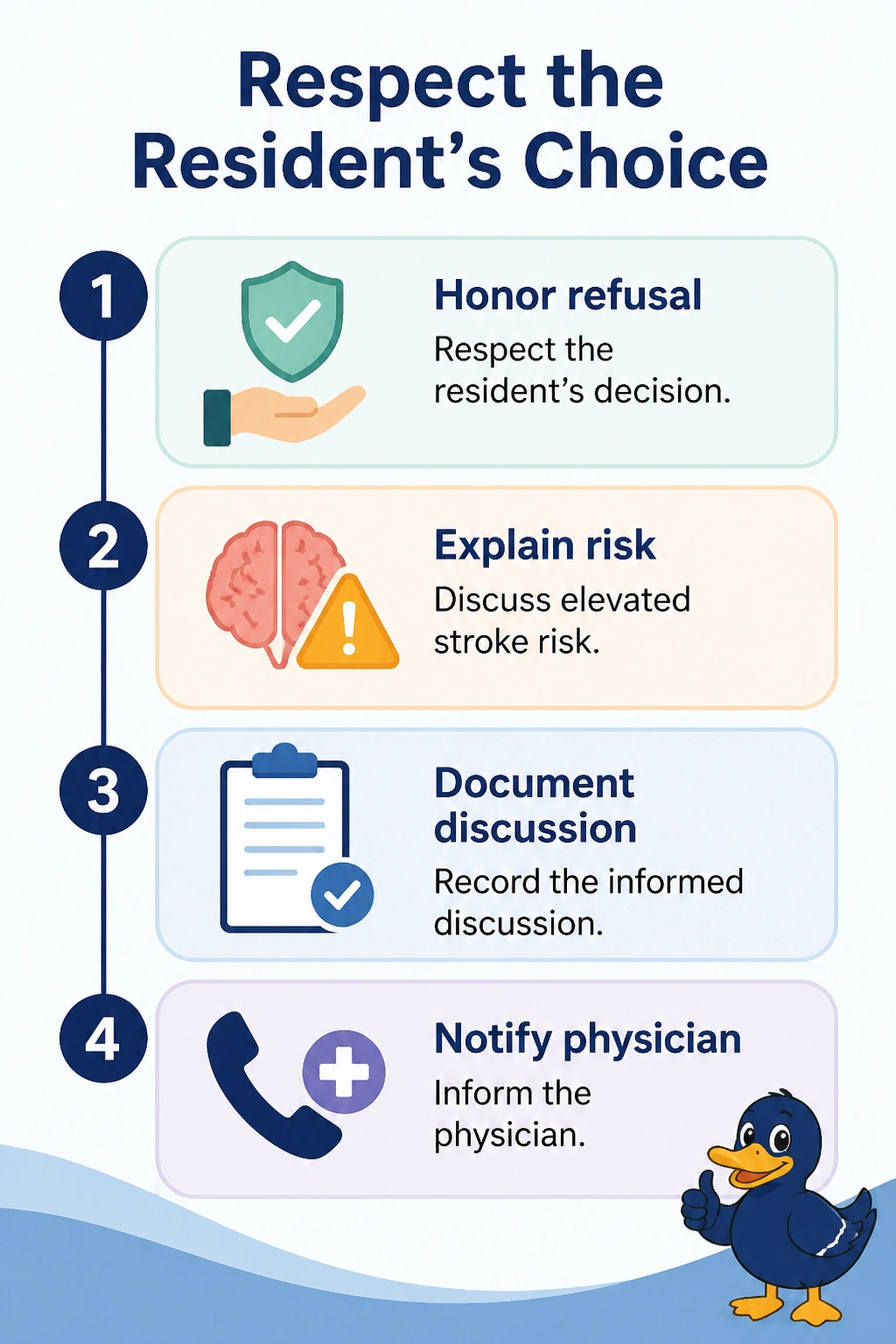
Under federal resident rights regulations, a decisionally capable resident may refuse any treatment, so the facility must Honor the refusal, document the informed discussion, and notify the physician to explore alternative plans. Respecting autonomy means ensuring the resident understands the clinical consequences of declining the blood thinner while updating the care plan to reflect their choice. Choosing to Administer the medication disguised in food because the resident has a high stroke risk constitutes covert administration, which violates informed consent and resident rights. Trying to Ask the resident's adult child to override the refusal and sign a consent form is invalid because family members cannot override a competent resident's healthcare decision. Attempting to Initiate involuntary discharge proceedings immediately for medical noncompliance misuses transfer-discharge rules, which allow discharge only under specific regulatory grounds after appropriate notice and care planning. As a clinical caveat, if a resident's decision-making capacity fluctuates, the team should verify capacity rather than assume incompetence. For an operational check, audit refusal documentation in the medical record to confirm risk education, physician notification, and care-plan updates.
Prefer to study offline? Printable PDF study book + test engine ($7.50, unofficial). These questions stay free here.