
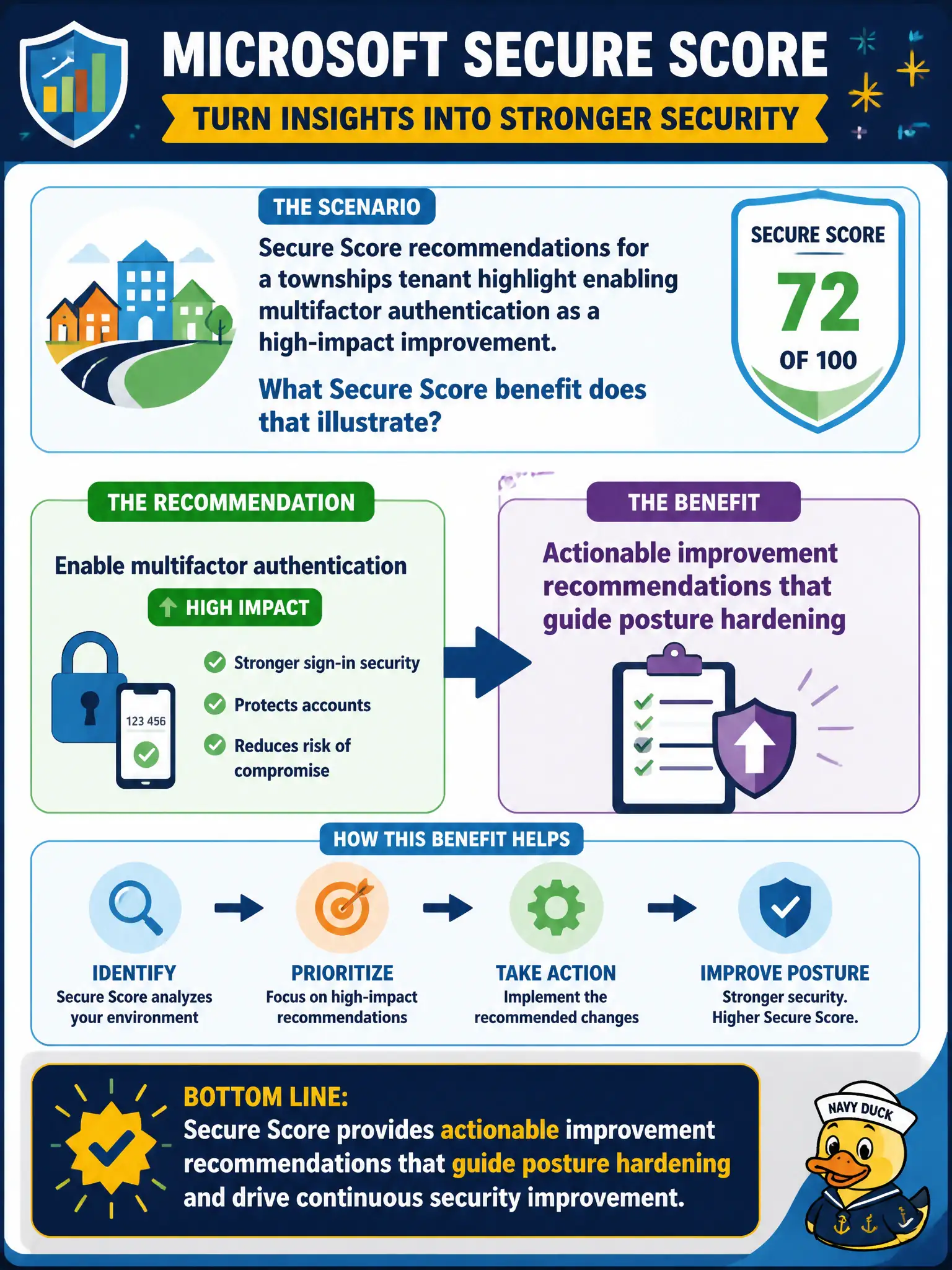
Secure Score recommendations for a townships tenant highlight enabling multifactor authentication as a high-impact improvement. What Secure Score benefit does that illustrate?
Select an answer to reveal the explanation.
Short Explanation
Secure Score does not just flash a number — it hands you a to-do list. Calling out MFA as a high-impact action is the classic 'here is how to harden next' benefit. It is guidance, not a magic Cloud PC swap or a free pass on audits.
Full Explanation
Actionable improvement recommendations that guide posture hardening are the Secure Score benefit illustrated when recommendations for a township tenant highlight enabling multifactor authentication as a high-impact improvement. Secure Score is valuable because it does not stop at a number; it points municipal teams toward concrete controls that raise resilience. That recommendation-driven model is what MS-900 associates with Secure Score benefits.
Secure Score does not automatically replace all endpoints with Windows 365. It is not a legal certification that replaces audits entirely. It does not imply administrators should delete Entra ID Conditional Access as unnecessary; recommendations typically reinforce identity hardening rather than remove it.
An exam caveat is that improvement points and impact ratings help prioritization, but cities must still test changes in pilots and respect operational constraints such as emergency services break-glass access. Operationally, accept the MFA improvement action from Secure Score, implement MFA for the in-scope township users, re-evaluate Secure Score after policy propagation, and record the residual recommendations for the next hardening sprint.