
A city council mandates that staff must approve a second factor when signing in to email. Which identity protection method does that mandate describe?
Select an answer to reveal the explanation.
Short Explanation
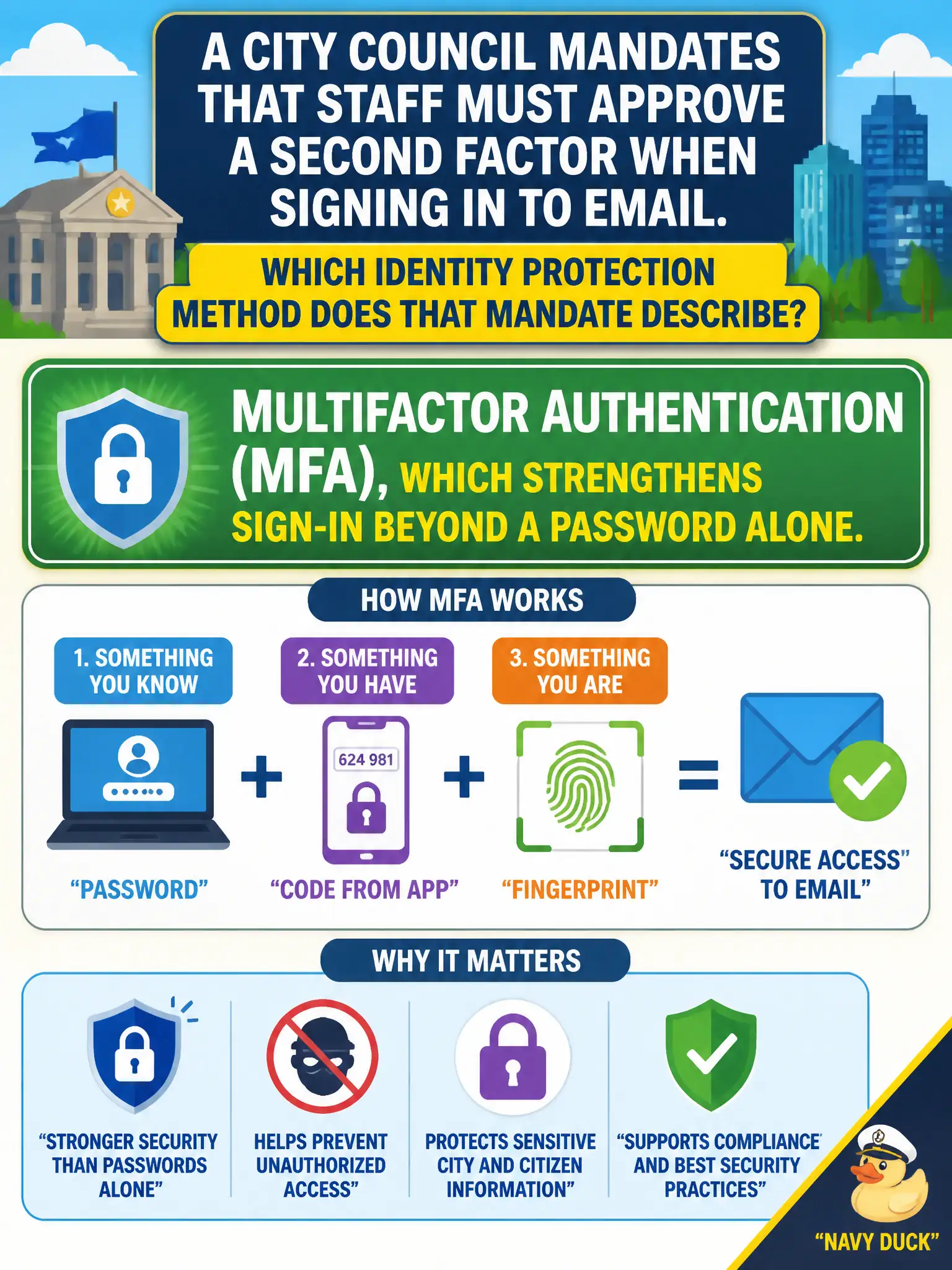
Password plus a second proof—phone approve, authenticator, or similar—is MFA. Council is saying email is too important for password-only. That extra step is the whole point of MFA.
Full Explanation
Multifactor authentication (MFA) strengthens sign-in beyond a password alone by requiring an additional verification factor, which is what a city council mandate for a second factor on email sign-in describes. MFA is foundational identity protection for Microsoft 365 and is especially important for municipal accounts that handle citizen data, payments, or privileged administration. Candidates should associate “password plus another factor” with MFA, not with document versioning or update rings.
SharePoint version history tracks document changes and does not provide sign-in factors. Deployment rings for Windows-as-a-Service stage operating system updates; they do not authenticate users to email. Direct billing license purchase is a commercial buying path, not an authentication control.
An exam caveat is that MFA is often paired with Conditional Access to require stronger authentication for sensitive apps or roles, but MFA itself is the second-factor control named in this mandate. Operationally, enable MFA for municipal email users, confirm staff can complete registration of an authenticator method, and spot-check that an Outlook or Outlook on the web sign-in prompts for the second factor after the council policy effective date.