
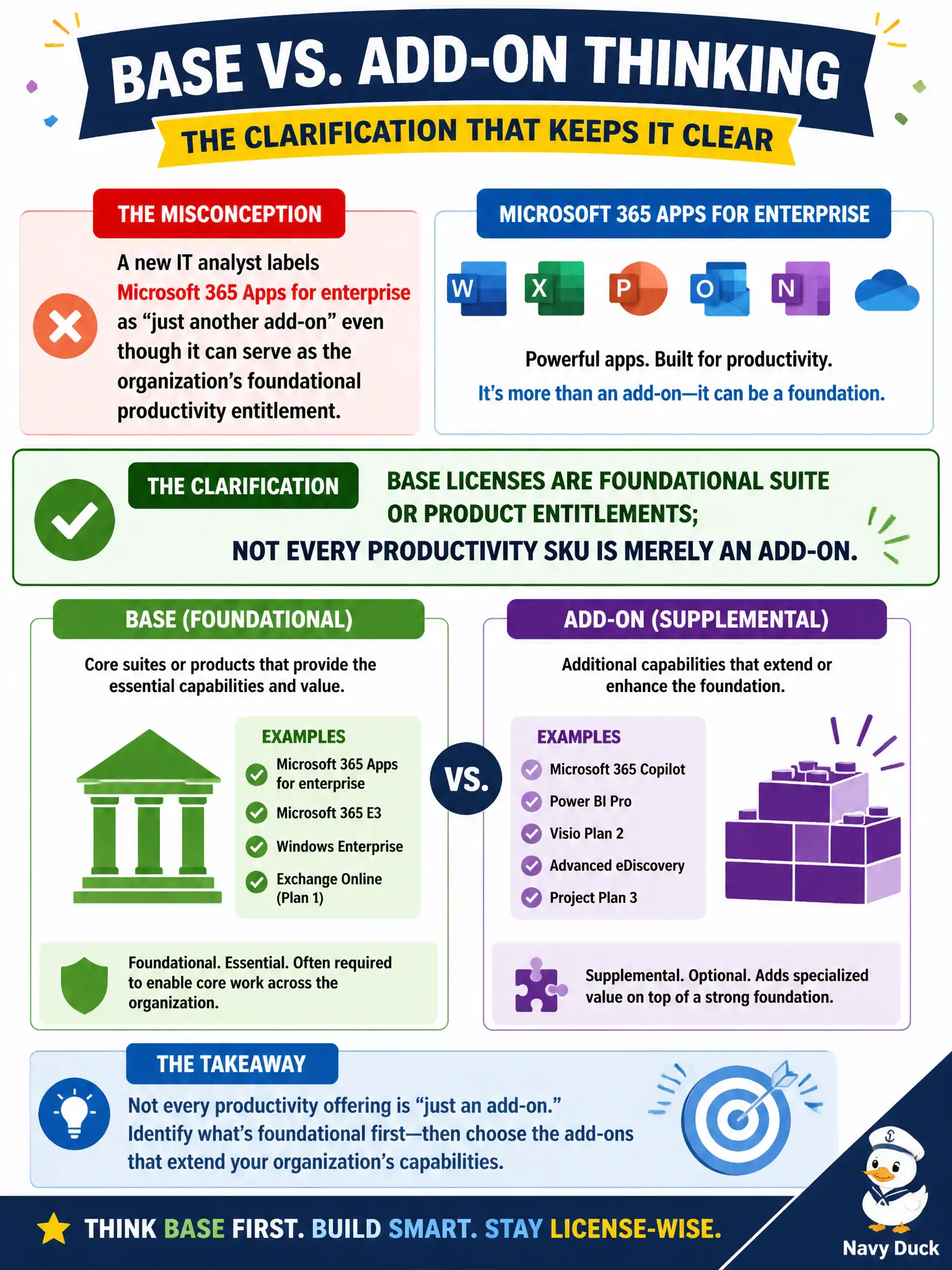
A new IT analyst labels Microsoft 365 Apps for enterprise as 'just another add-on' even though it can serve as the organization's foundational productivity entitlement. What clarification keeps base versus add-on thinking clear?
Select an answer to reveal the explanation.
Short Explanation
Do not call the foundation an optional porch. Some productivity licenses are the base itself—the main entitlement people stand on—while true add-ons extend that base.
Full Explanation
Base licenses are foundational suite or product entitlements; not every productivity SKU is merely an add-on. Microsoft 365 Apps for enterprise can serve as a foundational productivity entitlement, so labeling it 'just another add-on' blurs the base-versus-add-on teaching model MS-900 expects.
Not every Microsoft product name that includes Apps is only a telephony add-on. Base licenses are not limited to Azure Virtual Desktop and excluded from productivity apps. Add-ons are not the only licenses that can ever include Word or Excel.
Exam caveat: packaging changes over time; focus on the conceptual difference—foundation versus extension—when classifying a SKU in a scenario. Operational check: list the city’s base SKUs versus add-on SKUs in a simple table for onboarding analysts and require that table before approving new purchases. In municipal Microsoft 365 fundamentals scenarios, map the business need to the named capability, reject distractors from a different pillar, and verify the control or commercial setting in the admin or billing experience before reporting risk closed to leadership. In municipal Microsoft 365 fundamentals scenarios, map the business need to the named capability, reject distractors from a different pillar, and verify the control or commercial setting in the admin or billing experience before reporting risk closed to leadership.