
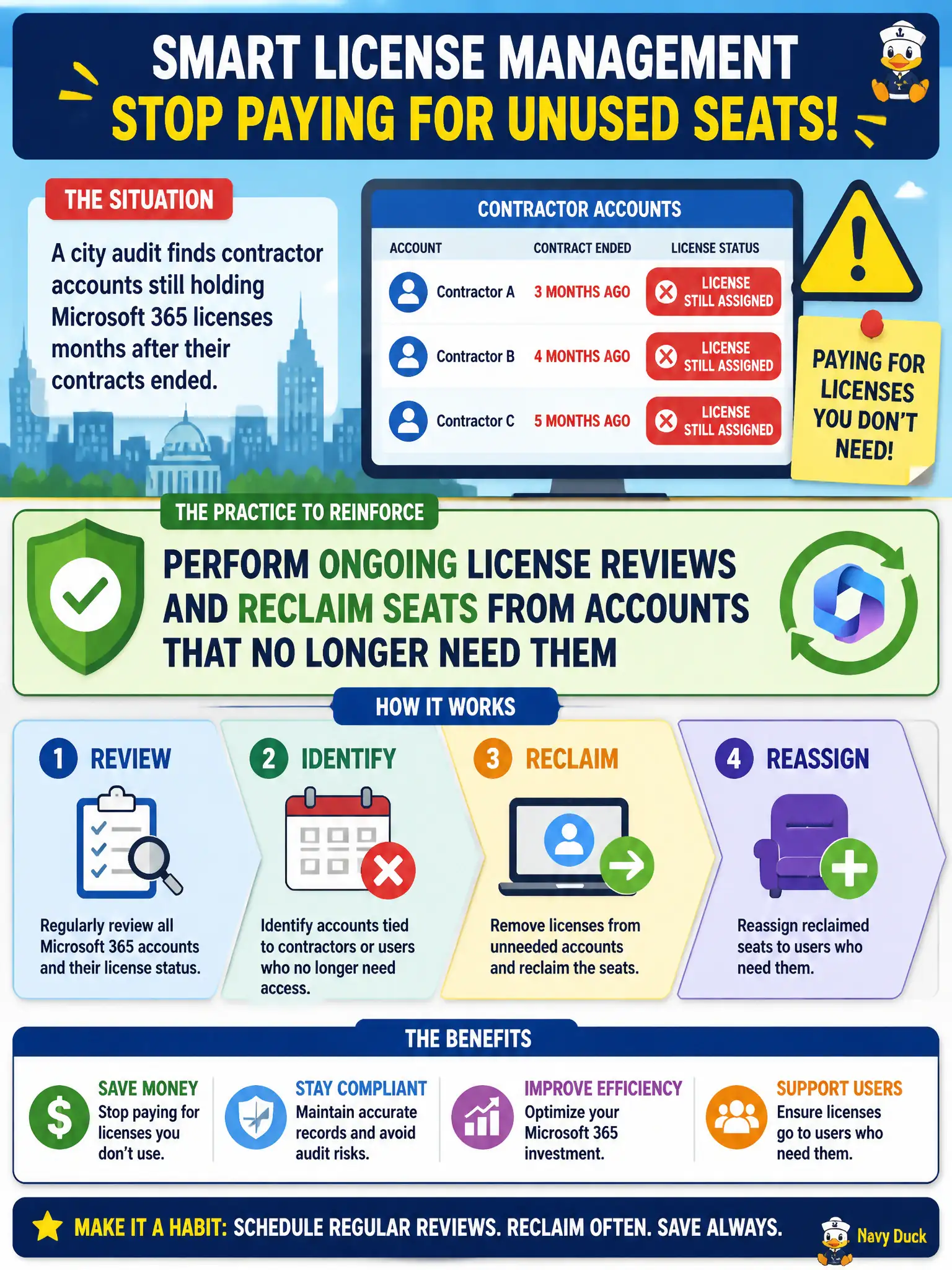
A city audit finds contractor accounts still holding Microsoft 365 licenses months after their contracts ended. What license-management practice should finance and IT reinforce?
Select an answer to reveal the explanation.
Short Explanation
Dead accounts with live licenses are money left on the sidewalk. Regular reviews—and reclaiming seats—keep the municipal wallet from paying for people who already walked away.
Full Explanation
Ongoing license reviews that reclaim seats from accounts that no longer need them keep municipal Microsoft 365 costs aligned with real usage. Seasonal staff, departures, and role changes should trigger unassignment rather than eternal paid entitlements on dormant accounts.
Seats do not expire automatically after 24 hours of inactivity as a reason to never unassign. Deleting Service health history does not stop unused licenses from appearing on invoices. Moving contractor identities into Azure Policy does not free Microsoft 365 seats; Azure Policy is not license reclamation.
Exam caveat: some soft-deleted or archived scenarios still need careful handling for mailbox data and compliance. Operational check: run a monthly license utilization report, list users with licenses blocked from sign-in for 30+ days, and reclaim after HR confirmation. In municipal Microsoft 365 fundamentals scenarios, map the business need to the named capability, reject distractors from a different pillar, and verify the control or commercial setting in the admin or billing experience before reporting risk closed to leadership. In municipal Microsoft 365 fundamentals scenarios, map the business need to the named capability, reject distractors from a different pillar, and verify the control or commercial setting in the admin or billing experience before reporting risk closed to leadership.