
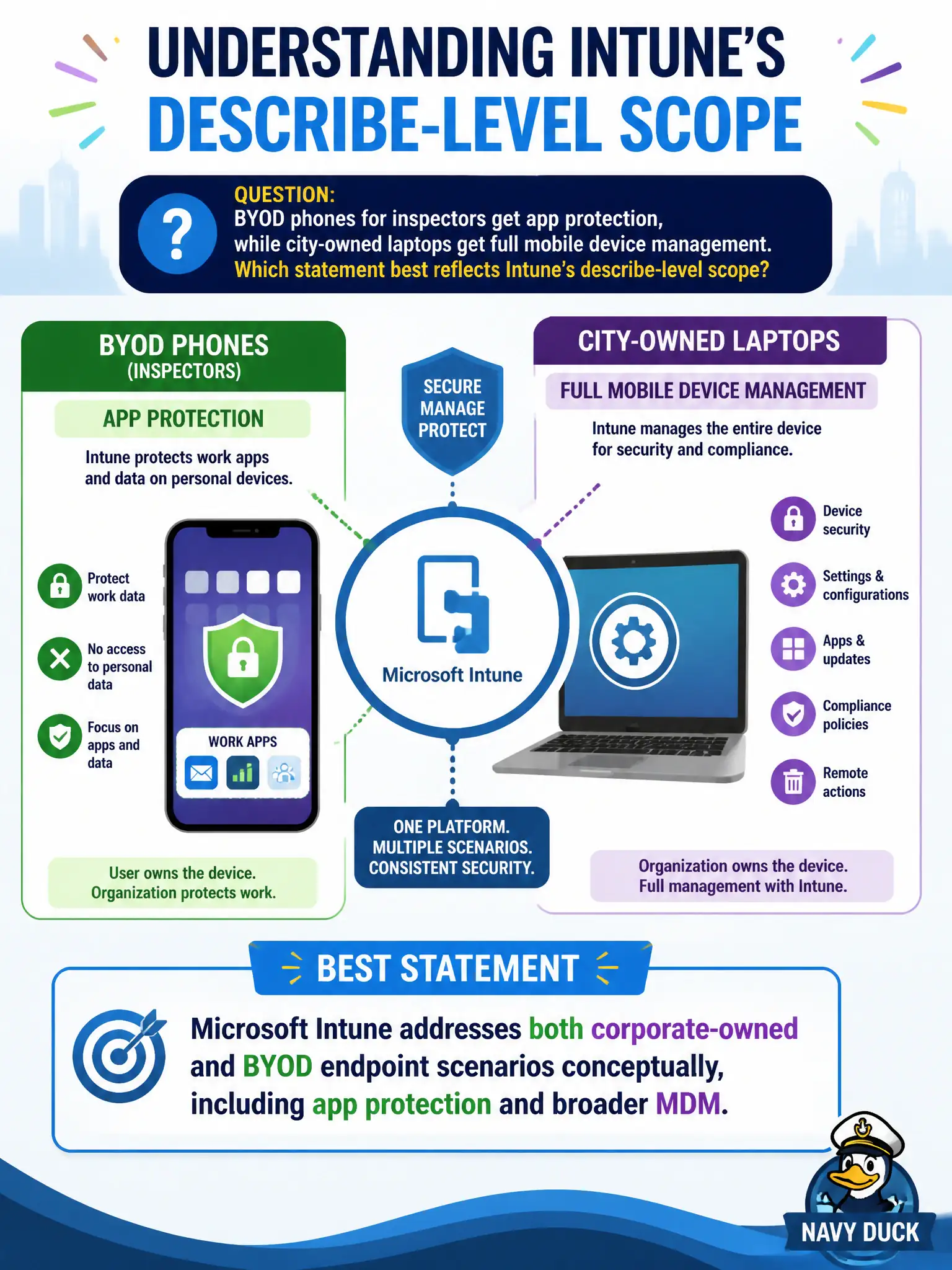
BYOD phones for inspectors get app protection, while city-owned laptops get full mobile device management. Which statement best reflects Intune’s describe-level scope?
Select an answer to reveal the explanation.
Short Explanation
Intune covers the ‘protect the app on a personal phone’ story and the ‘manage the city laptop’ story. Same family, different depth of control—not Whiteboard-only and not ConfigMgr-only.
Full Explanation
BYOD phones for inspectors getting app protection while city-owned laptops get full mobile device management best reflects that Microsoft Intune addresses both corporate-owned and BYOD endpoint scenarios conceptually, including app protection and broader MDM. Same management family, different control intensity: protect work apps and corporate data on personal phones; manage city laptops more completely with device compliance and configuration. That dual-scenario scope is a core Intune describe-level teaching point.
Claiming Intune can manage only personally owned phones and never organization-owned Windows laptops fails half the story. Claiming Intune applies solely to on-premises Configuration Manager servers with no cloud endpoint stories fails the cloud management narrative. Claiming Intune is limited to Microsoft Whiteboard devices and cannot protect Outlook mobile data is absurd and unrelated.
Exam caveat: Intune spans BYOD app protection and corporate MDM. Coexistence with ConfigMgr is possible via co-management, but Intune is not “ConfigMgr servers only,” and Whiteboard is not its boundary.
Operational check: deploy app protection for inspector BYOD Outlook/Teams, enroll city laptops for MDM compliance, publish a clear BYOD privacy notice, test selective wipe, and educate staff that Whiteboard does not define Intune’s scope.