
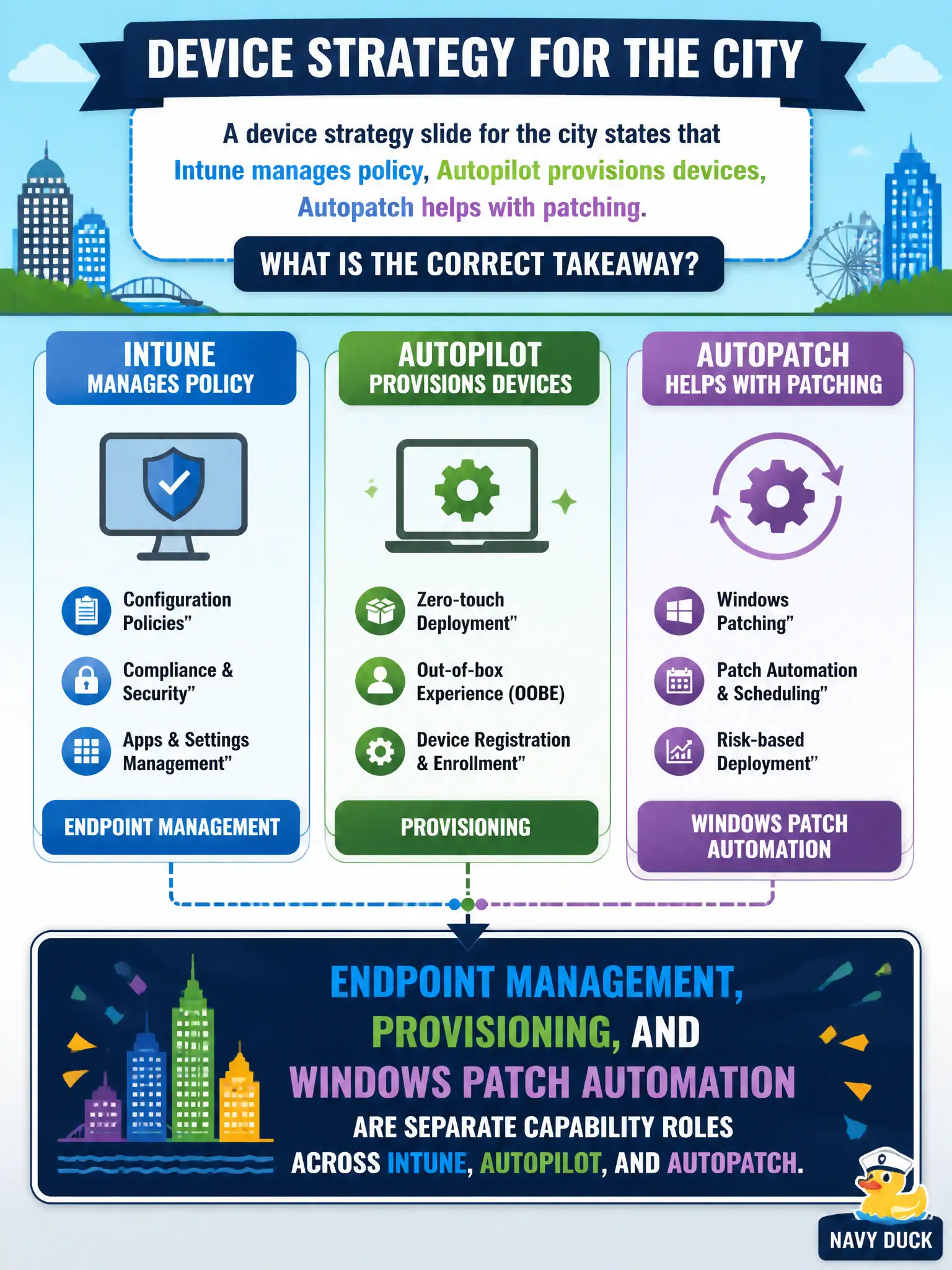
A device strategy slide for the city states that Intune manages policy, Autopilot provisions devices, and Autopatch helps with patching. What is the correct takeaway?
Select an answer to reveal the explanation.
Short Explanation
Three nameplates, three jobs: Intune steers policy, Autopilot births the device into the tenant, Autopatch helps with Windows update grind. Don’t mash them into one blob.
Full Explanation
A device strategy slide stating that Intune manages policy, Autopilot provisions devices, and Autopatch helps with patching should leave the takeaway that endpoint management, provisioning, and Windows patch automation are separate capability roles across Intune, Autopilot, and Autopatch. Three nameplates, three jobs—do not collapse them into one admin-center synonym or assume a single service owns all three outcomes. Clear role separation prevents wrong tickets and wrong budget owners in municipal IT.
Claiming all three names are interchangeable labels for the Microsoft 365 Admin center home page fails because the admin center is a portal, not a synonym for those three endpoint capabilities. Claiming Autopatch provisions hardware, Autopilot writes Intune policies, and Intune only patches Office scrambles the roles completely. Claiming only Autopilot performs management, provisioning, and patch automation as a single service over-consolidates falsely.
Exam caveat: Intune ≈ endpoint management/policy; Autopilot ≈ provision/enroll; Autopatch ≈ Windows update automation assistance. Keep the triangle straight under exam pressure.
Operational check: rewrite the strategy slide with one sentence per role, train new admins on the distinctions, align ownership (endpoint policy vs provisioning vs patch), and quiz help-desk leads until the scramble options feel obviously wrong.