
A city council briefing explains Windows feature-update rings as ‘pilot, then expand.’ What concept is being communicated?
Select an answer to reveal the explanation.
Short Explanation
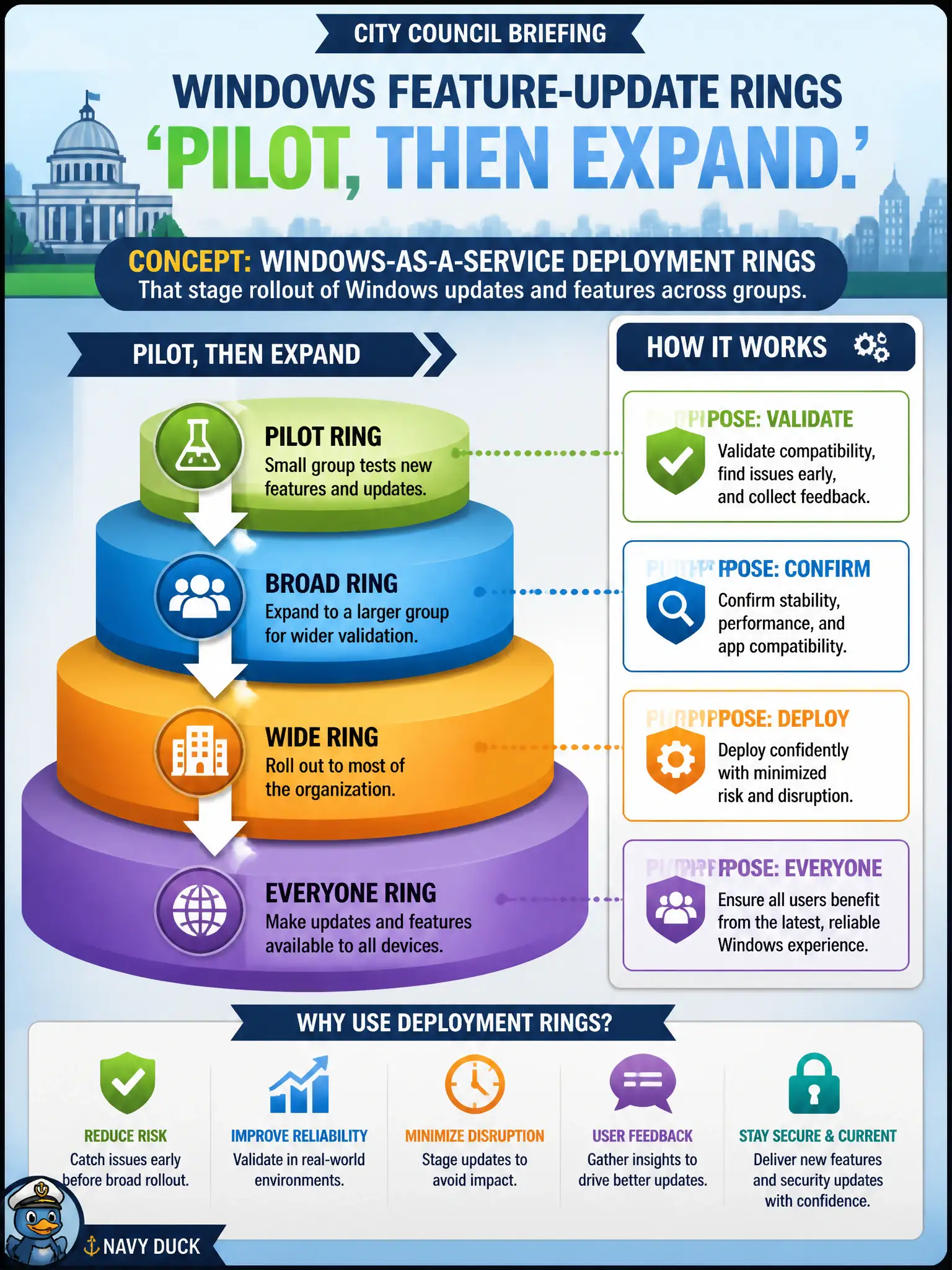
‘Pilot then expand’ is rings in council-speak: try a small group, then widen the circle. It’s staged WaaS rollout—not Copilot grounding or a big-bang every-PC flip.
Full Explanation
A city council briefing that explains Windows feature-update rings as “pilot, then expand” is communicating Windows-as-a-Service deployment rings that stage rollout of Windows updates and features across groups. Pilot cohorts validate changes; expansion follows only after confidence grows. That staged model is how municipalities limit blast radius during feature updates and avoid citywide surprise breakage on the same morning.
Microsoft 365 Copilot grounding only in public web content fails as an explanation of Windows update staging—Copilot grounding is an AI content topic, not WaaS rings. Immediate simultaneous upgrade of every municipal PC with no cohort sequencing is the opposite of rings. Replacement of Windows quality updates with Microsoft Viva Engage community posts fails because social posts are not OS servicing.
Exam caveat: “pilot then expand” = deployment rings / staged WaaS rollout. Do not drag Copilot grounding or Viva Engage into Windows update sequencing answers.
Operational check: define pilot and expansion cohorts explicitly for council-facing IT, report pilot health before widening, pause on negative signals from Endpoint Analytics or help-desk volume, and keep rings documentation free of Copilot/Viva false equivalents.