
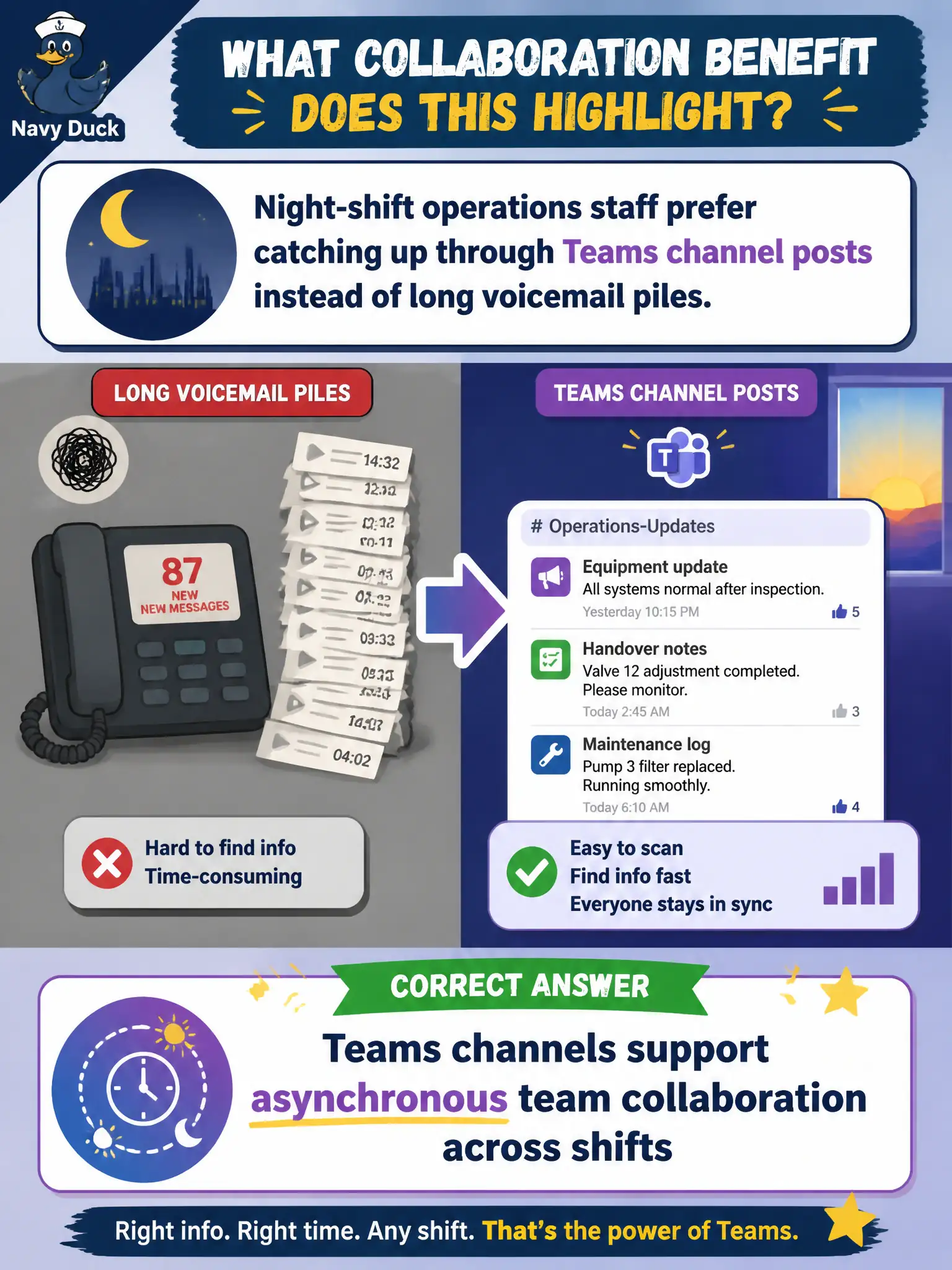
Night-shift operations staff prefer catching up through Teams channel posts instead of long voicemail piles. Which collaboration benefit does that highlight?
Select an answer to reveal the explanation.
Short Explanation
Night shift reads the channel wall when they clock in—classic async teamwork. Posts stick around; nobody has to be online at the same second, and voicemail is not the only option.
Full Explanation
Night-shift operations staff who prefer catching up through Teams channel posts instead of long voicemail piles highlight that Teams channels support asynchronous team collaboration across shifts. Posts, files, and updates remain visible for the next crew; decisions persist without requiring every member to be online at once. For 24/7 municipal operations, that asynchronous hallway is often more reliable than sequential voicemail for routine handoffs.
The claim that Teams channels only work during a live meeting and delete posts afterward fails because channels are persistent collaboration spaces, not ephemeral meeting chat alone. Claiming voicemail is the only supported async method inside Microsoft 365 fails because channel posts (and related collaboration features) explicitly support async teamwork. Claiming channel posts require every member online simultaneously to remain visible contradicts asynchronous collaboration.
Exam caveat: async channels complement urgent voice calls; they do not always replace them for life-safety escalation. The exam point is persistence across shifts versus meeting-only or voicemail-only myths.
Operational check: standardize shift-handoff posts in the ops channel, use clear subjects or tags for severity, pin SOPs in tabs, discourage burying critical handoffs only in voicemail, and periodically audit whether night and day shifts share one durable thread with readable history.