
A municipal CIO asks which model best describes Microsoft 365 Apps for Enterprise used over the internet by many cities. What is the best framing?
Select an answer to reveal the explanation.
Short Explanation
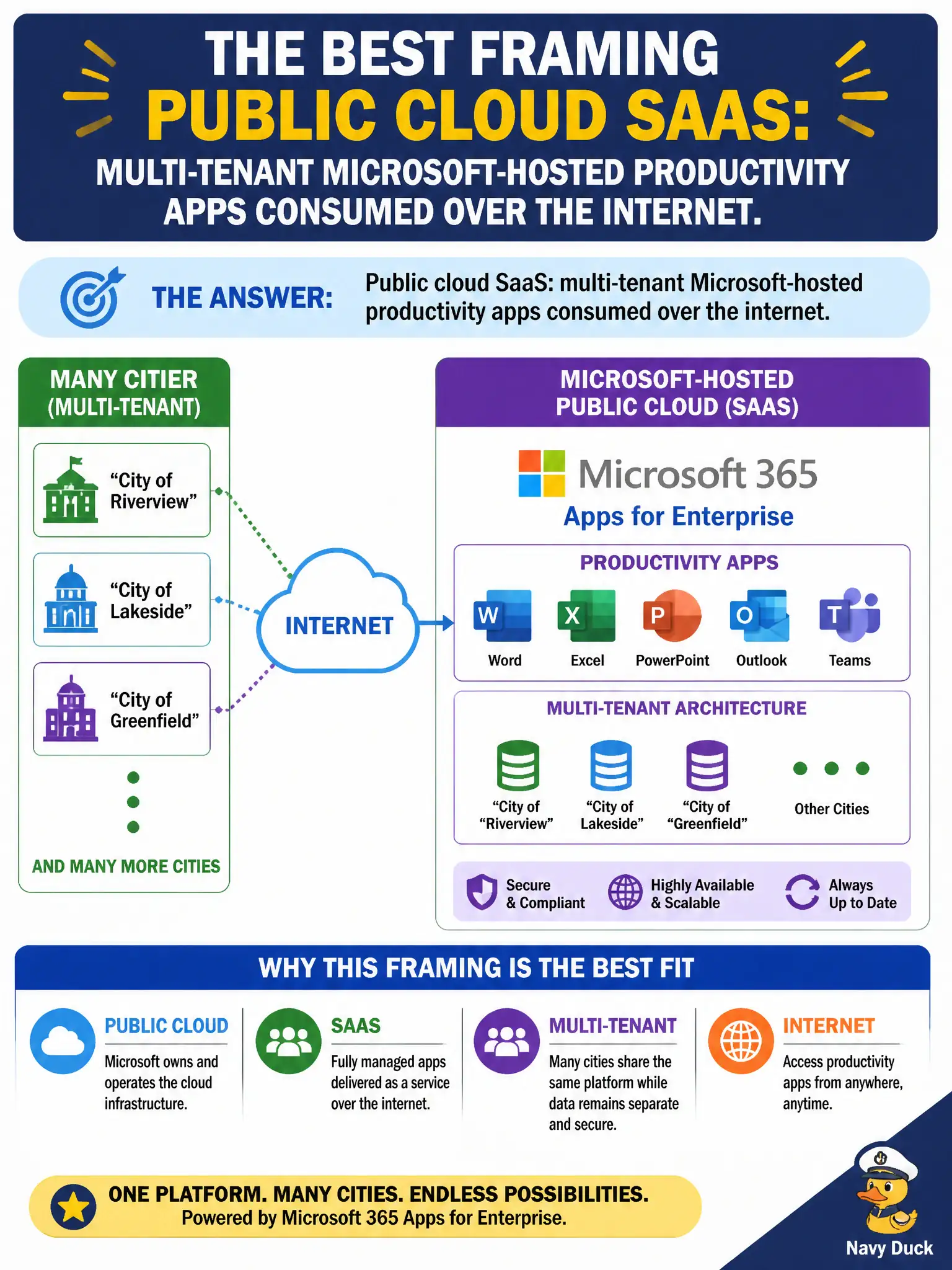
Lots of cities, same Microsoft-hosted apps over the internet—that is public cloud SaaS. You are not ordering a private Word mainframe per city hall.
Full Explanation
Microsoft 365 Apps for Enterprise used over the internet by many cities is best framed as public cloud SaaS: multi-tenant Microsoft-hosted productivity applications consumed across organizations. Cities authenticate and use Word, Excel, and related apps without each municipality operating dedicated physical application servers for those workloads.
Private cloud IaaS fails because cities do not each receive dedicated physical Word servers that Microsoft never shares in the normal Apps for Enterprise model. On-premises perpetual servers only fails because Microsoft 365 Apps are designed for internet/cloud use under subscription licensing. Defining Microsoft 365 Apps as Azure Virtual Desktop host-pool administration fails conceptually: AVD can deliver desktops, but it is not the definition of Microsoft 365 Apps themselves.
Exam caveat: some enterprises add VDI for special cases, yet the exam’s default framing for Apps over the internet remains public SaaS. Operational check: verify Apps are licensed in the tenant, confirm update channel policy, and show staff opening desktop or web apps against the city’s Microsoft 365 tenant—not against city-owned Office servers. Record the choice in the municipal service catalog so help-desk scripts stay consistent.