
A city HR policy allows flexible hours and home days. How do Microsoft 365 capabilities primarily support that flexible work pattern?
Select an answer to reveal the explanation.
Short Explanation
Flex hours and home days only work if people can still find each other and the files. Cloud mail, Teams, and shared docs are the glue—async when schedules differ, meetings when they need a live sync.
Full Explanation
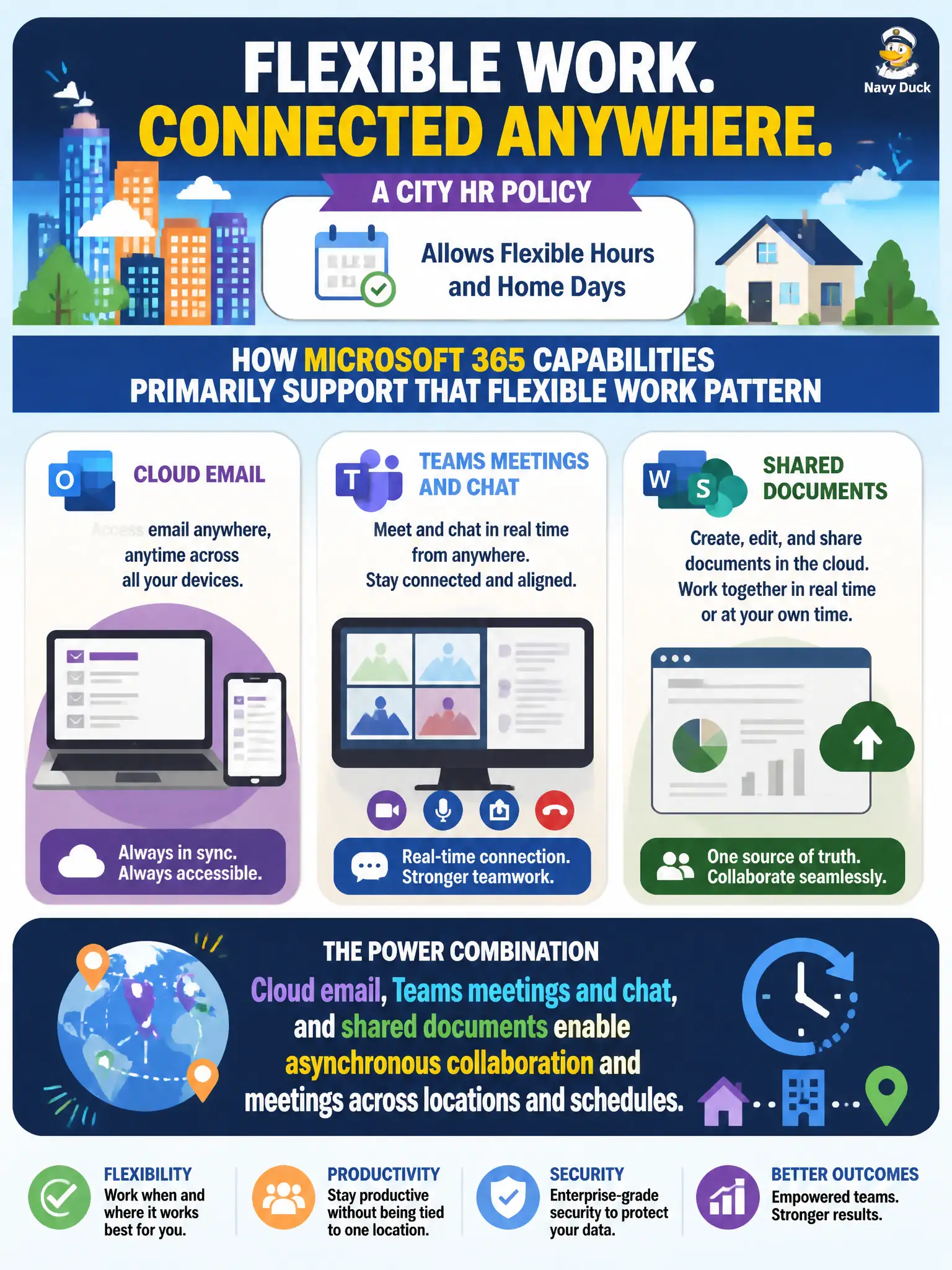
Microsoft 365 primarily supports flexible municipal HR patterns through cloud email, Teams meetings and chat, and shared documents that enable asynchronous collaboration across locations and schedules. Home days and flexible hours work when staff can meet, message, and co-author without everyone occupying the same cubicle at the same clock time across departments.
Disabling OneDrive and SharePoint so files never leave a single cubicle PC undermines flexible work and recreates attachment version chaos. Enforcing flexible hours only by purchasing Azure Blob storage redundancy SKUs fails because storage redundancy is unrelated to workforce schedule flexibility. Claiming Microsoft 365 blocks calendar sharing so home-day staff cannot schedule across teams fails factually and would hinder cross-department coordination for civic services.
Exam caveat: flexibility without retention, DLP, and access review can create uncontrolled copies of sensitive HR or constituent data on unmanaged devices. Operational check: enable approved sharing patterns, train staff on where HR files may live, verify meeting and document access from a managed home-device scenario, and sample audit logs for risky sharing.