
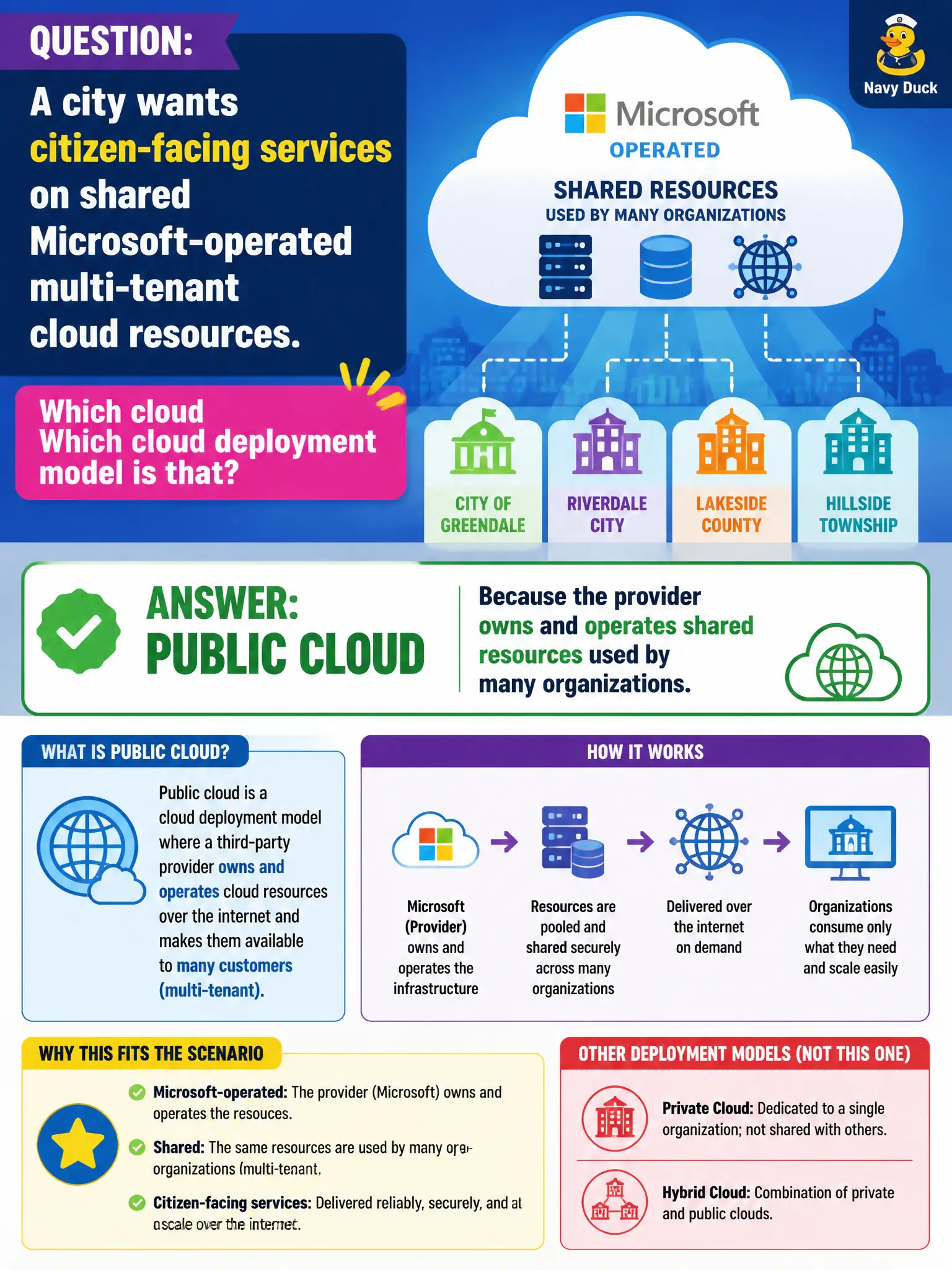
A city wants citizen-facing services on shared Microsoft-operated multi-tenant cloud resources. Which cloud deployment model is that?
Select an answer to reveal the explanation.
Short Explanation
Public cloud is the big shared apartment building Microsoft runs—many tenants, provider-owned gear. If the city is on shared multi-tenant Microsoft services, that is the public cloud model, not "our private basement only."
Full Explanation
Public cloud means the provider owns and operates shared multi-tenant resources used by many customer organizations. A city that places citizen-facing services on shared Microsoft-operated multi-tenant cloud resources is therefore using the public cloud deployment model. Shared capacity under provider operation—not exclusive city-owned iron—is the defining idea at fundamentals depth.
Private cloud fails for this stem because private cloud implies dedicated resources for one organization under its exclusive control, which contradicts shared Microsoft multi-tenant capacity. On-premises only fails because multi-tenant Microsoft services are cloud offerings, not basement-only systems that the city fully owns. Hybrid work licensing fails conceptually: hybrid work describes workforce location patterns for staff, not the cloud deployment model used to host citizen portals.
Exam caveat: public cloud still permits strong customer controls through identity, encryption, retention, and compliance configurations; shared infrastructure does not mean the city abandons governance. Operational check: inventory which citizen services run on Microsoft multi-tenant platforms, confirm residency and compliance obligations are satisfied, and brief council that public cloud means shared provider-operated capacity with municipal policy controls still required.