
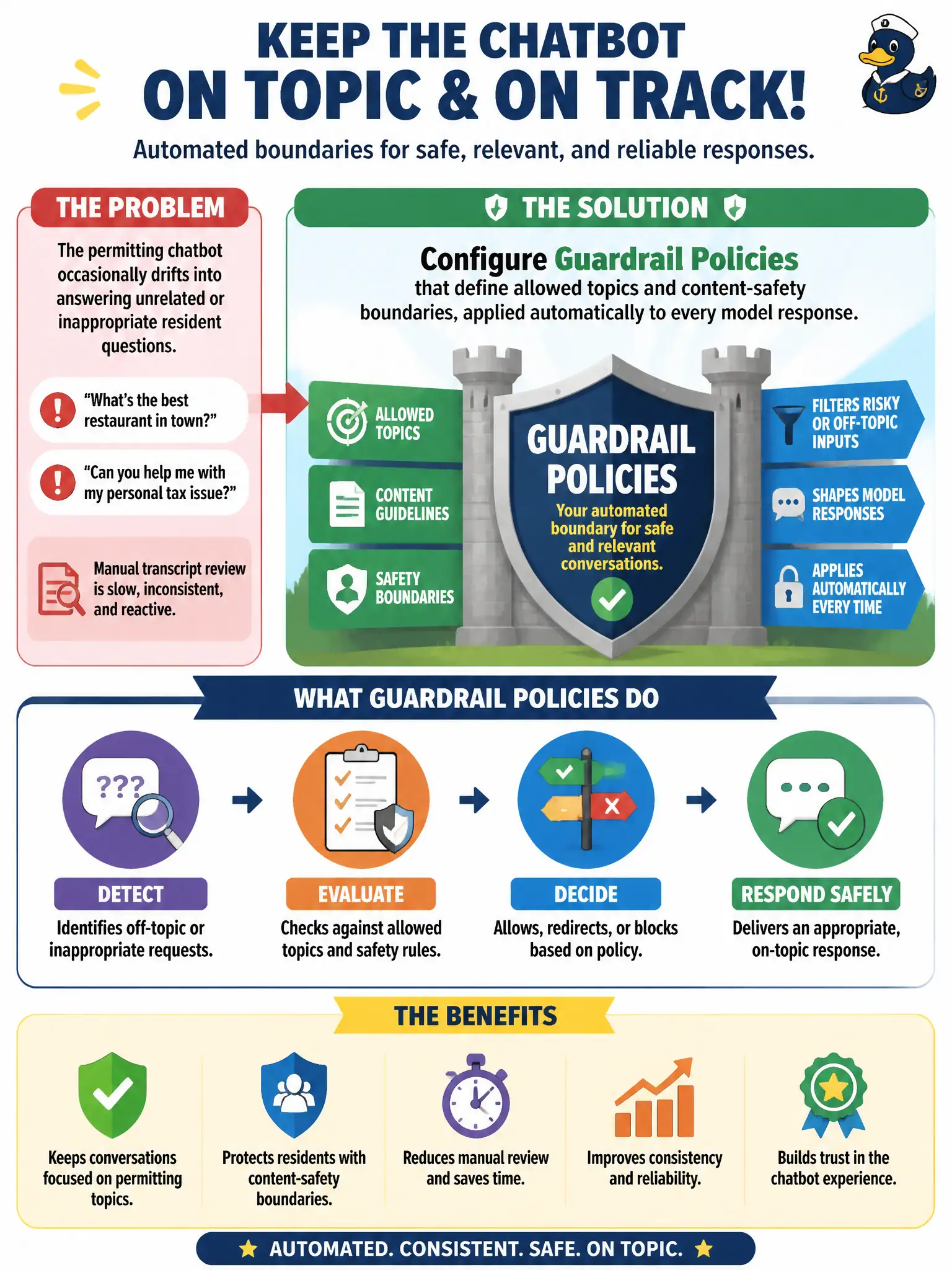
A permitting chatbot occasionally drifts into answering unrelated or inappropriate resident questions, and the office wants an automated boundary on the topics and content the agent will respond to, rather than relying on manual review of transcripts. What should the office configure?
Select an answer to reveal the explanation.
Short Explanation
A guardrail policy is the fence around the playground, not a note asking kids to stay inside the lines. Set the allowed topics once and every response gets checked against that boundary automatically, instead of catching drift after the fact in yesterday's transcripts. Prevention beats after-the-fact cleanup here.
Full Explanation
Guardrail policies that define allowed topics and content-safety boundaries are evaluated automatically against every response the model generates, which stops off-topic or inappropriate content before it reaches the resident rather than catching it afterward — that automation is exactly what the permitting office is asking for instead of manual transcript review. A stricter password policy for staff accounts secures who can administer the chatbot's configuration, which is a legitimate control in its own right but has no bearing on what the model says to residents during a conversation. A larger context window can help a model track a longer conversation but provides no enforcement mechanism against drifting into unrelated or inappropriate topics — a longer memory doesn't equal a boundary. A nightly manual review of transcripts is detective rather than preventive: by the time a human catches the off-topic exchange, it has already reached the resident. Scope caveat: guardrail topic and content policies need to be defined broadly enough to cover realistic drift scenarios, so periodically review flagged-but-allowed conversations to catch gaps in the policy's coverage. Operational check: submit a test prompt designed to trigger an out-of-scope topic and confirm the guardrail blocks or redirects the response.