
A city's 311 department is evaluating several Amazon Bedrock foundation models for a resident-service chatbot that must handle long conversation histories and respond fluently in the languages spoken by the city's resident population. What should guide the department's model selection?
Select an answer to reveal the explanation.
Short Explanation
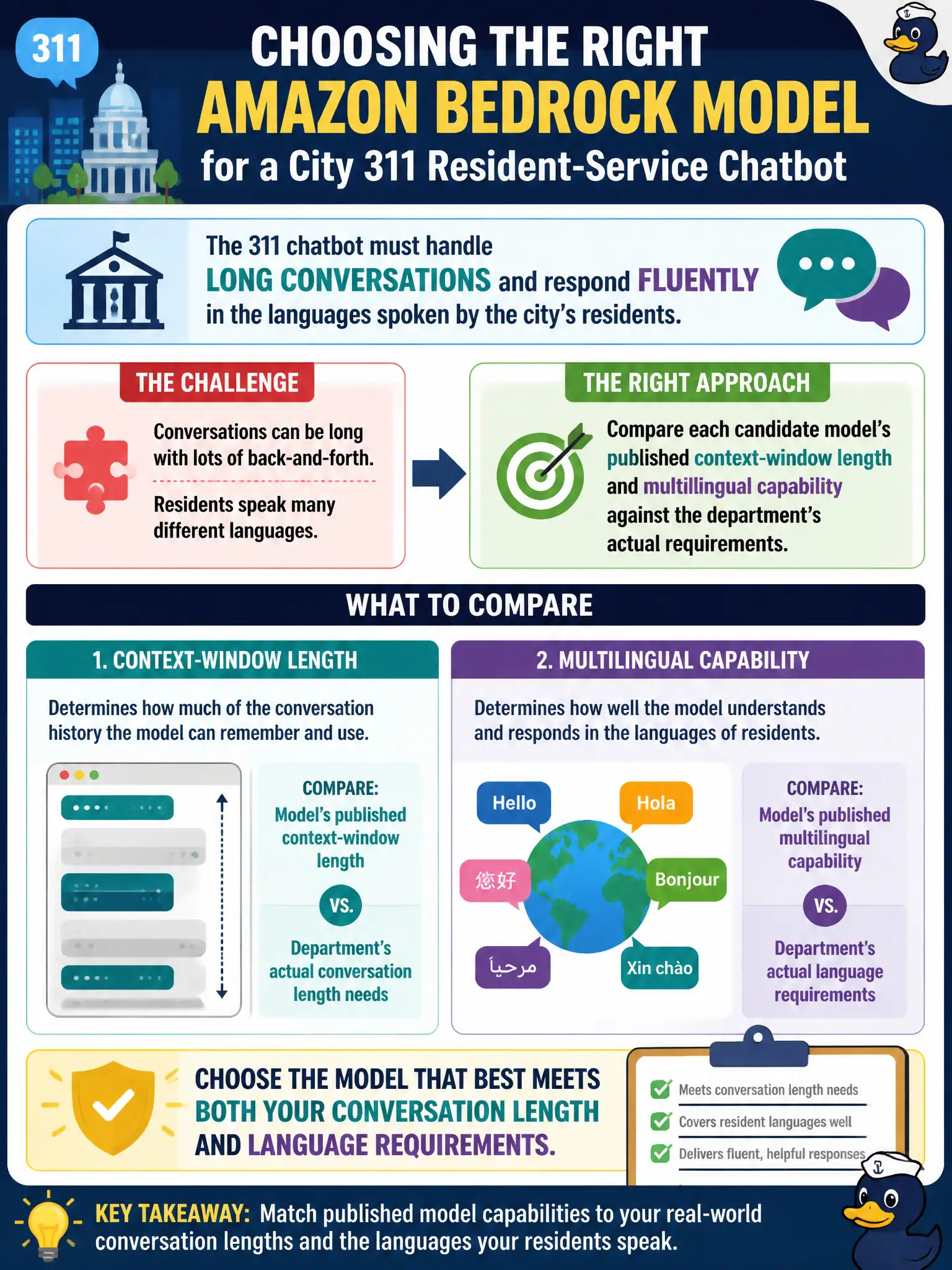
Picking a model isn't like grabbing the newest phone off the shelf — it's more like sizing a moving truck to the actual furniture. You check the specs that matter for the job: how long a conversation the model can hold in context, and which languages it actually handles well. A newer release, a lower price tag, or a bigger parameter count don't guarantee either of those things line up with what residents need.
Full Explanation
Selecting a foundation model against stated requirements means comparing published capability specs — context-window length and supported languages — to the department's actual needs, since Bedrock offers multiple models that differ meaningfully on both dimensions. A model released more recently isn't guaranteed to have the longest context window or the strongest multilingual coverage; recency is not a capability spec, so defaulting to 'newest' skips the actual evaluation. Choosing on price alone ignores that a cheaper model failing to meet language or context requirements produces a chatbot that mishandles resident conversations, which costs more in rework and complaints than the token savings are worth. Parameter count is a rough proxy for general capability, but it doesn't reliably predict context-window length or multilingual performance — those are architecture and training-data decisions independent of raw size. Scope caveat: published specs describe general capability, not guaranteed performance on this department's specific dialects or jargon, so specs should be paired with a pilot test. Operational check: run a sample of representative multilingual, long-history conversations against shortlisted models and measure whether responses stay accurate as the conversation grows.