
A security engineer is implementing Microsoft Defender for Cloud's governance capabilities to track remediation of AI security recommendations. The CISO wants to assign owners to each AI-related recommendation and track remediation within a 30-day SLA. Which Defender for Cloud feature provides this governance workflow?
Select an answer to reveal the explanation.
Short Explanation
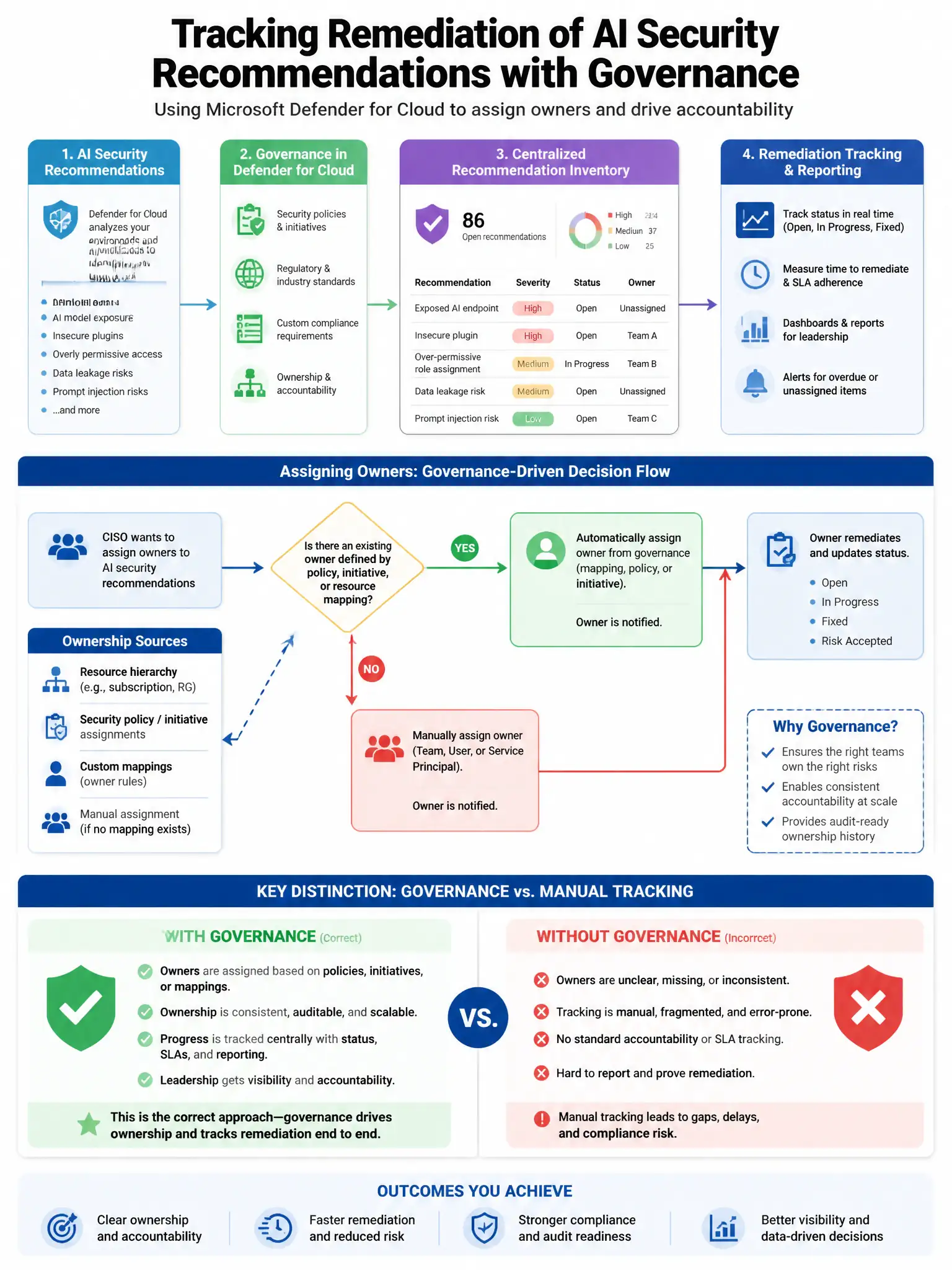
You need the Defender for Cloud governance rules feature because it lets you assign each recommendation to a named owner and set a due date, like a 30-day SLA. It tracks the assignment, sends reminders, and gives reporting on remediation progress.
Full Explanation
The correct feature is Microsoft Defender for Cloud governance rules assigning recommendation owners and due dates because it lets administrators assign specific recommendations to named owners with defined remediation due dates, including SLA periods such as 30 days. The governance feature tracks assignment status, sends reminder notifications, and provides executive reporting on remediation progress, making it the native tool for this requirement. The Azure Policy compliance dashboard with assignment to resource owners via email notification is incorrect because Azure Policy compliance dashboards show compliance status against policy assignments but do not provide an owner assignment and SLA tracking workflow for individual security recommendations. The Microsoft Sentinel workbook tracking Defender for Cloud recommendation resolution times is incorrect because Sentinel workbooks can visualize data from Defender for Cloud but require custom development to track recommendation resolution times; the native governance rules feature is purpose-built for this. The Azure DevOps work items automatically created from Defender for Cloud recommendations is incorrect because Azure DevOps work items integration for Defender for Cloud recommendations requires custom configuration and is a development workflow tool, not the native governance tracking mechanism.