
A security engineer is integrating Microsoft Defender for Cloud recommendations for Azure AI services into the organization's vulnerability management program. Defender for Cloud shows a high-severity recommendation: 'Azure AI services resources should have key access disabled (disable local authentication).' What is the security benefit of implementing this recommendation?
Select an answer to reveal the explanation.
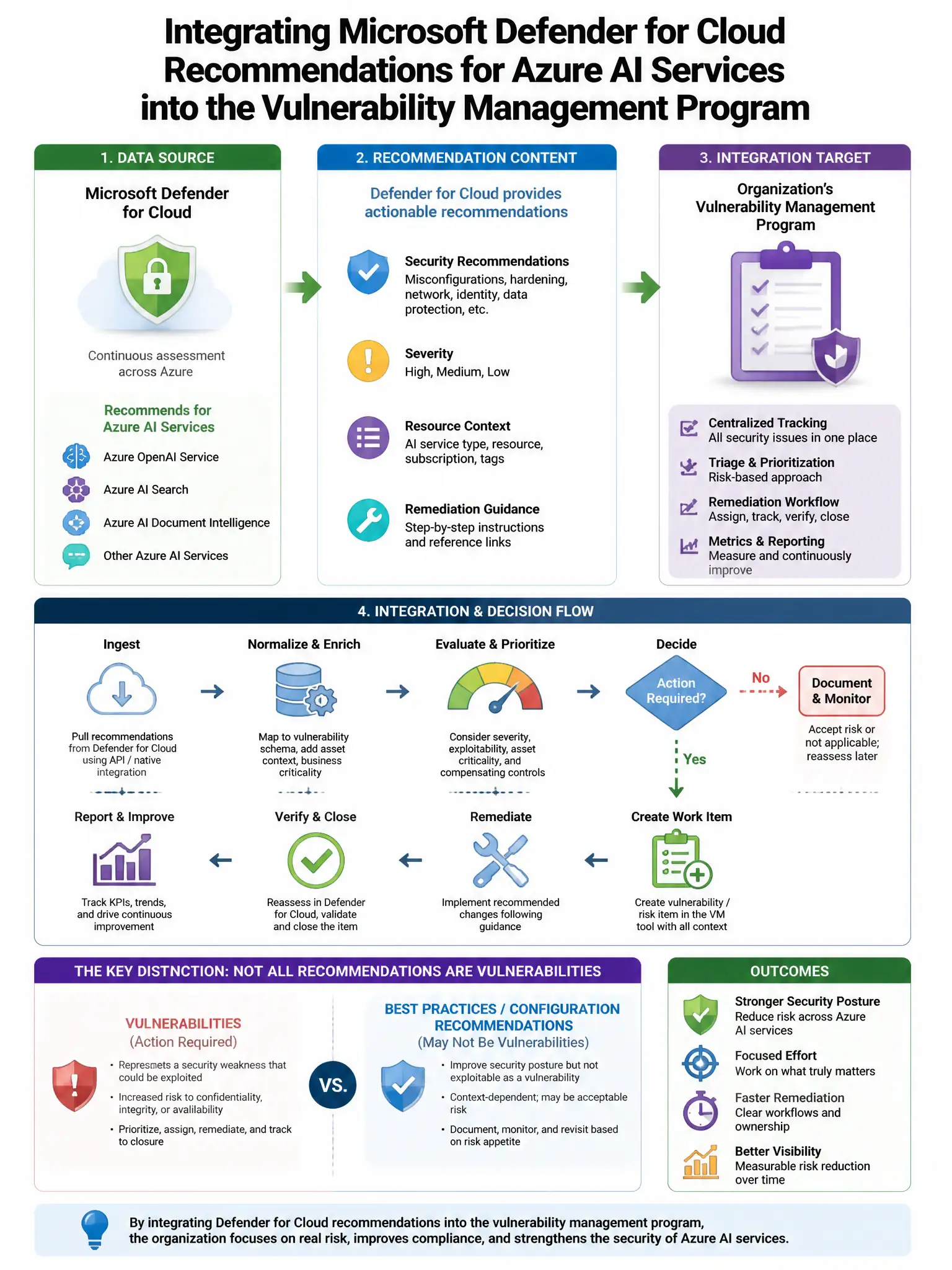
Short Explanation
Here's the deal — disabling key access stops API keys from working and forces every call to use Microsoft Entra ID tokens. You get stronger authentication with MFA, conditional access, and identity-based auditing instead of long-lived shared secrets.
Full Explanation
The correct benefit is that disabling key access removes the ability to use API keys, forcing all authentication through Microsoft Entra ID tokens. This 'disable local authentication' recommendation in Defender for Cloud for Azure AI services requires all API authentication to use Microsoft Entra ID tokens instead of static API keys. This provides significant security benefits: Entra ID tokens can be protected by Conditional Access (device compliance, location, MFA), have short lifetimes with automatic refresh, are attributable to specific identities for auditing, and can be instantly revoked by disabling the user or managed identity, unlike static API keys which are long-lived shared secrets. The option claiming that disabling key access prevents the Azure AI service from communicating with external endpoints is incorrect because disabling key access does not affect the network-level communication of the AI service; it only changes the authentication method. The option claiming that disabling key access enables automatic key rotation every 90 days without manual intervention is incorrect because key rotation is a management practice for when keys are enabled; disabling keys eliminates the need for key rotation rather than automating it. The option claiming that disabling key access forces the AI service to use Private Endpoints for all network traffic is incorrect because private endpoints are a network isolation control independent of the authentication method; disabling keys does not enforce private endpoint usage.