
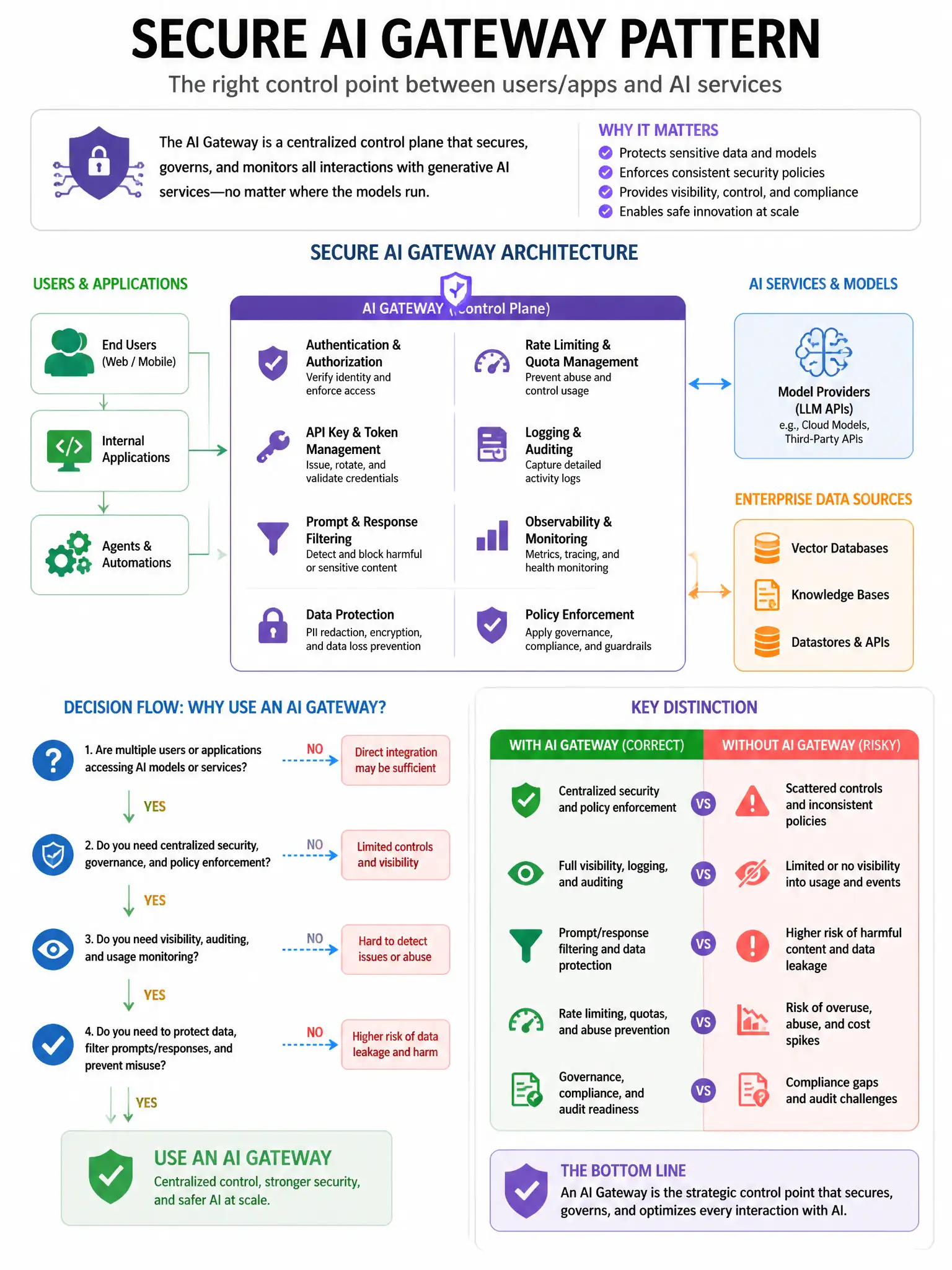
A company is evaluating AI security architecture for a new generative AI application. The security architect needs to implement a secure AI gateway pattern. Which architectural component sits between client applications and AI model endpoints to provide centralized security enforcement including rate limiting, authentication, content filtering, and logging?
Select an answer to reveal the explanation.
Short Explanation
Here's the deal — you want Azure API Management configured as an AI gateway because it sits between client apps and model endpoints and gives you centralized auth, rate limits, logging, content controls, and AI-specific policies. Microsoft even publishes APIM policies for Azure OpenAI token rate limiting and semantic caching.
Full Explanation
The correct component is Azure API Management (APIM) configured as an AI gateway with APIM policies for AI-specific controls. It sits between client applications and AI model endpoints and provides centralized security enforcement, including authentication/authorization via validate-jwt policies, rate limiting and quota management, request/response logging, content transformation, and custom policy execution. Microsoft has also published AI-specific APIM policies, including Azure OpenAI token rate limiting and semantic caching. Azure Application Gateway with WAF in front of Azure OpenAI is incorrect because it provides L7 web application firewall protection against web attacks but does not provide API management capabilities like authentication policy enforcement, rate limiting per API key/user, or AI-specific content inspection. Azure Front Door with custom routing rules for AI endpoint load balancing is incorrect because it provides CDN and global load balancing but lacks the API management policy framework needed for comprehensive AI security controls. Azure Load Balancer distributing traffic across multiple Azure OpenAI deployments is incorrect because it operates at L4 and provides no security policy enforcement capabilities.