
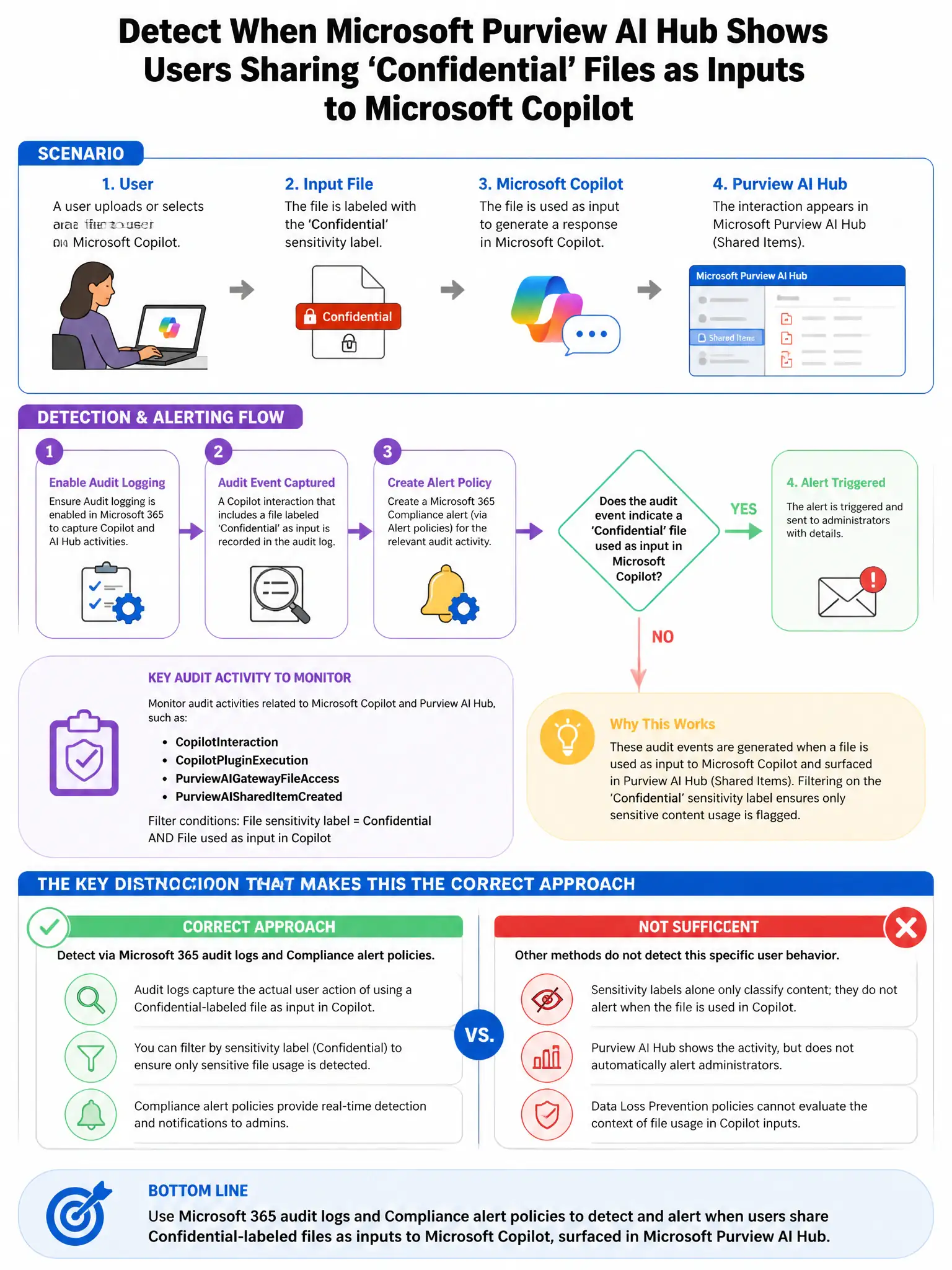
An organization wants to detect when Microsoft Purview AI Hub shows that users are sharing sensitive files marked with the 'Confidential' sensitivity label as inputs to Microsoft Copilot for Microsoft 365 prompts with external recipients. Which Purview AI Hub capability surfaces this oversharing risk?
Select an answer to reveal the explanation.
Short Explanation
Here's the deal — you need the AI Hub > Data security posture for AI > Oversharing risk for Copilot capability because it surfaces when users feed 'Confidential' labeled files into Copilot prompts in ways that could expose content to external recipients. The sensitive information types report only shows what data types appear in prompts, not label-based oversharing.
Full Explanation
The correct capability is AI Hub > Data security posture for AI > Oversharing risk for Copilot because Microsoft Purview AI Hub includes a 'Data security posture for AI' section that specifically surfaces oversharing risks—identifying when users are using files or data labeled with sensitivity labels as inputs to Copilot in ways that could lead to information being accessed by parties who should not see it, including sharing risks with external parties. The AI Hub > Sensitive information types detected in Copilot prompts report is wrong because it shows what sensitive information types appear in prompts, such as credit card numbers, not the oversharing of labeled content with external parties. Purview Compliance Manager AI assessment is wrong because it assesses regulatory control adherence, not real-time oversharing risk. Microsoft Defender for Cloud Apps unsanctioned app detection is wrong because it detects unsanctioned app usage, not oversharing risks within sanctioned Microsoft Copilot.