
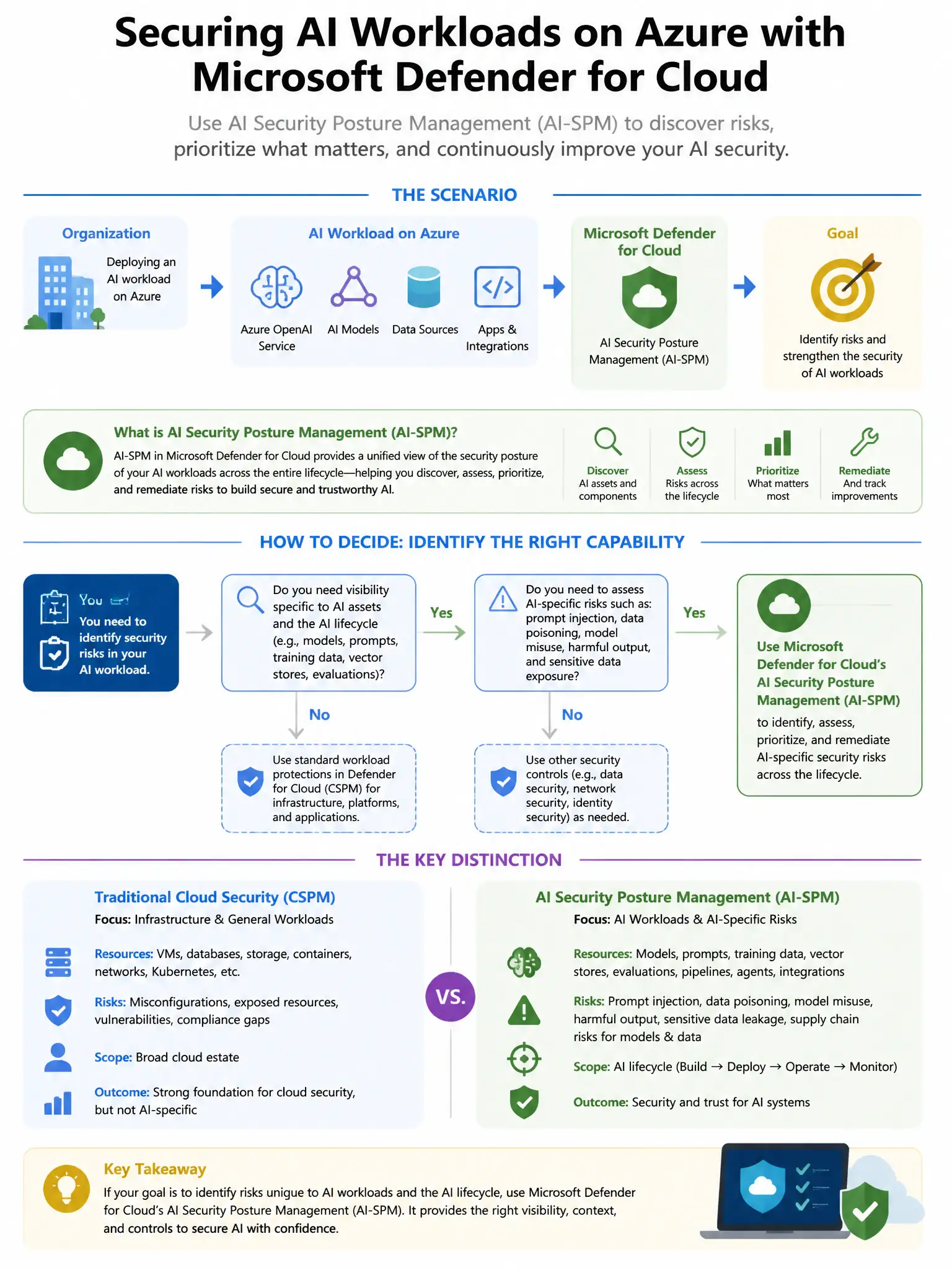
An organization is deploying an AI workload on Azure and wants to use Microsoft Defender for Cloud's AI security posture management capabilities. The security team needs to identify misconfigurations in their Azure OpenAI deployments. Which Defender for Cloud feature surfaces AI-specific security recommendations?
Select an answer to reveal the explanation.
Short Explanation
Here's the deal — Defender CSPM with AI security posture management is the feature you need because it discovers AI resources and surfaces Azure OpenAI recommendations like disabling public network access, enabling customer-managed keys, and using private endpoints.
Full Explanation
Defender CSPM with AI security posture management is correct because it includes AI security posture management capabilities that discover AI resources across the estate and surface specific security recommendations for Azure OpenAI Service, such as disabling public network access, enabling customer-managed keys, and using private endpoints. Defender for DevOps is wrong because it focuses on security in CI/CD pipelines and code repositories, not runtime AI resource posture. The Cloud Security Benchmark is wrong because it is a set of standards, not a posture management engine that surfaces per-resource recommendations. The regulatory compliance dashboard is wrong because it maps controls to standards, but it does not discover AI-specific misconfigurations.