
A financial services firm is implementing AI governance for an automated trading signal generation system. The governance board requires that all AI-generated trading signals above a certain risk threshold must be reviewed by a licensed trader before execution. This is an example of which responsible AI principle?
Select an answer to reveal the explanation.
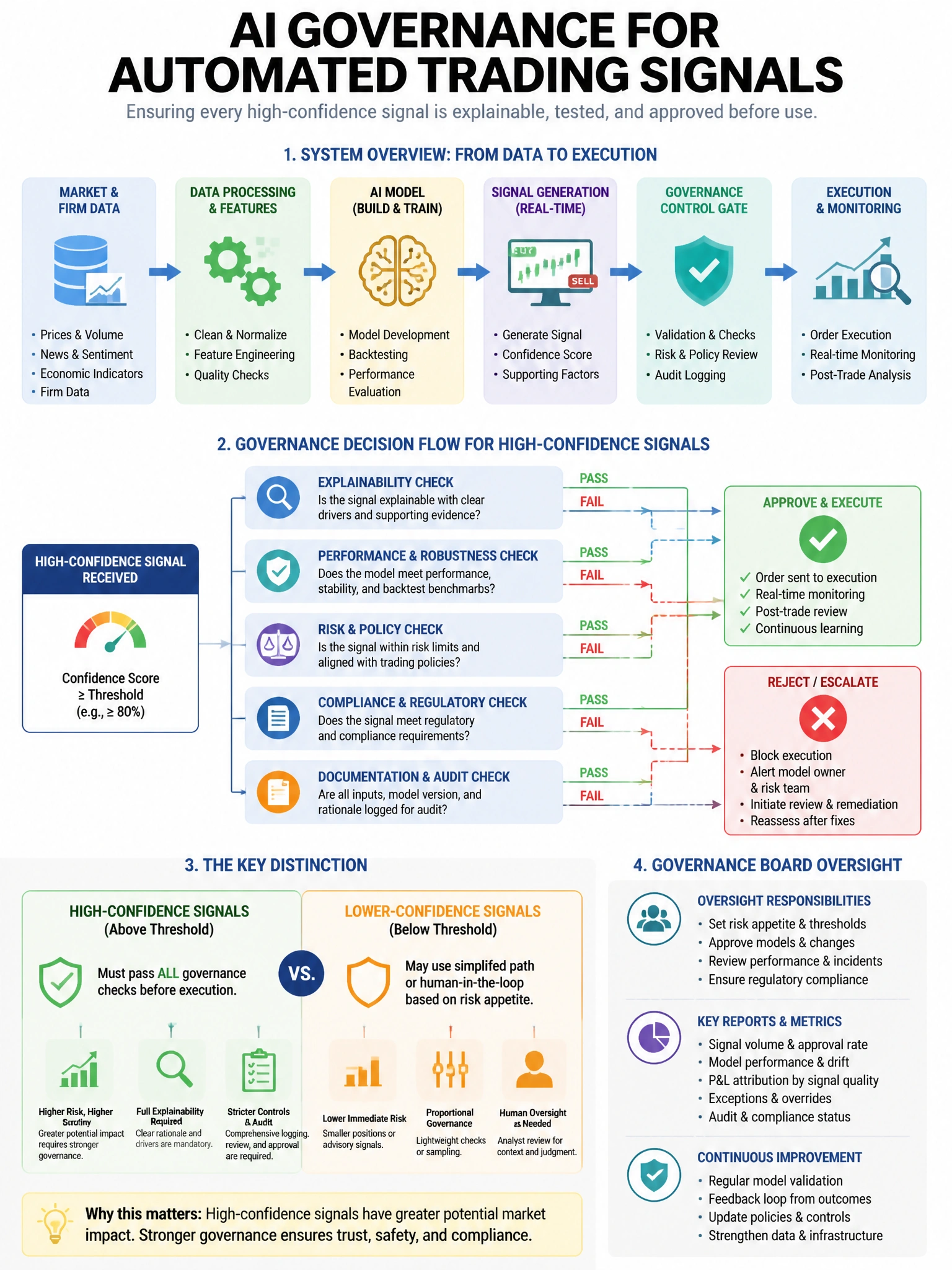
Short Explanation and Infographic
Here's the deal — c is correct because requiring a licensed trader to review high-risk AI-generated trading signals before execution implements the Accountability principle of Microsoft's Responsible AI framework. Accountability ensures that humans remain responsible for consequential decisions made with AI assistance, that appropriate oversight mechanisms exist, and that there are clear chains of responsibility for AI-influenced actions.
Full explanation below image
Full Explanation
C is correct because requiring a licensed trader to review high-risk AI-generated trading signals before execution implements the Accountability principle of Microsoft's Responsible AI framework. Accountability ensures that humans remain responsible for consequential decisions made with AI assistance, that appropriate oversight mechanisms exist, and that there are clear chains of responsibility for AI-influenced actions. B is incorrect because Reliability and Safety focuses on the AI system performing as designed and not causing unintended harm through failures, not specifically on human review oversight of decisions. A is incorrect because Fairness addresses whether the AI treats individuals, groups, or data equitably without discrimination, not human oversight requirements. D is incorrect because Inclusiveness ensures the AI benefits and includes diverse users and scenarios, not the human review chain of command for AI outputs.