
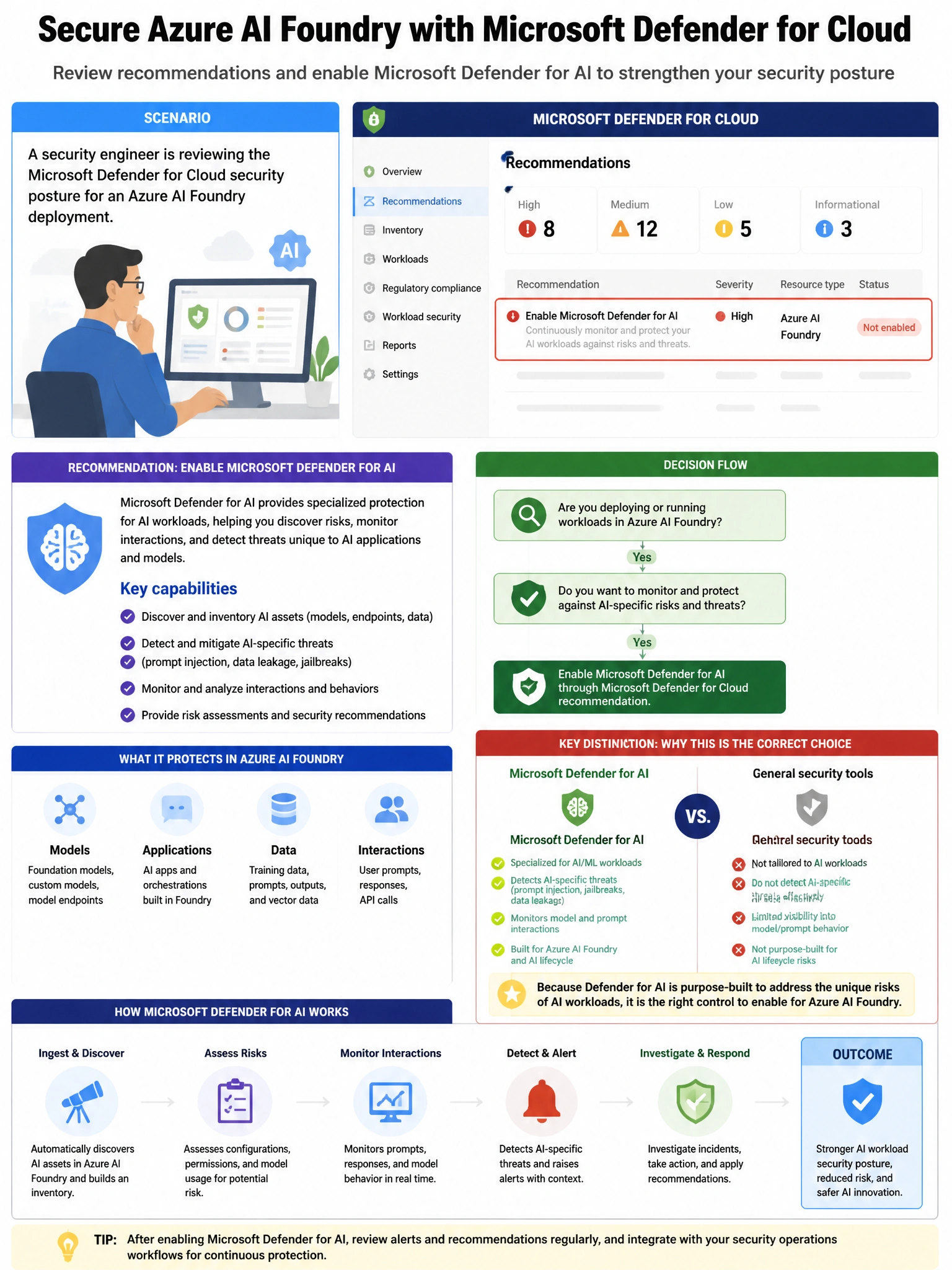
A security engineer is reviewing the Microsoft Defender for Cloud security posture for an Azure AI Foundry deployment. Defender for Cloud shows a recommendation to 'Enable Microsoft Defender for AI.' After enabling the plan, the engineer wants to verify that the protection is active. Where can the engineer confirm that Azure OpenAI resources are being protected?
Select an answer to reveal the explanation.
Short Explanation and Infographic
Here's the deal — b is correct because after enabling Microsoft Defender for AI plan in Defender for Cloud, the coverage and protection status for Azure OpenAI resources is visible in the Defender for Cloud portal under Workload protections, where the AI workloads section shows which resources are protected, coverage status, and any active alerts. A is incorrect because Microsoft Sentinel data connectors show ingested data sources, not Defender for AI plan coverage status; Defender for AI alerts flow to Sentinel separately.
Full explanation below image
Full Explanation
B is correct because after enabling Microsoft Defender for AI plan in Defender for Cloud, the coverage and protection status for Azure OpenAI resources is visible in the Defender for Cloud portal under Workload protections, where the AI workloads section shows which resources are protected, coverage status, and any active alerts. A is incorrect because Microsoft Sentinel data connectors show ingested data sources, not Defender for AI plan coverage status; Defender for AI alerts flow to Sentinel separately. C is incorrect because the Azure OpenAI resource portal does not have a 'Defender status' monitoring section; protection status is managed from Defender for Cloud. D is incorrect because Microsoft Defender XDR Settings > Endpoints is for endpoint protection configuration, not Azure AI service protection coverage.