
An Azure Machine Learning pipeline uses a managed online endpoint to serve a fraud detection model. The security team discovers that model prediction logs are being retained for only 30 days, insufficient for forensic investigations requiring 1-year retention. What is the most efficient solution?
Select an answer to reveal the explanation.
Short Explanation and Infographic
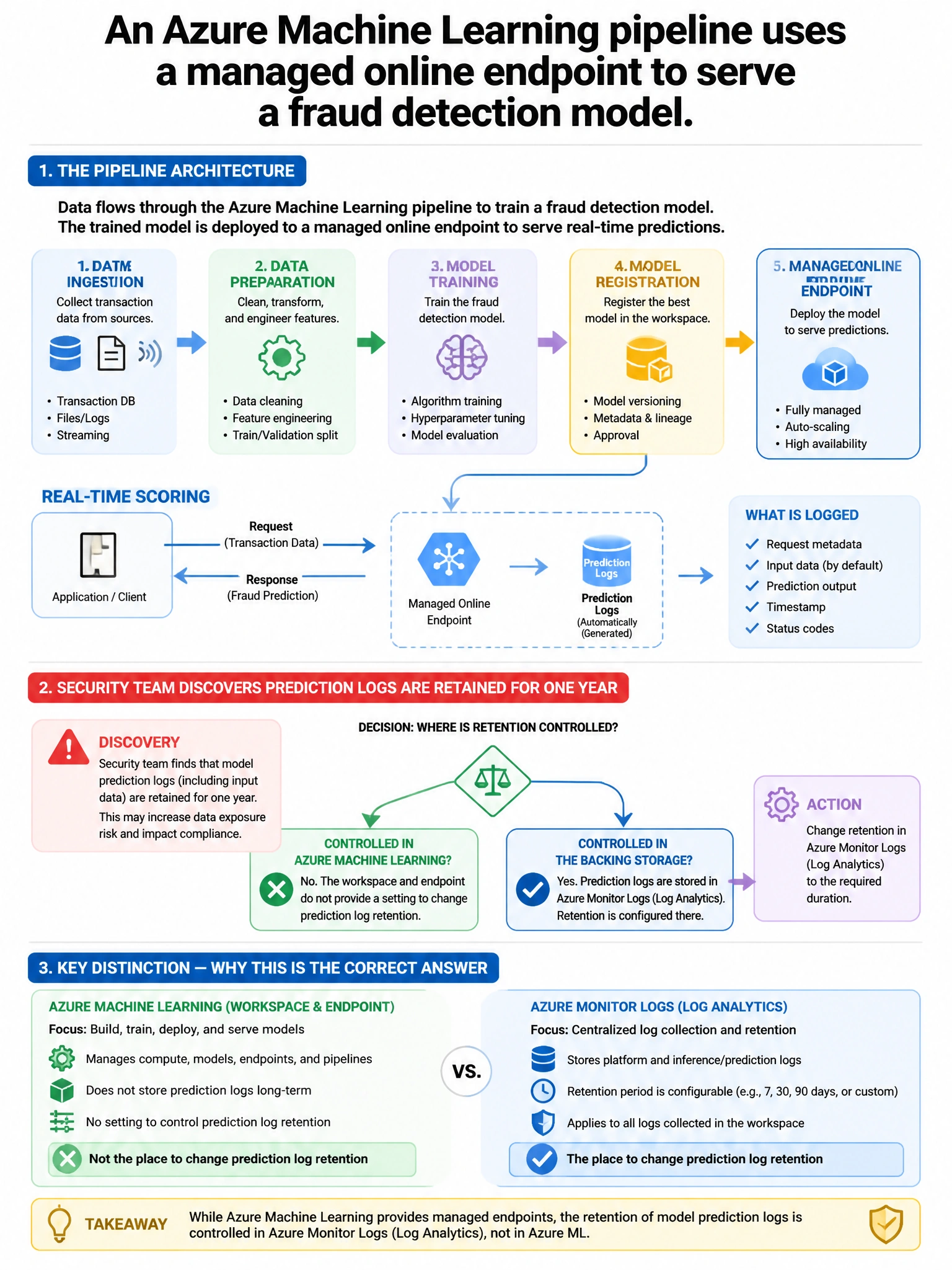
Here's the deal — b is correct because Azure Monitor Diagnostic Settings can be configured on the Azure Machine Learning workspace to send all logs including managed online endpoint request/response logs to a Log Analytics workspace, where data retention can be set to 365 days. This provides the required forensic retention period without custom development.
Full explanation below image
Full Explanation
B is correct because Azure Monitor Diagnostic Settings can be configured on the Azure Machine Learning workspace to send all logs including managed online endpoint request/response logs to a Log Analytics workspace, where data retention can be set to 365 days. This provides the required forensic retention period without custom development. A is incorrect because custom Functions-based log copying is operationally complex and unnecessary given Azure Monitor's native log routing capabilities. C is incorrect because model monitoring data drift detection is for performance monitoring of model behavior over time, not security audit log retention. D is incorrect because exporting to Event Hub and Data Lake is significantly more complex than simply configuring the Log Analytics retention period.