
A security architect is designing the identity layer for an AI system that must serve as a trusted reference for other downstream systems' security decisions. The AI system attests to its configuration state (model version, content filter settings, and security controls enabled) before downstream systems consume its outputs. Which Microsoft technology enables cryptographic attestation of a system's security configuration?
Select an answer to reveal the explanation.
Short Explanation and Infographic
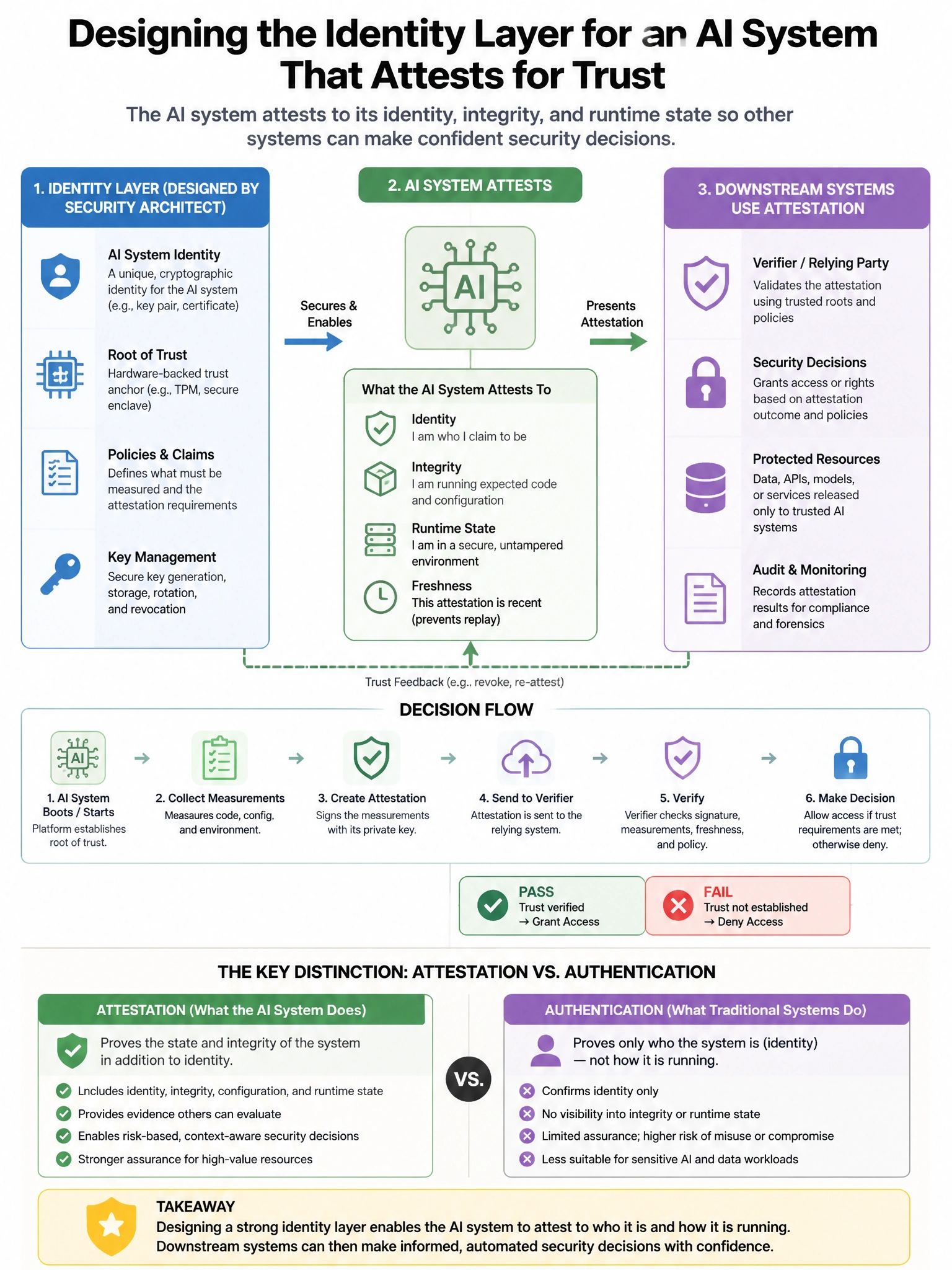
Here's the deal — b is correct because Azure Confidential Computing enables running workloads in hardware-isolated Trusted Execution Environments (TEEs). Microsoft Azure Attestation Service provides cryptographic attestation—generating signed attestation tokens that prove a system (such as an AI model server) is running in a genuine TEE with a specific, unmodified configuration.
Full explanation below image
Full Explanation
B is correct because Azure Confidential Computing enables running workloads in hardware-isolated Trusted Execution Environments (TEEs). Microsoft Azure Attestation Service provides cryptographic attestation—generating signed attestation tokens that prove a system (such as an AI model server) is running in a genuine TEE with a specific, unmodified configuration. Downstream systems can verify these attestation tokens cryptographically to confirm the AI system's security posture before trusting its outputs. A is wrong because Microsoft Entra Verified ID is a decentralized identity system for issuing and verifying human identity credentials (like employment or age verification); it is not designed for machine/system configuration attestation. C is wrong because Defender for Cloud compliance assessments evaluate resource configurations against frameworks, but they do not provide cryptographic proof of configuration state that downstream systems can verify programmatically. D is wrong because Azure Policy compliance state reporting shows whether resources meet policy definitions, but this is administrative reporting, not cryptographic attestation of runtime security configuration.