
An organization is deploying Azure AI Foundry with a private hub that uses private endpoints. The development team reports that they can access the Azure AI Foundry portal from within the VNet but cannot access it from their home offices. The security team needs to enable remote access without exposing the hub to the public internet. Which solution achieves this?
Select an answer to reveal the explanation.
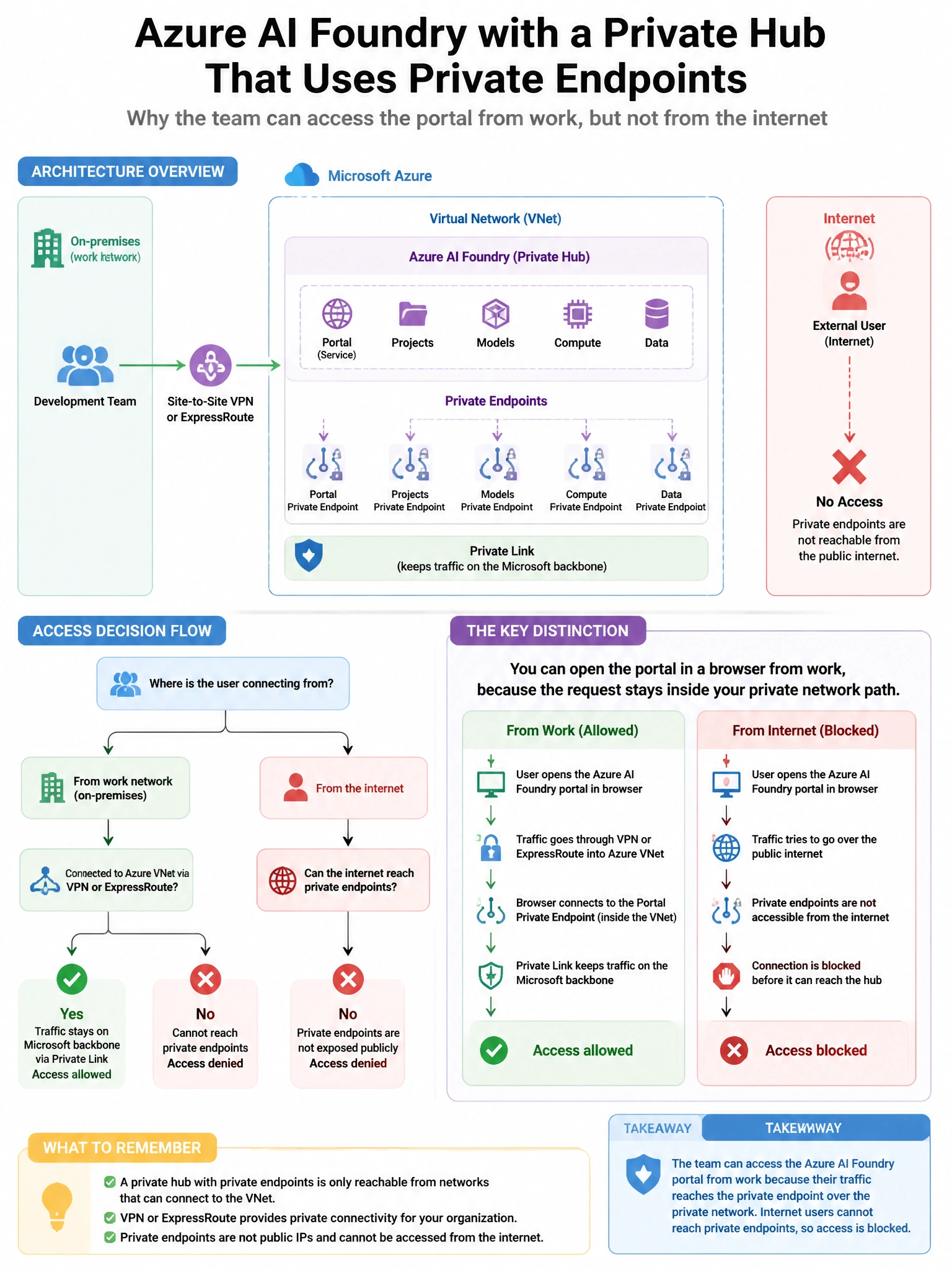
Short Explanation and Infographic
Here's the deal — c is correct because a Point-to-Site (P2S) VPN Gateway allows individual developers to connect their home offices to the organization's Azure VNet over an encrypted tunnel. Once connected via P2S VPN, their devices are virtually 'inside' the VNet and can resolve the private DNS entries and reach the Azure AI Foundry private endpoint, without exposing the hub to the public internet.
Full explanation below image
Full Explanation
C is correct because a Point-to-Site (P2S) VPN Gateway allows individual developers to connect their home offices to the organization's Azure VNet over an encrypted tunnel. Once connected via P2S VPN, their devices are virtually 'inside' the VNet and can resolve the private DNS entries and reach the Azure AI Foundry private endpoint, without exposing the hub to the public internet. A is wrong because disabling private endpoints and enabling public access defeats the security isolation that was implemented, exposing the AI Foundry hub to the internet. B is wrong because Azure Bastion enables secure RDP/SSH to VMs within the VNet; while developers could use a jump host to access AI Foundry, it creates an extra hop and does not provide direct workstation access to the private hub. D is wrong because Azure Front Door as a CDN endpoint would expose the AI Foundry hub through a public Front Door endpoint, violating the no-public-internet requirement.