
A company wants to enforce that Azure AI Content Safety content filtering is enabled and configured to block high-severity content for all Azure OpenAI deployments across the organization. Which approach enforces this at scale?
Select an answer to reveal the explanation.
Short Explanation and Infographic
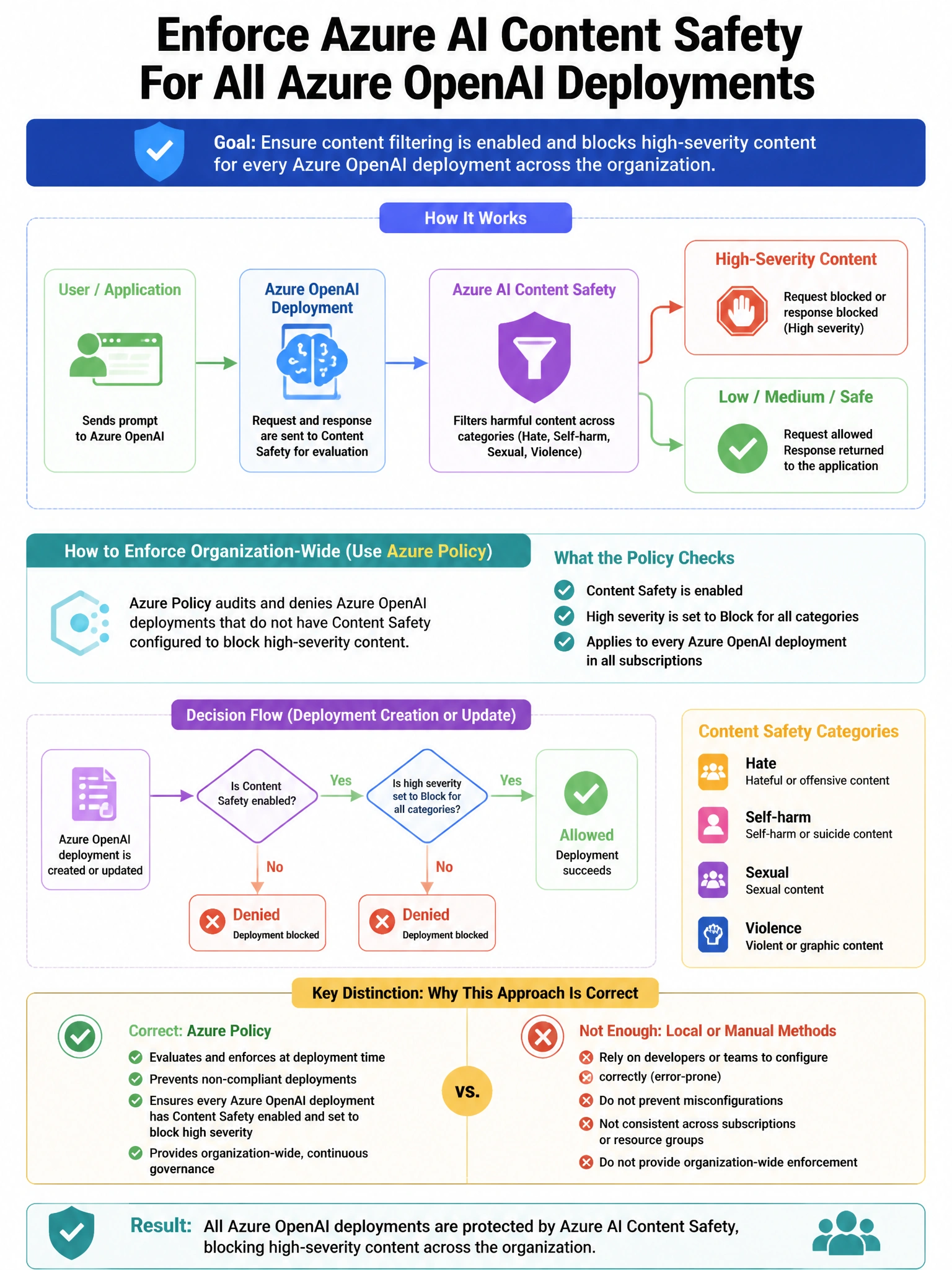
Here's the deal — b is correct because Azure Policy can be used to audit or deny Azure OpenAI deployments that lack a required content filter policy configuration. Policy assignments with 'deny' or 'deployIfNotExists' effects enforce that content filtering is applied consistently at deployment time across the organization, eliminating human error from manual configuration.
Full explanation below image
Full Explanation
B is correct because Azure Policy can be used to audit or deny Azure OpenAI deployments that lack a required content filter policy configuration. Policy assignments with 'deny' or 'deployIfNotExists' effects enforce that content filtering is applied consistently at deployment time across the organization, eliminating human error from manual configuration. A is wrong because manual configuration per deployment is error-prone, does not scale, and does not prevent non-compliant deployments from being created. C is wrong because Defender for Cloud recommendations generate findings but use 'audit' effect—they do not prevent non-compliant deployments. D is wrong because a default content filter in Azure OpenAI Studio is a portal-level preference that does not enforce policy across all deployments or prevent API-based deployment without the filter.