
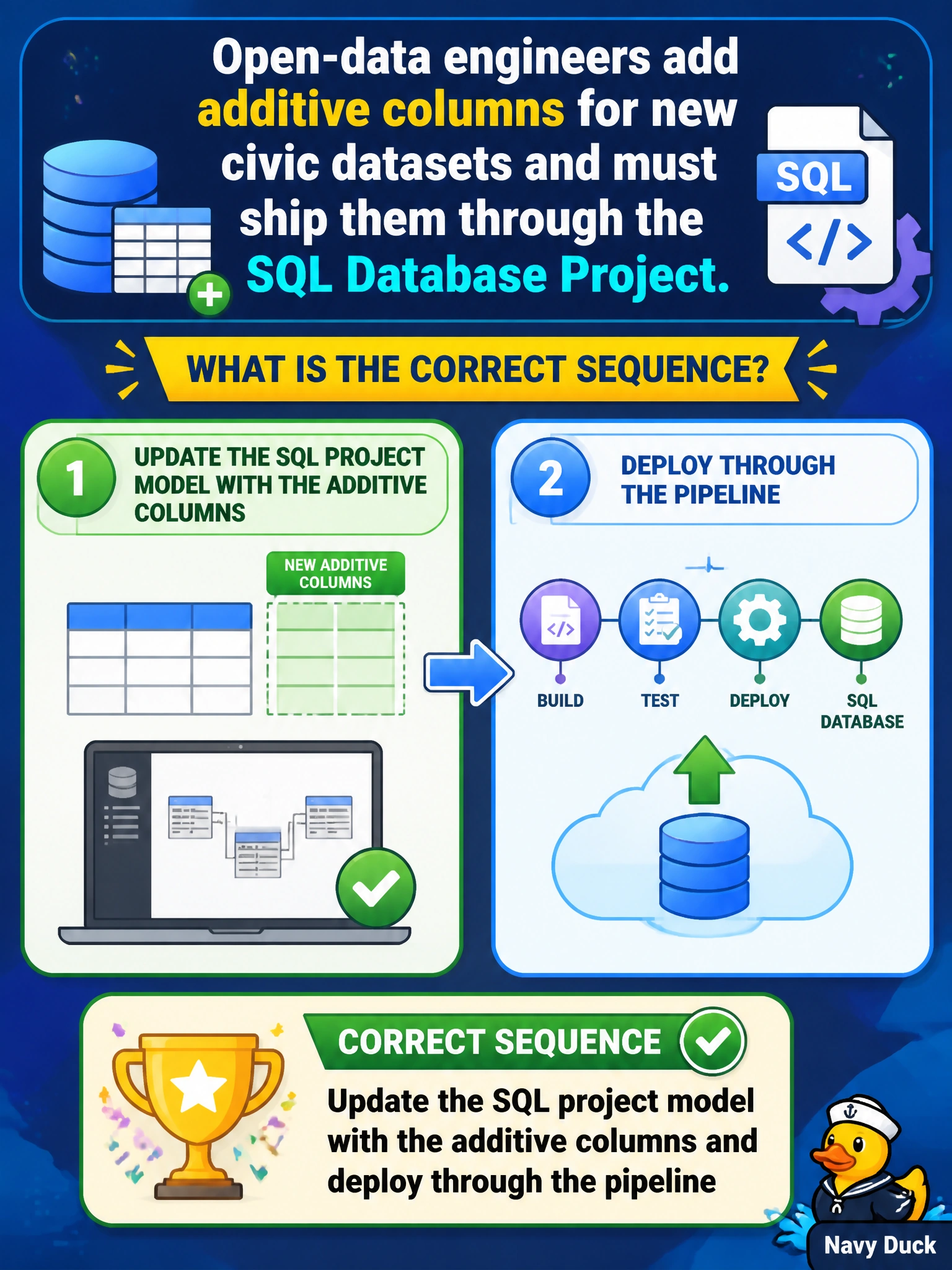
Open-data engineers add additive columns for new civic datasets and must ship them through the SQL Database Project. What is the correct sequence?
Select an answer to reveal the explanation.
Short Explanation
New open-data columns go into the project first, then the pipeline deploys them—blueprint, then build—not a surprise ALTER in prod that the model never hears about.
Full Explanation
Open-data engineers adding additive columns for new civic datasets must update the SQL Database Project model with those columns and deploy through the pipeline. That sequence keeps schema-as-code authoritative: the project defines the additive change, CI validates it, and controlled publish applies it to each environment so open-data schemas stay aligned and reviewable. Altering production first and never updating the project model creates immediate drift and sets up the next deploy to reverse or miss the columns. Changing only a personal database and skipping deployment tooling leaves shared environments untouched and untested. Publishing columns via email for DBAs to apply manually later bypasses CI, audit trails, and repeatable dacpac deployment. Exam caveat: additive columns are safer than destructive changes, but nullability, defaults, and backfills still need a plan so large civic tables do not lock excessively during deploy. Coordinate API/ETL consumers that will populate the new columns; deploying empty columns without pipeline consumers can confuse data quality monitors. Operational check: add the columns in the project source; open a PR with publish preview; merge and let the pipeline deploy to test; verify columns exist and open-data ETL loads succeed; promote to production through the same path; run schema compare to confirm project and prod match.