
Permits analysts suspect application_id lookups are scanning large tables. Which artifact should they inspect first to confirm the access method?
Select an answer to reveal the explanation.
Short Explanation
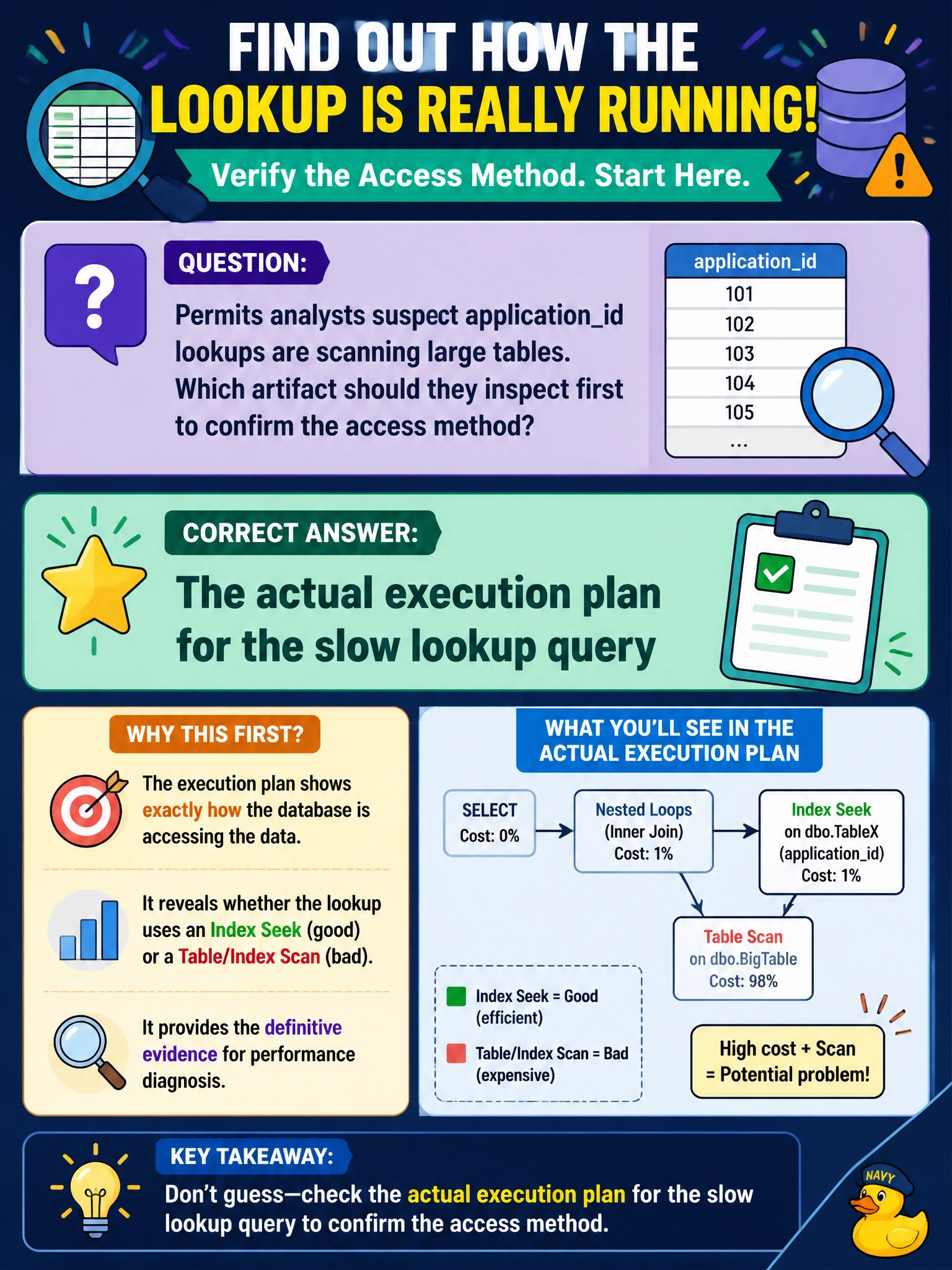
You can treat the actual execution plan as a GPS trace for the lookup: it shows whether the query scans or seeks. Check it first so you can diagnose the access method before guessing at a fix.
Full Explanation
Inspect the actual execution plan for the slow lookup query first: it shows the operators that ran, such as table or clustered index scans versus seeks, along with key lookups, residual predicates, and estimated versus actual rows. That evidence confirms the access method and helps guide indexing, statistics, or query-rewrite decisions for the permits workload. Checking only the database compatibility level without reviewing a plan fails because compatibility may influence cardinality-estimator behavior but does not reveal whether this lookup scanned. The public website robots.txt file for the permits portal is unrelated to SQL access methods. A list of Entra group names unrelated to the query may help with permission troubleshooting, but it says nothing about scan versus seek operators. Exam caveat: Prefer actual plans with runtime metrics when validating real performance spikes; estimated plans can mislead when parameter sensitivity or stale statistics are involved. Query Store can retain plans historically when you cannot reproduce the issue interactively. On DP-800, inspecting the plan is a better first step than changing random instance settings. Practical check: Capture the actual plan for the application_id lookup in SSMS, Extended Events, or Query Store; confirm scan versus seek and note predicates and row counts. If it scans, evaluate a nonclustered index on application_id with appropriate included columns, update statistics, and compare plans and durations afterward. Keep a before-and-after screenshot in the change record, and ignore unrelated portal or Entra artifacts unless the issue is authorization rather than performance.