
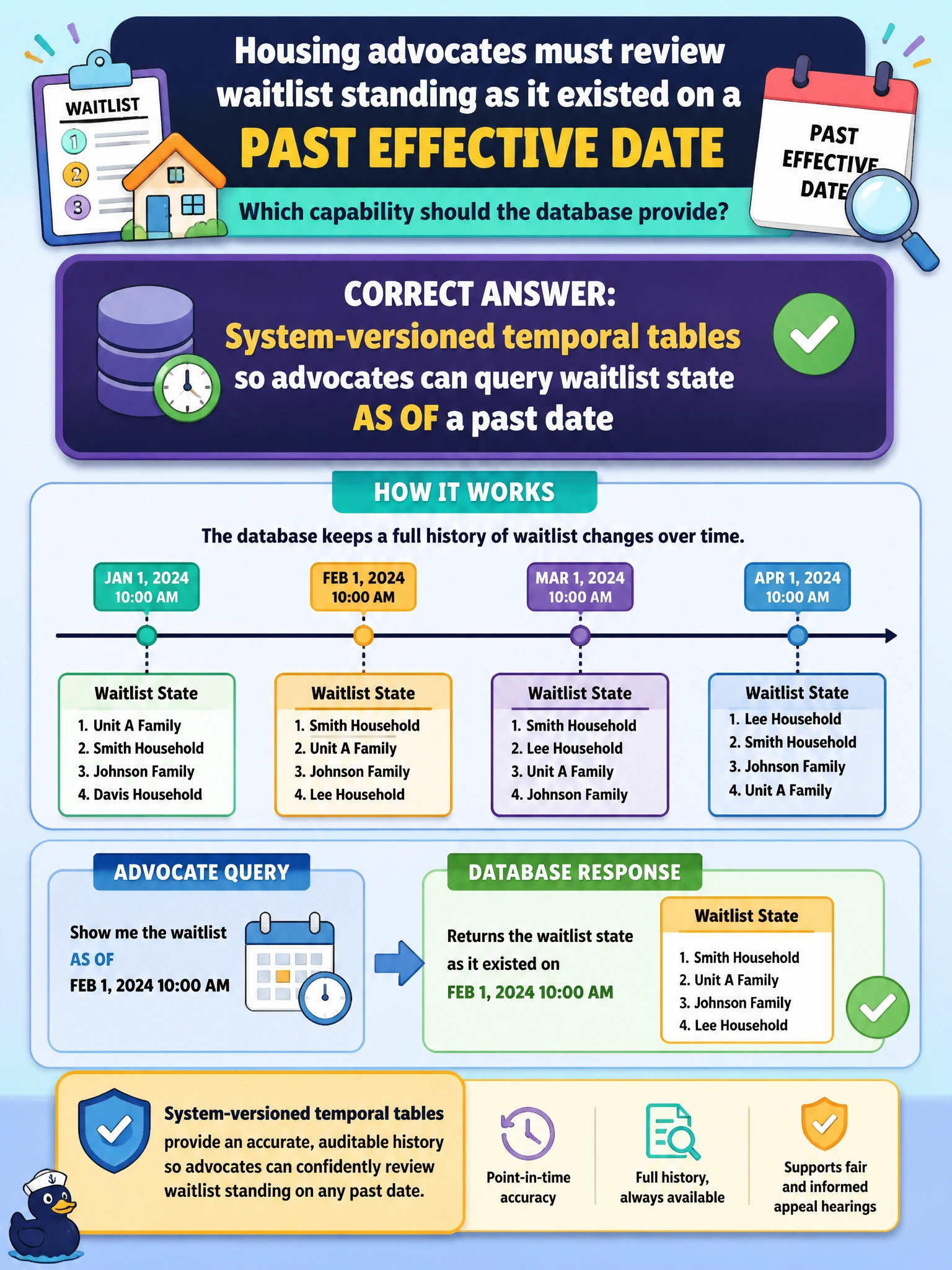
Housing advocates must review waitlist standing as it existed on a past effective date for appeal hearings. Which capability should the database provide?
Select an answer to reveal the explanation.
Short Explanation
Temporal AS OF is the housing time machine—advocates can ask what the waitlist looked like on the day that matters for the hearing, not just today’s reshuffled list. That is why system-versioned tables beat “current only” snapshots for municipal appeals.
Full Explanation
Housing appeal hearings often hinge on waitlist standing as of a past effective date, not merely today’s reshuffled snapshot. System-versioned temporal tables retain historical row versions automatically and support FOR SYSTEM_TIME AS OF queries, allowing advocates and staff to reconstruct municipal waitlist state for the date that matters legally. That point-in-time capability is the database feature the scenario requires. Keeping only the current snapshot cannot answer historical standing questions. External tables over paper scans may store images but do not provide queryable effective dating of ranked waitlist rows. Graph MATCH over unrelated edges cannot invent trustworthy historical ranks; graph models relationships, not system-versioned attribute history. Caveat: align the temporal timeline with business effective dating if legal standing depends on a business clock rather than transaction time; you may still need explicit effective-from/to attributes in addition to system versioning when those clocks differ. Operational check: change a household’s waitlist rank, then query FOR SYSTEM_TIME AS OF a timestamp before the change and confirm the prior rank returns for the appeal record.